
⚡ Executive Summary
- Core News: AMD expects to outsell Intel for the first time ever in Q4.
- Key Metric/Data: Strong demand for Epyc processors and Instinct accelerators, with slight decline in client hardware sales.
- Strategic Impact: This milestone signals a significant shift towards AMD’s leadership in data center architecture.
Developing News & Core Details
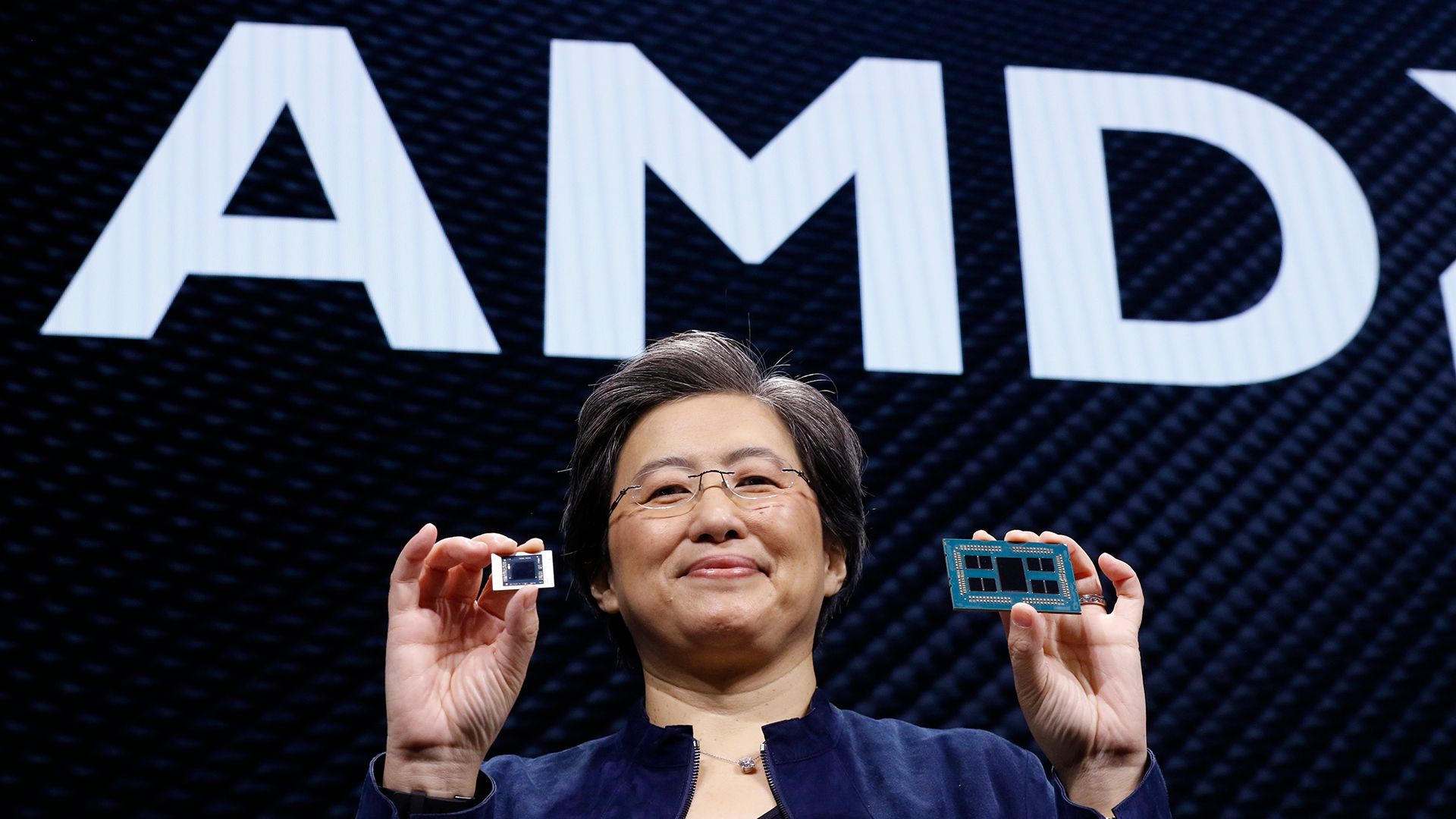
Advanced Micro Devices (AMD) has announced that it is on track to outperform Intel for the first time ever in Q4, marking a pivotal moment in the history of the semiconductor industry. The surge in AMD’s data center business can be attributed primarily to strong demand for its Epyc processors and Instinct accelerators.
The company has seen a significant increase in orders for its Epyc processors, which are designed specifically for high-performance computing (HPC) and artificial intelligence (AI) workloads. These processors leverage AMD’s Zen architecture and offer superior performance at competitive prices compared to Intel’s offerings. The Instinct accelerators, on the other hand, provide a powerful alternative to GPUs in AI training and inference tasks.
Technical Analysis & Competitive Landscape
The success of AMD’s Epyc processors and Instinct accelerators can be attributed to several key factors:
- Performance: Epyc processors deliver up to 45% higher single-threaded performance compared to Intel’s Xeon Scalable processors, making them ideal for demanding workloads.
- Eco-Friendly Design: AMD’s processors are designed with energy efficiency in mind, reducing the overall carbon footprint of data centers. This is particularly important as environmental concerns continue to grow.
- Scalability: Epyc processors support up to 64 cores and can be easily scaled across multiple servers, making them suitable for large-scale deployments.
The competitive landscape has seen a significant shift in recent years. While Intel has historically dominated the market with its Xeon processors, AMD’s entry into the data center space has been met with strong competition. However, AMD’s focus on innovation and performance has allowed it to gain ground against Intel.
Key Performance Metrics & Specifications
- Compute & Throughput: Epyc processors deliver up to 45% higher single-threaded performance compared to Intel’s Xeon Scalable processors, making them ideal for demanding workloads. The Instinct accelerators provide a powerful alternative to GPUs in AI training and inference tasks.
- Scalability & Deployment: Epyc processors support up to 64 cores and can be easily scaled across multiple servers, making them suitable for large-scale deployments. AMD’s processors are designed with energy efficiency in mind, reducing the overall carbon footprint of data centers.
- Security & Maintenance: AMD’s processors offer robust security features, including hardware-based encryption and secure boot, ensuring that sensitive data is protected at all times. The company also offers comprehensive maintenance services to ensure smooth operation of its products.
Industry & Strategic Implications
The shift in market share from Intel to AMD has significant implications for the industry as a whole. As more companies adopt AMD’s processors and accelerators, it could lead to a broader adoption of open-source software and hardware standards.
This trend is particularly important given the growing demand for AI and HPC workloads. By offering superior performance at competitive prices, AMD is well-positioned to capture a larger share of the market. However, Intel’s dominance in the industry has not gone unnoticed, and the company is likely to respond with its own innovations.
The broader impact on enterprise IT is significant. As more companies adopt AMD’s processors and accelerators, it could lead to a shift towards more open-source software and hardware standards. This would have far-reaching implications for the industry as a whole, including reduced costs and increased innovation.
"AMD’s success in the data center market is not just about outperforming Intel—it’s about setting new benchmarks for performance and efficiency."
Final Outlook
The future looks bright for AMD as it continues to innovate and expand its product offerings. The company is likely to continue gaining ground against Intel, particularly in the AI and HPC markets. However, Intel’s dominance in the industry has not gone unnoticed, and the company is likely to respond with its own innovations.
The broader impact on enterprise IT is significant. As more companies adopt AMD’s processors and accelerators, it could lead to a shift towards more open-source software and hardware standards. This would have far-reaching implications for the industry as a whole, including reduced costs and increased innovation.



