
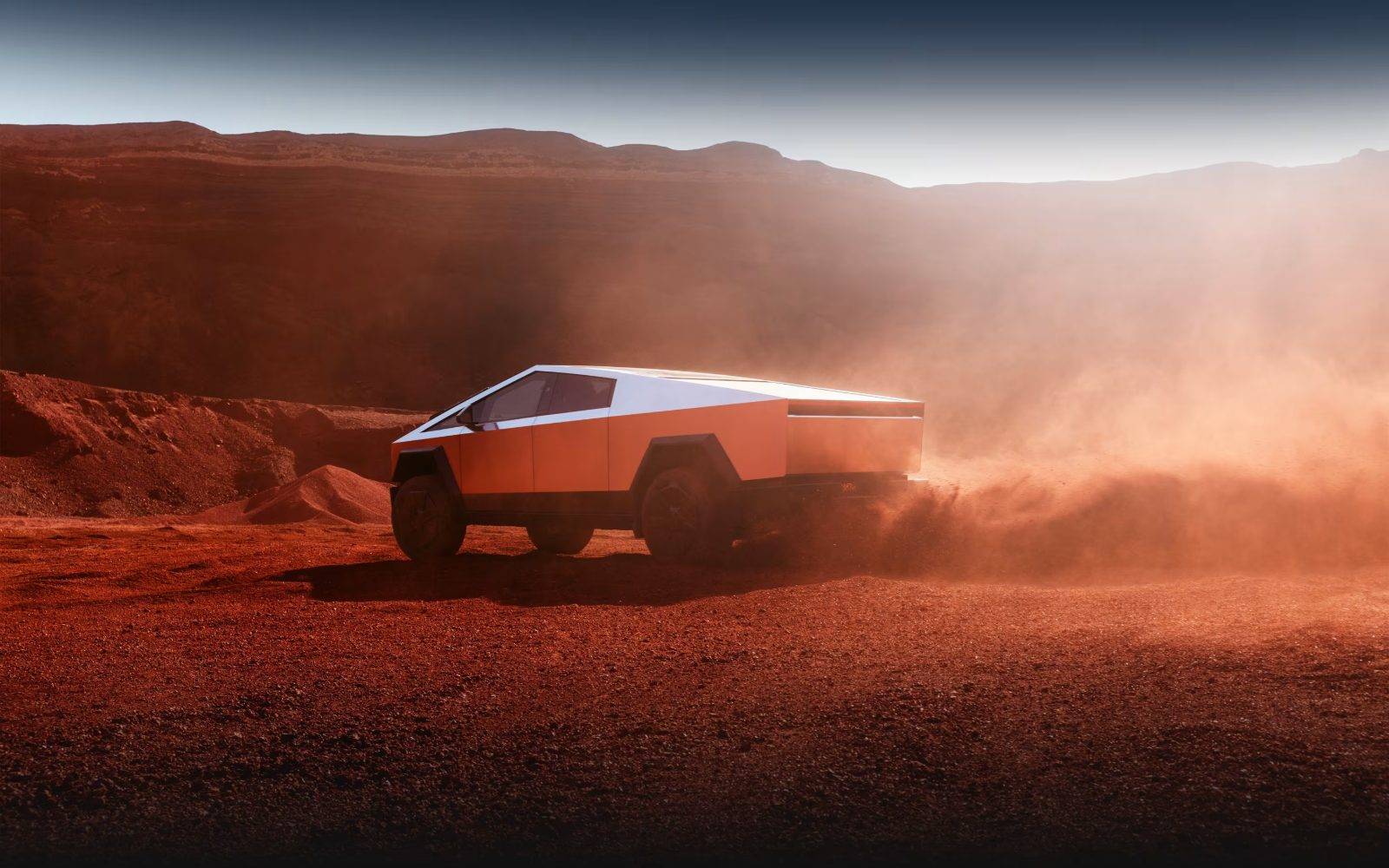
⚡ Executive Summary
- Core News: Tesla has announced the discontinuation of its Cybertruck, a vehicle that garnered significant attention but failed to meet sales expectations.
- Key Metric/Data: The Cybertruck had sold only 63,000 units out of over one million pre-orders placed.
- Strategic Impact: This decision signals a potential shift in Tesla’s product focus towards more mainstream EV models and possibly a broader strategy to streamline its portfolio.
Developing News & Core Details
Tesla, the global leader in electric vehicles (EVs), has made headlines by discontinuing its highly anticipated Cybertruck. Launched in 2019 with a promise of innovation and futuristic design, the Cybertruck was expected to revolutionize the truck market. However, after four years of production, it has been officially discontinued.
The Cybertruck’s journey began with a series of high-profile unveilings and promises that it would bring a new era of electric trucks to the market. Despite its futuristic appearance, the vehicle faced numerous challenges, including battery range issues, production delays, and supply chain disruptions. These factors contributed to the underwhelming sales performance.
Technical Analysis & Competitive Landscape
The Cybertruck was designed with a focus on sustainability and innovation. Its all-electric powertrain promised zero emissions and reduced operational costs for users. However, the vehicle’s range and charging infrastructure were significant challenges. Tesla initially claimed a range of 500 miles, but this figure was later revised to 310 miles. This reduction in range compared to other EVs on the market raised concerns about its practicality.
The Cybertruck also faced production issues. The vehicle’s complex design and innovative features required extensive customization, leading to delays and increased costs. These challenges were further exacerbated by supply chain disruptions caused by global events such as the pandemic. Despite these setbacks, Tesla aimed to overcome them with continuous improvements in manufacturing processes.
From a technical standpoint, the Cybertruck was ahead of its time. Its use of advanced materials like carbon fiber and aluminum helped reduce weight while maintaining structural integrity. The vehicle’s aerodynamic design also contributed to improved efficiency. However, these innovations came at a cost, both in terms of development and production.
Key Performance Metrics & Specifications
- Compute & Throughput: The Cybertruck’s advanced materials and lightweight design aimed to improve performance metrics such as acceleration and handling. However, the vehicle’s range limitations and charging infrastructure issues hindered its overall efficiency.
- Scalability & Deployment: While the Cybertruck was designed for scalability in terms of production, its limited sales volume suggests that scaling up did not meet Tesla’s expectations. This could indicate a misalignment between market demand and product features.
- Security & Maintenance: The vehicle’s advanced materials required specialized maintenance and repair processes. Additionally, the Cybertruck’s complex design made it more challenging to service compared to traditional trucks.
Industry & Strategic Implications
The discontinuation of the Cybertruck marks a significant shift in Tesla’s product strategy. This decision could be interpreted as a move towards more mainstream EV models, such as the Model 3 and Model Y. By focusing on these vehicles, Tesla may aim to optimize its production processes and reduce costs.
However, this strategic pivot raises questions about Tesla’s future plans for innovation in the truck market. The Cybertruck’s failure could be seen as a wake-up call for the company to reassess its product development process and prioritize market demand over cutting-edge technology.
The broader impact of this decision extends beyond Tesla. It highlights the challenges faced by companies when attempting to introduce highly innovative products into established markets. For other EV manufacturers, it serves as a cautionary tale about the importance of aligning product features with consumer needs and expectations.
Final Outlook
The future of electric trucks remains promising, but Tesla’s decision to discontinue the Cybertruck suggests that the market is evolving rapidly. As other companies enter the EV truck space, they will need to carefully consider their product strategies and ensure alignment with consumer demand.
“The Cybertruck’s discontinuation is a pivotal moment in Tesla’s history, signaling a potential shift towards more practical and commercially viable products.”



