
⚡ Executive Summary
- Core News: AMD’s MEXT technology enables servers to run at 50% DRAM capacity, achieving 95% of full-DRAM performance.
- Key Metric/Data: Servers using MEXT can operate with half the standard DRAM while maintaining 95% of peak performance in certain applications.
- Strategic Impact: This innovation addresses memory shortages, reduces costs, and enhances overall server efficiency.
Developing News & Core Details
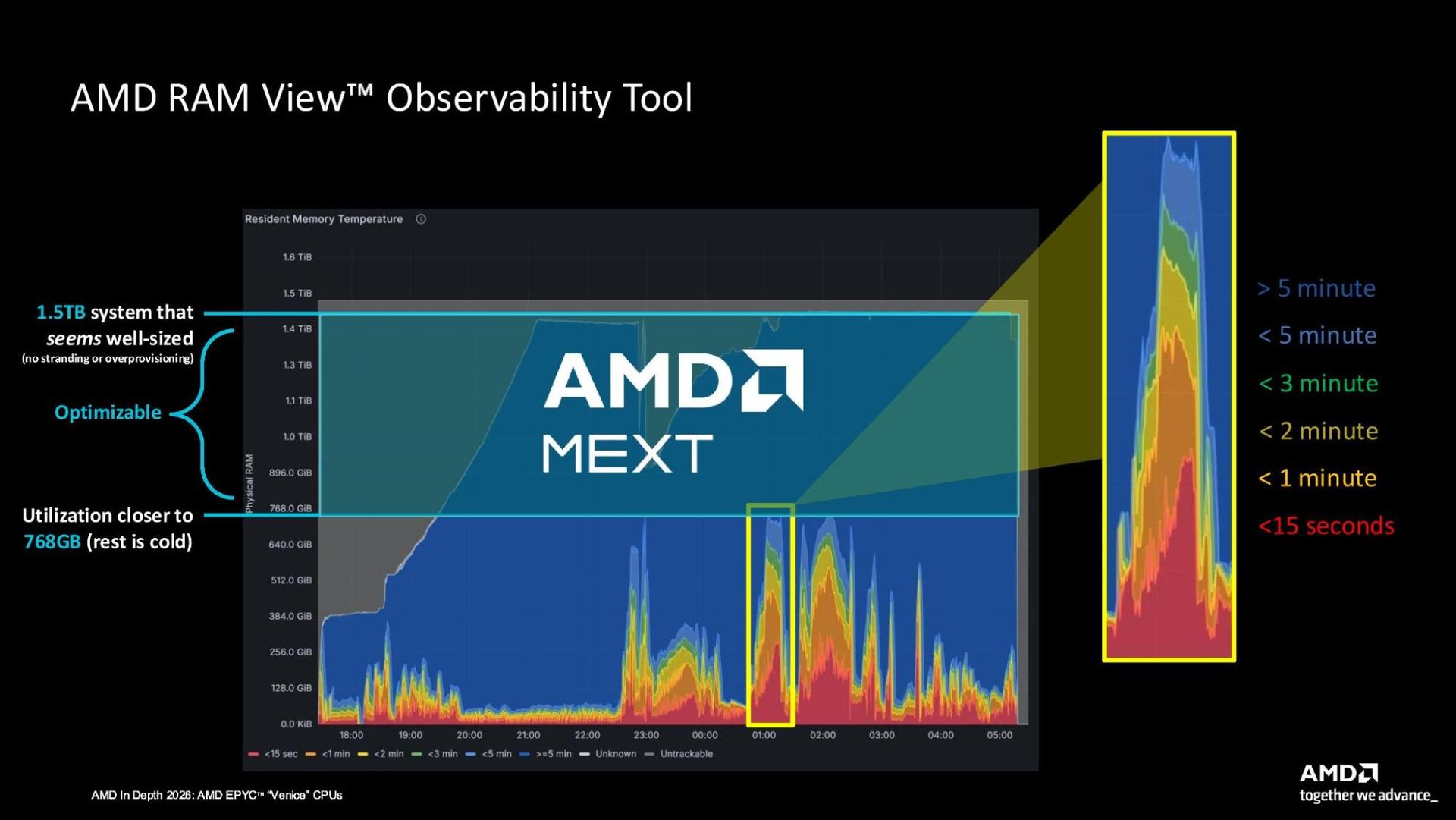
Following AMD’s acquisition of MEXT earlier this year, the company has revealed its own IT infrastructure is using the technology to run servers at 50% DRAM capacity while achieving 95% of the performance of a full-DRAM system in certain applications. This development comes as memory shortages have become a significant challenge for data centers and cloud providers.
AMD’s MEXT (Memory Extension Technology) is designed to extend the life of existing DRAM by allowing it to be used more efficiently. The technology works by leveraging advanced compression techniques that allow data to be stored in less space, thus reducing the need for additional DRAM modules.
Technical Analysis & Competitive Landscape
The introduction of MEXT represents a significant leap forward in server architecture and memory management. By enabling servers to operate with half the standard DRAM capacity, AMD is addressing one of the most pressing issues facing data centers today: memory shortages. These shortages are primarily driven by the rapid growth of AI workloads, which require vast amounts of memory for training models and processing large datasets.
Compared to legacy architectures, MEXT offers several advantages:
- Economical: By reducing DRAM usage, data centers can significantly lower their capital expenditures (CapEx) on hardware. This is particularly beneficial for cloud providers who are constantly expanding their infrastructure to meet demand.
- Scalability: MEXT allows for more efficient scaling of server resources without the need for additional physical DRAM modules, which can be costly and time-consuming to install.
- Performance: While maintaining 95% of full-DRAM performance in certain applications, MEXT ensures that critical workloads do not suffer from reduced efficiency. This is particularly important for applications such as AI inference, where even small drops in performance can have significant impacts on user experience.
In the competitive landscape, AMD’s MEXT technology positions the company as a leader in memory optimization and server efficiency. By addressing one of the most pressing challenges facing data centers today, AMD is not only improving its own infrastructure but also setting a new standard for the industry.
Industry & Strategic Implications
The broader impact of MEXT extends beyond just AMD’s internal operations. This technology has significant implications for enterprise IT and cloud services providers:
- Cost Savings: By reducing DRAM usage, data centers can lower their operational costs, which translates to reduced prices for end-users.
- Environmental Impact: Lowering the demand for new DRAM modules also reduces the environmental impact of manufacturing and disposing of electronic waste.
- Scalability: MEXT allows cloud providers to scale their infrastructure more efficiently, which is crucial as they continue to expand into emerging markets like AI and IoT.
In conclusion, AMD’s MEXT technology represents a significant advancement in server architecture. By enabling servers to operate with half the standard DRAM capacity while maintaining 95% of full-DRAM performance, this innovation addresses critical memory shortages and offers substantial cost savings for data centers and cloud providers.
“MEXT is not just about saving on DRAM; it’s about optimizing server resources in a way that benefits both the environment and business efficiency.”
Final Outlook
Looking ahead, MEXT is expected to play a crucial role in shaping the future of data center infrastructure. As AI workloads continue to grow, the demand for memory will only increase. AMD’s technology provides a solution that can help meet this demand while keeping costs under control.



