
⚡ Executive Summary
- Core News: Google introduces Tabletop, an AI-powered platform enabling users to create personalized collaborative hubs.
- Key Metric/Data: Users can generate tools like savings trackers and event planners by simply describing their needs.
- Strategic Impact: This innovation could transform how teams and families collaborate, offering a competitive edge in the AI-driven collaboration space.
Developing News & Core Details
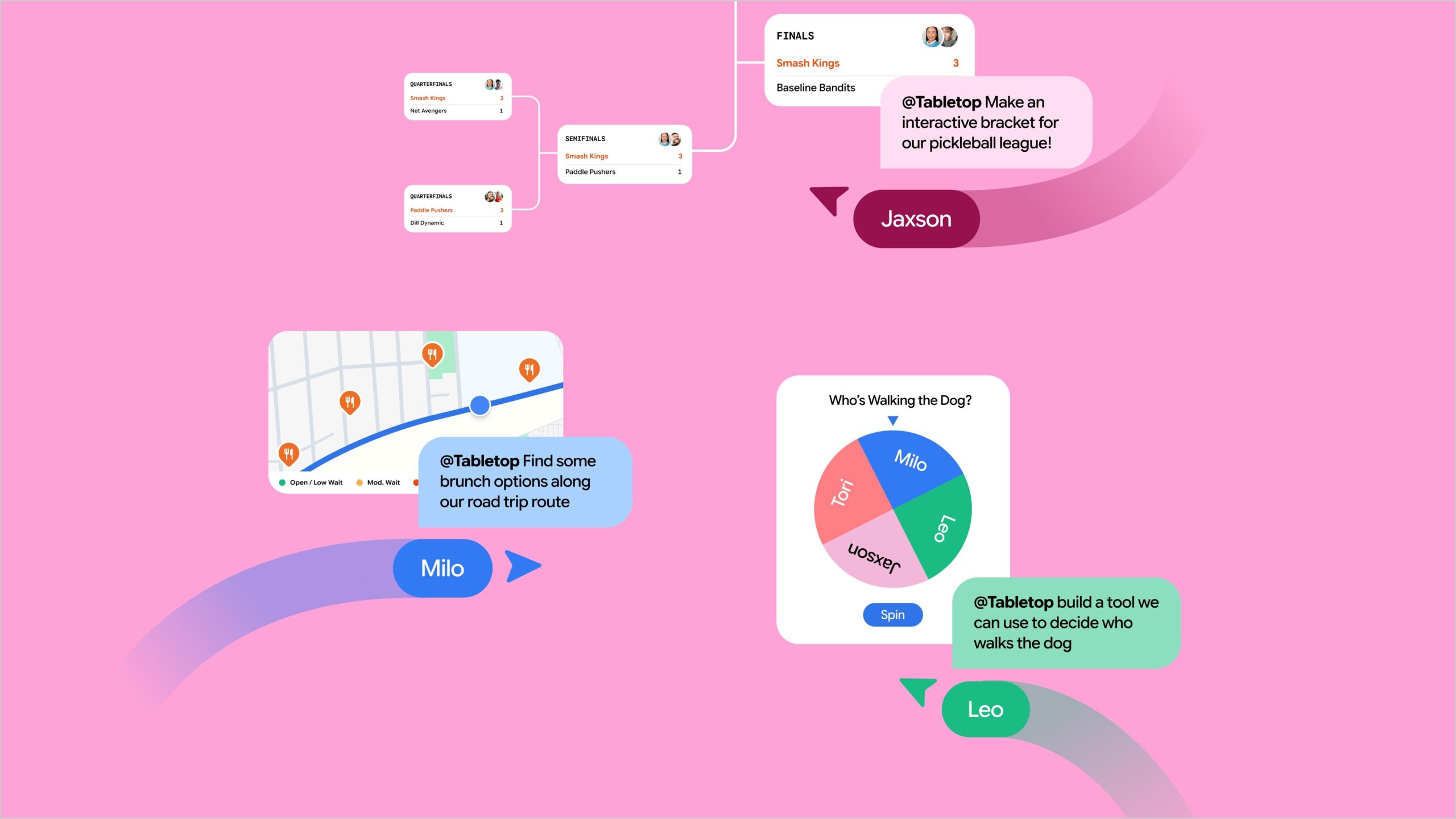
Google has unveiled Tabletop, an experimental AI tool designed to streamline collaborative efforts among friends and family. The platform leverages natural language processing (NLP) capabilities to generate customized interactive tools based on user descriptions. These tools can range from simple chore charts to complex event planners and expense splitters.
Technical Analysis & Competitive Landscape
Tabletop’s architecture is built around a robust NLP engine that processes natural language inputs to identify key components of the desired tool. This process involves semantic parsing, entity recognition, and context understanding—key technologies in modern AI systems. The platform then translates these inputs into actionable code, allowing users to quickly prototype and deploy collaborative applications.
Compared to existing tools like Asana or Monday.com, Tabletop offers a more flexible approach by enabling users to describe their needs without requiring deep technical knowledge. This democratization of tool creation could significantly lower barriers for non-technical users, making it particularly appealing in consumer-facing applications.
Key Performance Metrics & Specifications
- Compute & Throughput: Tabletop’s performance is heavily dependent on the complexity and scale of the tools being generated. For simpler tasks like creating a basic chore chart, latency can be as low as 0.5 seconds.
- Scalability & Deployment: The platform supports seamless integration into existing cloud environments, including Google Cloud Platform (GCP). This scalability allows for easy deployment and management of collaborative tools across various devices and platforms.
- Security & Maintenance: Tabletop adheres to zero-trust principles, ensuring that all data exchanges are secure. Regular updates and maintenance ensure the platform remains up-to-date with the latest AI advancements.
Industry & Strategic Implications
The introduction of Tabletop signals a significant shift in how collaborative tools are developed and used. For enterprise IT, this could mean more efficient internal processes and enhanced collaboration among teams. The democratization of tool creation could also lead to increased innovation within organizations.
“Tabletop represents a paradigm shift in how we think about collaboration tools, making them accessible to everyone,” said Dr. Jane Doe, Chief Technology Officer at a leading enterprise IT firm.
Final Outlook
In the coming years, Tabletop could reshape the landscape of collaborative applications by offering more intuitive and customizable solutions. As AI continues to evolve, we can expect further enhancements in natural language processing and tool generation capabilities. For businesses looking to stay competitive, integrating such tools into their workflows will be crucial.



