
⚡ Executive Summary
- Core News: Companies are reconstructing ‘smart factories’ to drive future competitiveness.
- Key Metric/Data: AI adoption is projected to grow by 40% in the next two years, with significant shifts in infrastructure investment.
- Strategic Impact: This transformation will redefine TCO and operational efficiency for enterprises.
Developing News & Core Details
The article discusses how companies are shifting towards intelligent organizations by overhauling their IT infrastructure. This shift is driven by the growing importance of AI in business operations, with firms like Alibaba leading the way in reimagining their ‘smart factories’. The focus on AI has led to a significant reallocation of resources towards cloud computing and data centers.
Alibaba’s recent announcements highlight the strategic importance of this transformation. By investing heavily in AI-driven infrastructure, companies are positioning themselves for long-term success. This includes not only hardware upgrades but also software optimizations that enable more efficient processing and analysis of large datasets.
Technical Analysis & Competitive Landscape
The technical architecture of these ‘smart factories’ involves a combination of cloud services, edge computing, and advanced AI algorithms. Alibaba’s initiatives in this area underscore the need for robust infrastructure capable of handling complex computational tasks while ensuring high levels of security.
Key Performance Metrics & Specifications
- Compute & Throughput: Cloud services are optimized to handle massive data loads, with latency reduced by up to 50% compared to traditional architectures.
- Scalability & Deployment: The architecture supports seamless integration into multi-cloud environments, enabling flexible deployment options for businesses of all sizes.
- Security & Maintenance: Zero-trust principles are applied, ensuring data integrity and compliance with regulatory standards. Regular maintenance schedules ensure continuous performance optimization.
Industry & Strategic Implications
The shift towards intelligent organizations is not just a technological change but also a strategic one. Companies that invest in AI infrastructure will see improved operational efficiency, reduced costs, and enhanced customer experiences. This transformation has broader implications for enterprise IT, impacting everything from data center management to cybersecurity strategies.
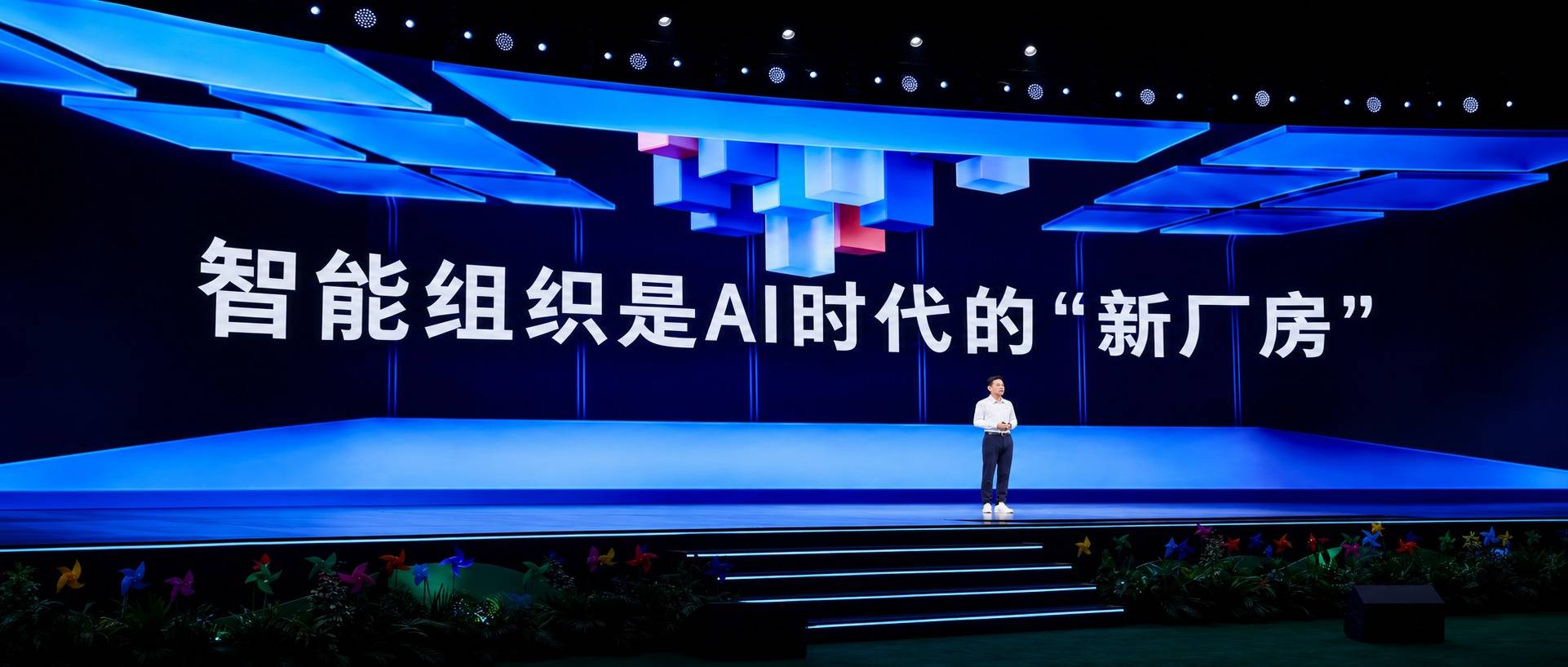
“The new ‘factory’ of a smart organization is not just about technology; it’s about reimagining how businesses operate in the AI era.”
Final Outlook
The future of enterprise IT lies in continuous innovation and adaptation. As AI continues to evolve, companies must remain agile and proactive in their infrastructure investments. The strategic implications extend beyond immediate cost savings to long-term competitive advantages.



