
⚡ Executive Summary
- Core News: Tesla has officially greenlit a massive €3 billion investment to scale up its Gigafactory Berlin-Brandenburg, specifically tailoring its regional production lines to accommodate the upcoming autonomous Cybercab.
- Key Metric/Data: The €3 billion capital injection represents one of the single largest industrial expansions in European electric vehicle manufacturing, designed to scale footprint and localized supply chains.
- Strategic Impact: By baking autonomous robotaxi architecture into its European manufacturing blueprint, Tesla is preparing for an aggressive regulatory and operational push across global markets simultaneously.
Developing News & Core Details
Tesla’s strategic pivot toward autonomous mobility took a tangible leap forward as the company finalized plans for a sweeping €3 billion expansion of Gigafactory Berlin. This capital allocation is not merely a capacity booster for traditional Model Y production; rather, it fundamentally re-architects the European facility to integrate manufacturing lines dedicated to the company’s purpose-built robotaxi, the Cybercab. Originally unveiled at a tightly orchestrated corporate event, the Cybercab discards conventional human-centric automotive controls like steering wheels and pedals, relying entirely on Tesla’s Vision-based Full Self-Driving (FSD) architecture.
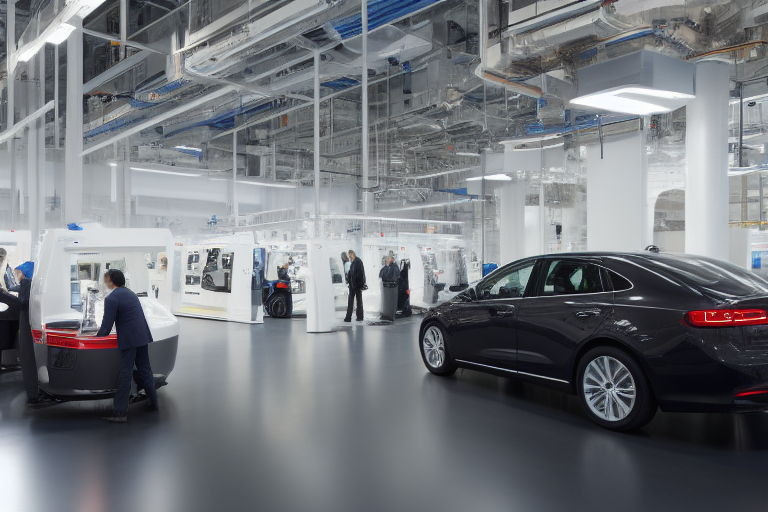
By anchoring the Cybercab’s international production footprint inside the European Union, Tesla aims to preemptively satisfy regional regulatory frameworks, supply chain mandates, and localized scaling pressures. The Berlin expansion includes upgraded casting facilities, advanced battery-cell integration nodes, and specialized assembly bays optimized for autonomous hardware suites. This move demonstrates that Tesla views the Cybercab not as an experimental American novelty, but as a globally scalable pillar of its future enterprise value.
Technical Analysis & Competitive Landscape
From an engineering perspective, pivoting a high-volume gigafactory toward an autonomous platform requires a radical shift in validation, software flashing, and quality assurance protocols. Traditional vehicles rely on human-in-the-loop fail-safes. The Cybercab architecture, by contrast, demands absolute hardware redundancy—from compute units to steering and braking actuators—built directly onto the line. Tesla’s unboxed manufacturing process, which reimagines vehicle assembly as a simultaneous module-joining exercise rather than a sequential line, is expected to find its most rigorous European test bed within these expanded Berlin halls.
In the broader mobility landscape, this development places Tesla on a direct collision course with established European automotive incumbents and autonomous software developers alike. While legacy European automakers have tread cautiously with software-defined vehicles and Level 4 autonomy due to liability concerns and conservative regulatory environments, Tesla is forcing the issue through massive infrastructure commitments. By localizing production, Tesla attempts to bypass potential trade frictions while positioning its robotaxi network as a native European mobility solution, challenging urban transit paradigms across major continental hubs.
Industry & Strategic Implications
The economic ramifications of a €3 billion manufacturing bet extend deep into the European tech and supply chain ecosystem. Local battery cell developers, sensor manufacturers, and precision engineering firms across Germany and neighboring states will face stringent integration demands to meet Tesla’s aggressive cost-per-mile targets for the Cybercab fleet. For enterprise investors, this signifies that Tesla’s valuation thesis is definitively shifting away from hardware-margin automotive sales toward a high-margin, software-driven ridesharing model.
Furthermore, this expansion serves as a regulatory stress test. European transportation authorities are notoriously rigorous regarding autonomous deployment. By manufacturing the vehicles locally, Tesla signals its intent to work hand-in-hand with European policymakers to establish safety certifications, data compliance protocols, and infrastructure integrations required to launch commercial robotaxi fleets on dense European roadways.
“Tesla’s €3 billion Berlin expansion transforms the Cybercab from a Silicon Valley design concept into an imminent industrial reality, fundamentally altering Europe’s autonomous mobility landscape.”
Final Outlook
As construction and re-tooling phases ramp up at Gigafactory Berlin, the ultimate success of this initiative will hinge on two primary variables: the regulatory clearance of Tesla’s FSD software stack within European jurisdictions, and the flawless execution of high-volume unboxed manufacturing. If Tesla successfully scales Cybercab production in Europe, it will have established a blueprint for decentralized, autonomous fleet deployment that competitors will struggle to match. The €3 billion bet is clear: Tesla is no longer just building cars for drivers; it is manufacturing the infrastructure for a driverless future.
⚡ Featured Enterprise & AI Infrastructure Picks
Building high-throughput AI pipelines or upgrading your workstation? Explore our curated cloud hosting, GPU workstations, and enterprise software stack.



