
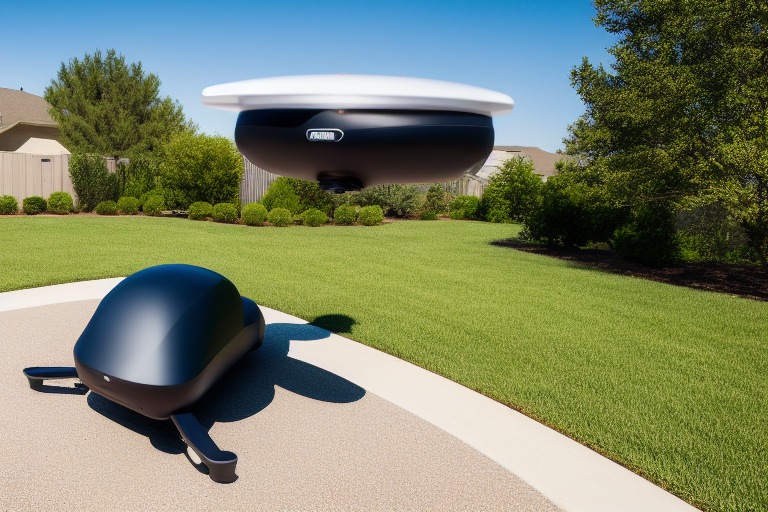
⚡ Executive Summary
- Core News: Uber Eats and Zipline have officially launched commercial drone delivery, starting in the Houston suburb of Spring, Texas, with Dallas and dozens of US cities to follow.
- Key Metric/Data: The partnership targets an unprecedented scaling milestone of 1 million drone deliveries per day by the end of 2029.
- Strategic Impact: This rollout fundamentally alters the last-mile economics of food delivery, substituting expensive human-driven vehicles with autonomous electric flight.
Developing News & Core Details
The commercial rollout of autonomous drone delivery by Uber and Zipline in Spring, Texas, marks a watershed moment for urban logistics. Following their strategic alignment and investment announcement in August 2026, the two companies have moved rapidly from regulatory testing to consumer-facing execution. For residents within the operational coverage area, the Uber Eats app now features a dedicated “Drone” icon, transforming standard food ordering into an aerospace-integrated experience. Upon checkout, users verify delivery zone compatibility, opening the door to lightning-fast, aerial-fulfilled merchant menus.
The operational architecture hinges on Zipline’s advanced, long-range autonomous aircraft technology integrated directly into Uber’s massive marketplace and routing infrastructure. By decentralizing fulfillment from traditional brick-and-mortar storefronts to automated launch nodes, the system bypasses surface street congestion entirely. Dallas is slated as the next metropolitan expansion point, with a national roadmap encompassing dozens of major U.S. markets currently undergoing airspace validation and municipal coordination.
Technical Analysis & Competitive Landscape
Examining the technological underpinnings reveals a masterclass in scalable aerospace engineering. Traditional multirotor delivery drones have long struggled with limited battery range, wind vulnerability, and excessive acoustic signatures. Zipline’s hybrid fixed-wing and vertical takeoff and landing (VTOL) architecture overcomes these physics-driven constraints, enabling high-speed, point-to-point transit with minimal energy loss. Furthermore, the precision drop mechanism ensures packages are lowered safely to residential yards or designated landing beacons without manual pilot intervention.
In the broader competitive arena, this deployment positions Uber and Zipline ahead of fragmented rivals who are still tethered to localized, proof-of-concept trials. While competitors like Amazon Prime Air and Alphabet’s Wing have achieved notable regional milestones, none have yet coupled an aviation network with a dominant global commerce and delivery aggregator like Uber Eats. This symbiotic integration solves the hardest problem in tech logistics: consumer acquisition and order density. A drone network is only economically viable when aircraft maintain high utilization rates, and Uber’s demand-aggregation engine provides the exact volume necessary to justify high-density flight paths.
Industry & Strategic Implications
The economic implications for the last-mile delivery sector are profound. Human courier labor represents the single largest variable cost in food and retail logistics. Transitioning a substantial percentage of sub-five-pound orders to automated aerial vectors compresses variable delivery costs toward marginal energy expenses, dramatically improving operating margins for both platforms and participating merchants.
From an urban planning perspective, this deployment tests the resilience of municipal infrastructure and airspace management. As hundreds, and eventually thousands, of daily flights crisscross suburban skylines, regulatory bodies like the Federal Aviation Administration (FAA) will closely monitor traffic density, collision avoidance systems, and public acoustic impact. If successful, the Spring and Dallas rollouts will serve as the legislative and technical blueprint for national urban airspace commercialization over the next decade.
“By marrying Uber’s unmatched demand aggregator with Zipline’s aerospace prowess, the industry is no longer testing if autonomous delivery works—it is aggressively scaling to dominate the physical economy.”
Final Outlook
The ambitious corporate target of achieving 1 million drone deliveries per day by the close of 2029 redefines the horizon for autonomous logistics. While technical hurdles, weather dependencies, and localized regulatory friction remain formidable obstacles, the momentum is now irreversible. As Dallas follows Houston, and dozens of secondary markets join the network, drone delivery will transition from a futuristic novelty into an expected utility. Investors and technologists should recognize this moment not merely as a product launch, but as the foundational brick of a completely reimagined aerial supply chain.
🚀 Custom Web Hosting & AI Automation Solutions
Need enterprise-grade web hosting, custom WordPress architecture, or automated workflow deployment for your business?



