
⚡ Executive Summary
- Core News: Tesla is channeling a massive €3 billion investment into its Berlin Gigafactory, explicitly pivoting European operations toward the production and deployment of the dedicated autonomous Cybercab.
- Key Metric/Data: The €3 billion capital injection represents one of the single largest manufacturing commitments to autonomous vehicle infrastructure within the European Union to date.
- Strategic Impact: This move signals Tesla’s aggressive transition from a traditional consumer automotive manufacturer into a vertically integrated autonomous ride-hailing services provider, directly challenging European legacy automakers on their home turf.
Developing News & Core Details
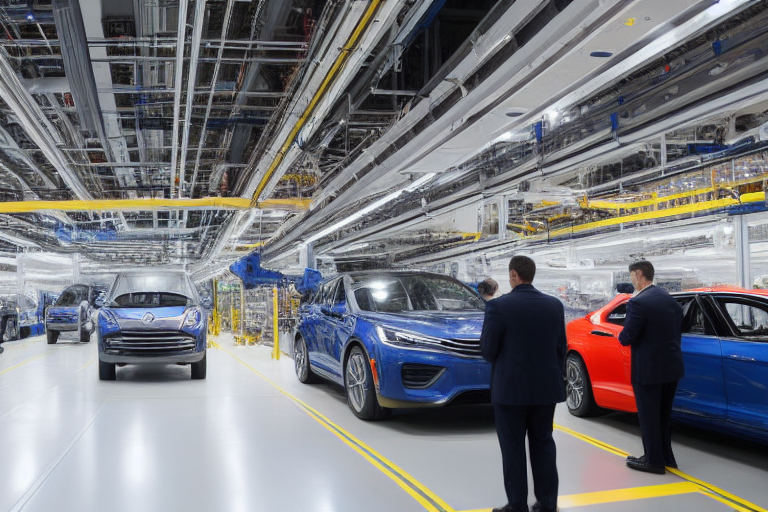
Tesla has officially locked in its strategic trajectory for the European continent by anchoring its next-generation autonomous vehicle roadmap to a €3 billion expansion of Gigafactory Berlin-Brandenburg. Rather than solely scaling up production lines for iteration variants of the Model Y, the capital expenditure is specifically earmarked for the structural modifications, tooling installations, and assembly pathways required to build the Cybercab—Tesla’s steering-wheel-free, pedal-less robotaxi.
The scale of this investment underscores a profound operational pivot. Constructing a dedicated manufacturing ecosystem for a vehicle that lacks manual driving controls requires entirely reimagined supply chains, rigorous validation testing bays, and specialized calibration facilities for advanced vision-based sensor arrays. By localizing Cybercab production within the European Union, Tesla aims to bypass escalating international tariffs, streamline localized supply chain logistics, and position itself advantageously to navigate complex regional trade corridors.
Technical Analysis & Competitive Landscape
From an architectural standpoint, the Cybercab represents a radical departure from conventional automotive design. Built upon Tesla’s next-generation vehicle platform, the chassis utilizes advanced unibody casting techniques that dramatically reduce the number of structural components, lower production costs, and accelerate assembly throughput. However, translating this architectural efficiency into European deployment introduces complex engineering hurdles.
Unlike the uniform regulatory environment of the United States, Europe is a patchwork of national jurisdictions, each with stringent homologation standards, autonomous testing permits, and safety oversight frameworks. Tesla’s reliance on a pure-vision Full Self-Driving (FSD) stack faces intense scrutiny from European regulators who historically favor radar and LiDAR redundancies. To win regulatory approval for a vehicle devoid of human operational overrides, Tesla will need to demonstrate unprecedented statistical safety metrics derived from millions of regional miles driven.
Competitively, this expansion places direct pressure on European legacy automotive groups, such as the Volkswagen Group, BMW, and Mercedes-Benz. While these traditional giants have advanced driver-assistance systems (ADAS) in the market, their commercial strategies for fully autonomous robotaxis have generally been more measured, often relying on partnerships with established mobility providers. Tesla’s vertically integrated approach—controlling the vehicle, the neural net training architecture, the manufacturing plant, and the eventual ride-hailing network application—threatens to undercut legacy margins entirely.
Industry & Strategic Implications
The ripple effects of a €3 billion autonomous vehicle manufacturing hub in Berlin extend far beyond Tesla’s balance sheet. For the European technology and enterprise ecosystem, it acts as a massive catalyst for talent acquisition in computer vision, neural network optimization, edge computing, and localized fleet management software.
Furthermore, the introduction of a dedicated ride-hailing vehicle shifts urban mobility paradigms across major European metropolises. As cities increasingly restrict internal combustion engines and prioritize low-emission, high-density public and shared transit spaces, the Cybercab’s low operating cost per mile could radically transform urban economics. Fleet operators, delivery networks, and municipal planners must now factor scalable, autonomous electric fleets into their long-term infrastructure models.
“Tesla is no longer just building cars for individuals to own; they are manufacturing the foundational nodes of a global, autonomous transport utility, shifting the battleground straight to the heart of Europe’s industrial manufacturing base.”
Final Outlook
Tesla’s commitment to building the Cybercab in Berlin is a high-stakes bet on the inevitability of autonomous mobility. While regulatory hurdles, infrastructure readiness, and consumer skepticism remain formidable roadblocks, the sheer financial and industrial weight of this €3 billion investment changes the calculus for the entire automotive sector. If Tesla successfully navigates European type-approval processes and scales production out of Brandenburg, the Cybercab will not merely be a new product offering—it will establish a completely new baseline for how urban populations consume transportation services in the decades ahead.
⚡ Featured Enterprise & AI Infrastructure Picks
Building high-throughput AI pipelines or upgrading your workstation? Explore our curated cloud hosting, GPU workstations, and enterprise software stack.



