
⚡ Executive Summary
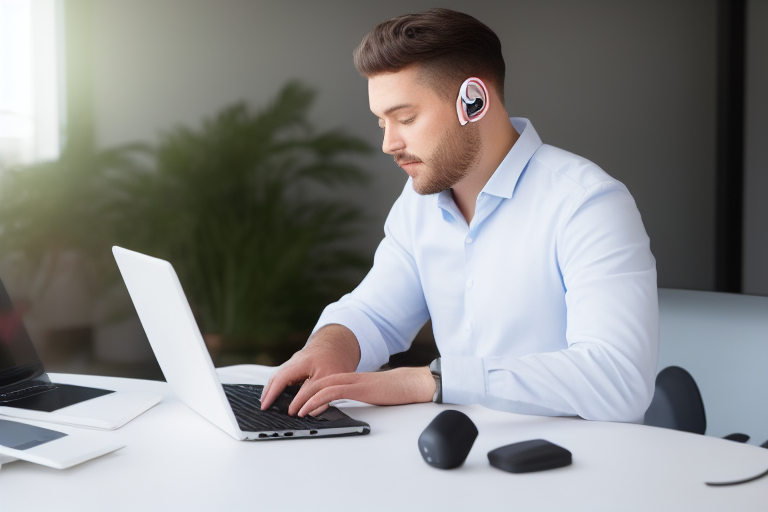
- Core News: NodLink introduces an innovative software paradigm that repurposes Apple AirPods into spatial mouse pointers and gesture-driven controllers via subtle head movements.
- Key Metric/Data: Operates entirely through existing inertial measurement units (IMUs) embedded in AirPods, bypassing the need for external cameras, computer vision processing, or additional wearable hardware.
- Strategic Impact: Signals a major shift in ambient computing and accessibility tech, demonstrating how edge-processed consumer audio gear can be retrofitted for advanced spatial navigation.
Developing News & Core Details
The boundary between audio peripherals and spatial computing input devices is blurring, thanks to NodLink. This emerging utility re-engineers how users interact with desktop operating systems by converting Apple’s ubiquitous AirPods into fully functional air mice. Instead of relying on a physical surface, an optical mouse, or intrusive depth-sensing cameras, NodLink taps directly into the sophisticated internal architecture of the earbuds.
By leveraging the precise on-board Inertial Measurement Units (IMUs) and spatial audio gyroscopes already housed within AirPods, NodLink tracks microscopic changes in head orientation. Turning your head translates directly to smooth, high-precision cursor movement across the screen. A slight tilt executes a click action, while integrated voice command pipelines allow users to invoke complex macros or system shortcuts purely through speech. Crucially, the entire system operates locally, requiring no optical camera setups, preserving user privacy, and eliminating the friction of strapping on dedicated AR/VR headsets or headbands.
Technical Analysis & Competitive Landscape
From an engineering standpoint, extracting high-fidelity cursor tracking from wireless earbuds presents significant latency and drift challenges. Traditional IMU-based motion tracking often suffers from cumulative sensor drift, requiring constant recalibration. NodLink addresses this by implementing advanced sensor-fusion algorithms that filter out ambient body movements, stabilizing the cursor for granular, pixel-accurate desktop navigation.
When evaluated against the broader human-computer interaction (HCI) landscape, NodLink occupies a fascinating niche. While tech giants like Apple and Meta focus heavily on dedicated smart glasses, heavy vision headsets, or camera-based hand-tracking systems (such as Apple Vision Pro’s optoelectronic tracking), NodLink takes a decentralized, software-first approach. It transforms an already multi-billion-unit installed hardware base—AirPods—into an input vector. This lowers the barrier to entry for spatial navigation, making accessibility features and hands-free productivity available to anyone with standard consumer gear.
Industry & Strategic Implications
The implications of software-defined peripheral transformation extend far beyond novelty accessibility tools. For the enterprise workspace, gesture-based desktop control opens up new paradigms for ergonomic computing, standing-desk navigation, and remote presentation management. Users can pace a room, glance at a screen, tilt their head to advance slides, and issue verbal commands without holding a clicker or standing near a desk.
Furthermore, this development highlights the untapped potential of edge-computing intelligence within consumer accessories. As audio companies continue to pack heavy processing chips (such as Apple’s H-series silicon) into small form factors, third-party developers now have the platform capacity to reinvent peripheral utility. Software is rapidly decoupling functionality from fixed hardware designs, suggesting that future hardware upgrades may happen entirely via over-the-air app updates rather than hardware replacements.
“NodLink proves that the next great leap in desktop navigation won’t necessarily require entirely new hardware categories—it will come from unlocking hidden capabilities in the devices we already wear every day.”
Final Outlook
As spatial computing matures, input modalities must evolve to become as frictionless as possible. NodLink represents a compelling blueprint for how ambient, camera-free gesture control can integrate seamlessly into daily workflows. While fine-tuning is still required to match the absolute muscle-memory precision of a physical mechanical mouse for high-speed tasks like gaming or professional CAD design, its utility for general productivity, media consumption, and accessibility is undeniable.
Looking ahead, we can expect a wave of similar utility-driven software enhancements that leverage existing wearable ecosystems. For investors and technologists, NodLink is a reminder that the most disruptive ecosystem plays often happen not by building a better walled garden, but by connecting disparate consumer tools in radically inventive ways.
⚡ Featured Enterprise & AI Infrastructure Picks
Building high-throughput AI pipelines or upgrading your workstation? Explore our curated cloud hosting, GPU workstations, and enterprise software stack.



