
⚡ Executive Summary
- Core News: The Senate Commerce Committee, led by Senator Ted Cruz, unanimously advanced Donald Trump’s FCC nominee 15-0 after Democratic members staged a strategic boycott to deny a quorum.
- Key Metric/Data: 15-0 committee vote along strict party lines, reflecting profound legislative polarization over upcoming telecommunications policy and regulatory control.
- Strategic Impact: The contentious committee action sets the stage for a bitter confirmation battle that will dictate the future of net neutrality, spectrum allocation, and broadband subsidies.
Developing News & Core Details
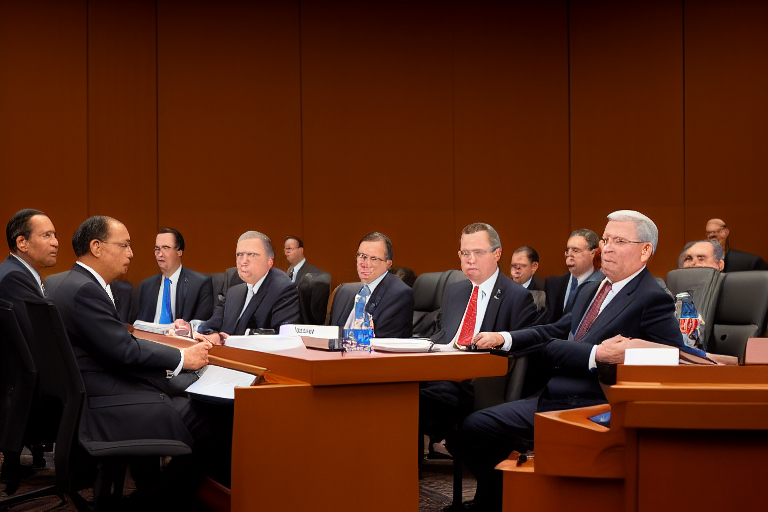
The Senate Commerce, Science, and Transportation Committee convened under high-stakes political maneuvering as Chairman Ted Cruz pushed forward with the confirmation vote for the administration’s Federal Communications Commission (FCC) nominee. Facing a coordinated boycott by Democratic senators attempting to break the committee’s quorum requirements, Republican leadership utilized procedural mechanisms to advance the nomination on a 15-0 vote.
The boycott was triggered by mounting Democratic opposition and allegations concerning the nominee’s transparency during confirmation hearings. Minority lawmakers asserted that the nominee misled the committee regarding past work on media-related policy matters, creating a flashpoint over regulatory ethics. Despite these objections, the panel’s Republican majority proceeded, framing the Democratic maneuver as an obstructionist tactic designed to delay critical oversight of the nation’s airwaves and digital infrastructure.
Technical Analysis & Competitive Landscape
The Federal Communications Commission remains the primary regulatory gatekeeper for the United States telecommunications ecosystem, wielding immense authority over 5G spectrum auctions, broadband mapping data, structural media ownership caps, and universal service fund distributions. The installation of a conservative-leaning majority at the FCC shifts the technical and regulatory baseline for major telecom conglomerates, competitive local exchange carriers, and satellite internet providers alike.
From an architectural standpoint, the impending commission shift will likely pivot away from heavy-handed network neutrality regulations and Title II utility classifications enacted under previous administrations. Instead, industry analysts anticipate a deregulatory push focused on streamlining infrastructure deployment permissions—particularly for small cell 5G rollouts and rural broadband expansion. However, this policy pivot directly impacts market competition, potentially altering the playing field for enterprise connectivity costs, open-RAN adoption timelines, and spectrum reallocations vital for next-generation wireless innovation.
Industry & Strategic Implications
For enterprise IT leaders and telecommunications providers, the leadership transition at the FCC carries profound compliance and strategic ramifications. Regulatory certainty is paramount for capital expenditure planning in multi-billion-dollar fiber-optic and cellular infrastructure projects. A polarized commission risks prolonged legal battles over state-level broadband regulations, privacy mandates, and algorithmic transparency rules.
Furthermore, the aggressive confirmation path engineered by Senator Cruz signals a hardening partisan landscape within digital governance. As emerging technologies—such as satellite-to-device communications, AI-driven spectrum management, and cloud-based telecom virtualization—blur traditional regulatory boundaries, a unified or gridlocked FCC directly impacts how quickly American enterprises can deploy cutting-edge digital architectures.
“Regulatory oversight of the telecommunications sector is no longer just about consumer pricing; it is a foundational pillar of national economic competitiveness in an era of rapid digital transformation.”
Final Outlook
As the nomination moves from the Senate Commerce Committee to the full Senate floor, the partisan acrimony witnessed during the markup session foreshadows a contentious confirmation debate. Industry stakeholders must prepare for a recalibration of federal oversight that favors market-driven infrastructure expansion while rolling back stringent behavioral rules for dominant internet service providers. The ultimate composition of the FCC will define the regulatory boundaries of American digital infrastructure for the remainder of the decade.
🚀 Custom Web Hosting & AI Automation Solutions
Need enterprise-grade web hosting, custom WordPress architecture, or automated workflow deployment for your business?



