
⚡ Executive Summary
- Core News: The Federal Aviation Administration (FAA) faces mounting pressure to modernize the decades-old US National Airspace System (NAS) architecture without triggering high-risk, emergency nationwide ground stops.
- Key Metric/Data: Portions of the core air traffic control messaging and routing networks rely on legacy protocols and software infrastructure operating continuously for over three decades, creating compounding single points of failure.
- Strategic Impact: Transitioning to distributed, cloud-native, and zero-trust network models will require zero-downtime hot-swapping strategies to maintain the absolute reliability required by commercial aviation.
Developing News & Core Details
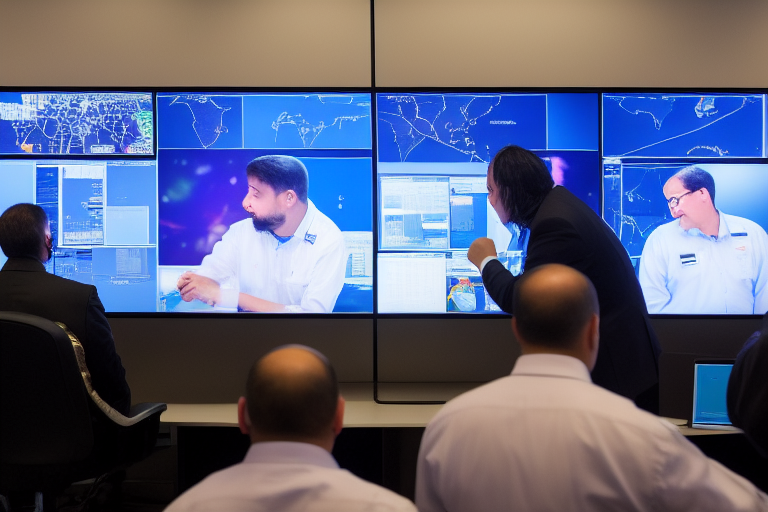
The imperative to overhaul the United States National Airspace System (NAS) has moved from a routine legislative item to an urgent national security and economic priority. Recent high-profile technological failures—including critical anomalies in the Notice to Air Missions (NOTAM) system—have exposed the fragility of an aviation infrastructure built upon patched, legacy software frameworks. Former FAA insiders and modernization experts are increasingly warning that traditional “forklift upgrades,” which require sweeping system-wide offline windows, are no longer viable in a 24/7 global economy handling tens of thousands of simultaneous flights.
Modernizing this sprawling network involves harmonizing disparate air traffic management (ATM) subsystems, flight data processing (FDP) systems, and radar integration layers. The core challenge is not merely writing new software, but systematically replacing running components of a high-availability, mission-critical ecosystem where failure carries catastrophic physical consequences. The FAA’s ongoing NextGen initiatives attempt to bridge this gap, yet structural bureaucracy and rigid procurement cycles have historically slowed the adoption of modern, agile engineering practices.
Technical Analysis & Competitive Landscape
From an enterprise systems architecture perspective, the NAS represents one of the world’s most extreme examples of a distributed, real-time legacy environment. Unlike commercial cloud infrastructures that can tolerate micro-outages or fallback loops, air traffic control demands deterministic latency, absolute fault tolerance, and backward compatibility with avionics hardware that may be decades old.
To execute upgrades without emergency ground stops, the agency must move away from monolithic mainframe-dependent architectures toward decentralized, containerized, and microservices-based fabrics. This structural shift mirrors modern enterprise cloud migrations, yet the stakes are exponentially higher. Implementing software-defined networking (SDN) and automated failover pipelines allows engineering teams to deploy incremental patches and run parallel shadow environments. In a shadow routing configuration, live air traffic data is mirrored through upgraded processing nodes while legacy systems retain primary operational control, mitigating systemic risk.
Furthermore, cybersecurity hardening is a paramount consideration. Legacy aviation networks were originally designed for isolation rather than interoperability. As the FAA integrates modern IP-based flight data exchanges and collaborative decision-making tools, the attack surface expands exponentially, necessitating strict zero-trust network architectures (ZTNA) embedded directly into the foundational transport layers.
Industry & Strategic Implications
The modernization trajectory of the NAS has far-reaching implications for commercial airlines, defense contractors, and enterprise software vendors specializing in aerospace solutions. For commercial carriers, erratic system upgrades and subsequent ground stops result in hundreds of millions of dollars in cascading delays, fuel burn inefficiencies, and passenger compensation claims. A predictable, incremental modernization roadmap provides greater operational stability and enables more precise trajectory-based operations (TBO), which optimize fuel consumption and lower carbon emissions.
For the defense and tech sectors, the FAA’s shift toward resilient, modular architectures opens multi-billion-dollar opportunities for systems integrators proficient in high-reliability computing, edge AI, and secure communications. However, winning these contracts demands a fundamental cultural pivot: vendors must demonstrate not just feature velocity, but rigorous formal verification methods and bulletproof rollback mechanisms.
“You cannot simply reboot the United States airspace like a consumer server farm. Modernization requires a surgical, parallel-architecture approach where the new system proves its absolute reliability under live operational stress long before the legacy safety net is decommissioned.”
Final Outlook
The path forward for the FAA relies on balancing aggressive technical innovation with conservative operational risk management. By embracing continuous deployment pipelines running on resilient, distributed cloud-edge hybrids, the agency can phase out aging mainframes without risking the economic paralysis of emergency ground stops. Ultimately, the successful transformation of the National Airspace System will serve as the benchmark for how critical national infrastructure can safely evolve in the twenty-first century.
⚡ Featured Enterprise & AI Infrastructure Picks
Building high-throughput AI pipelines or upgrading your workstation? Explore our curated cloud hosting, GPU workstations, and enterprise software stack.



