
⚡ Executive Summary
- Core News: At the SC26 conference, VAST Data’s Glenn Lockwood warned that the emergence of petabyte-scale solid-state drives breaks the foundational assumptions of legacy parallel file system RAID architectures.
- Key Metric/Data: As single-drive capacities scale into the petabyte range, raw rebuild times and uncorrectable read error (URE) probabilities skyrocket, rendering traditional RAID 5/6 and even standard declustered arrays obsolete.
- Strategic Impact: Enterprise data infrastructure must transition toward global data declustering and multi-dimensional parity mitigation to safeguard massive AI and high-performance computing (HPC) workloads.
Developing News & Core Details
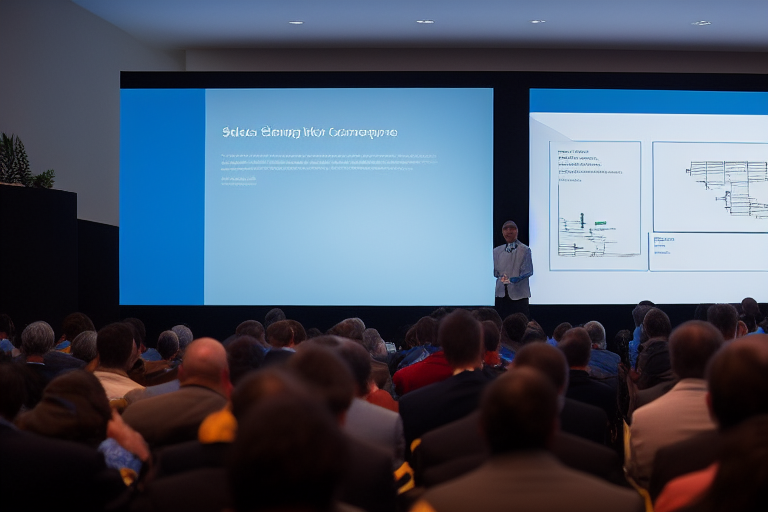
The trajectory of enterprise storage density has officially hit a structural inflection point. Speaking at the SC26 high-performance computing conference, VAST Data storage architect Glenn Lockwood delivered a stark warning to the systems engineering community: the dawn of the petabyte SSD completely outgrows the mathematical and structural limits of today’s parallel file system RAID implementations.
For decades, parallel file systems have relied on rigid RAID topologies—distributing parity blocks across localized stripes of disks to protect against single or dual-drive failures. However, as flash manufacturing shifts toward hyper-dense QLC, TLC, and emerging 3D-stacked NAND architectures, individual drive capacities are expanding from terabytes into the petabyte tier. Lockwood pointed out that when a single storage device holds a petabyte of data, the time required to reconstruct that drive upon failure—known as the rebuild window—stretches from hours to days, or even weeks, depending on network and controller bottlenecks.
During these extended rebuild windows, the remaining drives in the array are subjected to immense, continuous read-intensive strain. This drastically elevates the statistical probability of encountering an uncorrectable read error (URE), triggering catastrophic data loss across traditional localized RAID groups. VAST Data argues that legacy file systems, which segment storage into isolated silos or rigid pools, simply cannot marshal enough system-wide parallelism and spare capacity fast enough to outrun the physics of modern flash recovery.
Technical Analysis & Competitive Landscape
To fully appreciate VAST Data’s critique, one must examine the core mechanics of parallel file systems like Lustre, GPFS (IBM Spectrum Scale), and traditional clustered filesystems. These architectures were engineered in an era where hard disk drives (HDDs) or early enterprise SSDs maxed out at a few hundred gigabytes or single-digit terabytes. RAID groups were intentionally sized small to keep rebuild times manageable and localized.
Petabyte-scale SSDs shatter this paradigm. When a single drive failure equals the loss of an entire legacy rack of storage, localized RAID configurations create dangerous performance bottlenecks and vulnerability windows. VAST Data advocates for a complete architectural pivot toward global declustering—a technique that spreads data, metadata, and parity uniformly across every available drive in a massive, disaggregated cluster rather than locking them into fixed parity groups.
Furthermore, VAST emphasizes the necessity of extra parity layers. Standard dual-parity (such as RAID 6 or equivalent erasure coding schemes) is no longer sufficient when a single component failure exposes petabytes of secondary data to latent sector errors. Modern hyperscale architectures must adopt multi-layered resilience, combining localized error correction, global erasure coding, and intelligent background scrubbing to preempt drive degradation before it cascades into failure.
This technical stance positions VAST Data directly against legacy storage vendors who continue to patch aging parallel file system codebases. By designing its Disaggregated Shared Everything (DASE) architecture from the ground up to treat flash as a unified, global pool, VAST aims to capture the burgeoning AI infrastructure market, where data loss is measured in millions of dollars per hour of downtime.
Industry & Strategic Implications
The implications of this architectural shift extend far beyond niche HPC circles. As generative AI, large language model (LLM) training, and massive scientific simulations demand exabyte-scale data lakes, enterprise IT budgets are increasingly anchored by high-density flash arrays.
If legacy parallel file systems cannot reliably manage petabyte drives, enterprise buyers face a difficult choice: artificially restrict drive capacities—thereby missing out on density and power efficiency gains—or overhaul their underlying storage software stacks. This creates a massive market opening for modern software-defined storage vendors and disaggregated architectures that decouple capacity scaling from compute performance.
For investors and CIOs, hardware procurement strategies must now factor in software resilience. Buying dense petabyte SSDs without a global declustering file system is akin to putting jet engines on a glider; the underlying frame simply cannot handle the load vectors. As flash manufacturers continue to push density boundaries, software intelligence will remain the primary differentiator between reliable enterprise clouds and fragile data graveyards.
“As single storage devices swell to petabyte scale, the traditional math of RAID breaks down. Without global declustering and extra parity, the recovery window alone becomes an open invitation for catastrophic data loss.”
Final Outlook
Glenn Lockwood’s remarks at SC26 mark a symbolic turning point for enterprise storage design. The era of treating SSDs as faster drop-in replacements for HDDs within legacy RAID topologies is officially over. As petabyte-scale flash becomes the standard for AI and high-performance computing, the industry must embrace global declustering and advanced, multi-tiered parity frameworks.
Over the next few years, storage vendors that fail to adapt their parallel file systems to globalized resilience models will find themselves sidelined. The future belongs to architectures capable of absorbing massive component failures seamlessly, turning what was once a terrifying multi-day rebuild ordeal into a quiet, background administrative event.
⚡ Featured Enterprise & AI Infrastructure Picks
Building high-throughput AI pipelines or upgrading your workstation? Explore our curated cloud hosting, GPU workstations, and enterprise software stack.



