
⚡ Executive Summary
- Core News: Chinese EV maker Li Auto has stepped onto the prestigious TSMC technology platform to showcase its proprietary, custom-designed autonomous driving silicon, marking a major milestone in vertical integration.
- Key Metric/Data: The chip is engineered to process massive multi-modal transformer workloads directly on the edge, matching the compute densities required for advanced level-3 and level-4 autonomy frameworks.
- Strategic Impact: By controlling its own silicon stack, Li Auto joins the elite tier of automakers—alongside Tesla and NIO—seeking hardware-software co-optimization to reduce supply chain vulnerability and enhance real-time perception.
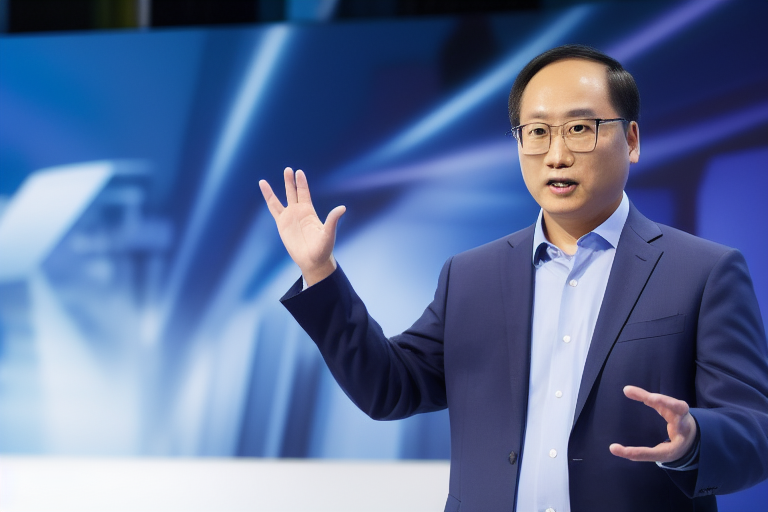
In the high-stakes theater of modern automotive engineering, validation from the world’s preeminent semiconductor foundry remains the ultimate industry stamp of approval. When Li Auto secured its place on the TSMC keynote stage to unveil its custom-built smart driving silicon, it signaled a fundamental shift in the company’s identity: it is no longer merely an assembler of premium electric vehicles, but a full-stack AI and semiconductor powerhouse. Yet, paradoxically, the entire architecture of this silicon is engineered around a singular, counterintuitive user experience goal—making the technology completely, seamlessly disappear.
Developing News & Core Details
The newly revealed custom autonomous driving chip represents years of internal research and development by Li Auto’s hardware and artificial intelligence divisions. Built upon advanced process nodes provided by TSMC, the silicon has been meticulously tailored to execute dense, low-latency neural network workloads rather than general-purpose computing tasks.
Modern smart vehicles are essentially rolling supercomputers, burdened with processing feeds from an array of high-resolution cameras, LiDAR units, ultrasonic sensors, and millimeter-wave radars. Li Auto’s proprietary processor tackles this data bottleneck head-on by integrating dedicated neural processing units (NPUs) optimized for transformer-based architecture—the same underlying math driving modern generative AI models. By moving away from off-the-shelf, generalized automotive chips, the company has eliminated redundant processing overhead, achieving superior power efficiency and lower thermal dissipation inside the vehicle’s electronic control units (ECUs).
Technical Analysis & Competitive Landscape
The decision to build custom silicon is fraught with financial and technical risks, making it an avenue pursued by only the most capitalized and ambitious automotive brands. The industry currently splits into three distinct architectural strategies:
- The Off-the-Shelf Camp: Utilizing merchant silicon providers like NVIDIA (DRIVE Orin/Thor) or Qualcomm (Snapdragon Ride) for rapid time-to-market.
- The Full-Stack Vertical Integration Camp: Pioneers like Tesla with its Full Self-Driving (FSD) hardware, and now Li Auto, which design proprietary ASICs (Application-Specific Integrated Circuits) to maximize performance-per-watt and algorithmic synergy.
- The Hybrid Approach: Utilizing modular co-processors paired with centralized domain controllers.
Li Auto’s custom silicon lands firmly in the second camp. By co-designing the hardware instruction set alongside its proprietary end-to-end neural network driving algorithms, Li Auto can squeeze maximum efficiency out of every square millimeter of silicon. This tight coupling reduces latency between perception and actuation—a critical metric where milliseconds can mean the difference between a smooth lane change and an emergency intervention.
“The paradox of advanced automotive AI is that the pinnacle of engineering achievement is absolute user oblivion; you know the technology has triumphed only when the driver forgets it is even running.”
Industry & Strategic Implications
For enterprise IT strategists and automotive supply chain executives, Li Auto’s silicon milestone underscores a broader macroeconomic trend: software-defined vehicles are rapidly becoming hardware-defined ecosystems. Relying on third-party silicon leaves automakers vulnerable to geopolitical supply chain shocks, margin compression, and feature lock-in imposed by chip vendors.
By owning its silicon roadmap, Li Auto gains architectural agility. If an unexpected breakthrough occurs in spatial-temporal neural networks, the company can theoretically adapt its hardware pipelines or future tape-outs to support it natively, unconstrained by the product roadmaps of external semiconductor giants. Furthermore, this move elevates Li Auto’s valuation narrative from a traditional manufacturing enterprise to a high-margin technology platform capable of monetizing continuous over-the-air AI upgrades.
Final Outlook
As Li Auto transitions from silicon tape-out to mass production and vehicle integration, the true test will not be found in benchmark datasheets or TSMC presentation slides, but on the congested, chaotic asphalt of real-world highways and city streets. The philosophy that ‘the best smart driving chip is one you completely forget’ serves as a humbling reminder to engineers intoxicated by raw compute metrics. Ultimately, compute is merely a means to an end. By weaponizing advanced semiconductor manufacturing to deliver radical simplicity, Li Auto is setting a new benchmark for what drivers should expect from human-machine collaboration in the age of autonomous mobility.
⚡ Featured Enterprise & AI Infrastructure Picks
Building high-throughput AI pipelines or upgrading your workstation? Explore our curated cloud hosting, GPU workstations, and enterprise software stack.



