
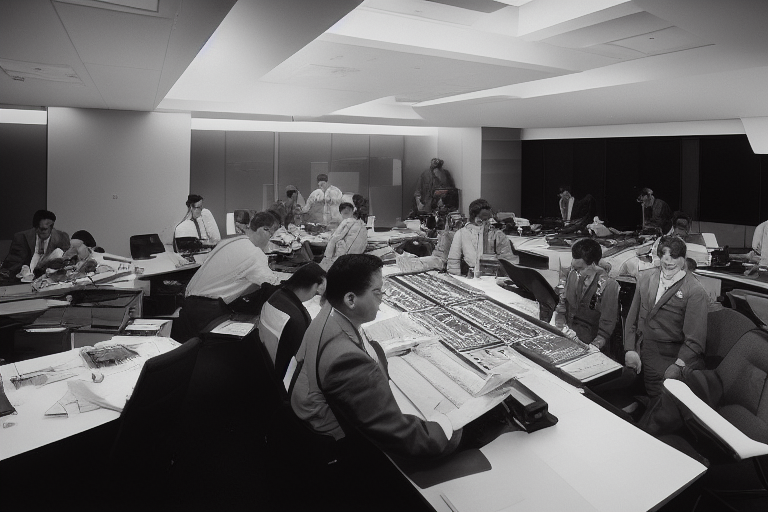
⚡ Executive Summary
- Core News: NASA is actively refining its Artemis-era lunar exploration architecture, balancing ambitious timeline milestones with rigorous internal and external technical debates over orbital mechanics and hardware integration.
- Key Metric/Data: The multi-billion-dollar Space Launch System (SLS) and commercial human landing system (HLS) variants form a complex critical path requiring unprecedented synchronized milestones across government and private contractors.
- Strategic Impact: The shift toward sustainable lunar infrastructure alters the risk profile for private aerospace suppliers, forcing a heavier reliance on in-situ resource utilization (ISRU) and modular commercial cargo delivery.
Developing News & Core Details
NASA’s blueprint for returning humans to the lunar surface and establishing a sustained presence has entered a critical phase of design iteration. While public milestones often dominate agency press releases, the engineering reality behind the scenes involves intense technical trade-offs regarding orbital staging, propellant depots, and surface habitat power systems. Agency leadership and contractor teams are continually reassessing trajectory designs—particularly between Lunar Orbit Rendezvous (LOR) profiles utilizing the Lunar Gateway and direct-to-surface architectures.
Central to these developments are the iterative refinements of the Space Launch System (SLS) block upgrades, Orion capsule life support systems, and the human landing systems (HLS) being developed by commercial partners such as SpaceX and Blue Origin. These platforms are not merely transport vehicles; they represent an interdependent ecosystem where a slip in one subsystem cascades across the entire timeline. As program managers evaluate flight hardware readiness, technical discussions increasingly center on thermal management in permanently shadowed regions (PSRs) of the lunar south pole and radiation shielding for long-duration crew stays.
Technical Analysis & Competitive Landscape
From an architectural standpoint, NASA’s modern lunar campaign represents a hybrid model: combining the rigorous safety and oversight of traditional government aerospace programs with the cost-efficiency and rapid iteration cycles of commercial New Space entities. However, this hybrid approach introduces friction. Traditional cost-plus contracting mindsets occasionally clash with commercial fixed-price milestones, creating friction points in hardware delivery and safety certification.
The technical challenges of the lunar south pole are profound. Unlike the equatorial Apollo landing sites, the south pole offers volatile resources—specifically water ice trapped in craters—at the expense of continuous solar illumination and straightforward line-of-sight communication with Earth. This forces mission architects to incorporate advanced autonomous navigation, nuclear fission surface power studies (such as the Kilopower project), and relay satellite constellations into baseline mission planning. Competitively, aerospace prime contractors are pivoting their R&D toward autonomous resource extraction, precision landing lidar, and cryogenic fluid management—technologies that will dictate market leadership in cis-lunar space over the next three decades.
Industry & Strategic Implications
The broader implications of NASA’s evolving lunar blueprint extend far beyond government science budgets. By anchoring a permanent economy around the Moon, the agency is effectively acting as the anchor tenant for a nascent cis-lunar industrial complex. Private venture capital and institutional investors are closely monitoring how NASA transitions from a purchaser of bespoke hardware to a buyer of commercial services, mirroring the successful playbook established by the Commercial Orbital Transportation Services (COTS) program for low-Earth orbit cargo.
Furthermore, international geopolitics plays an undeniable role. The race for premier lunar real estate—specifically high-ground locations with persistent illumination and proximity to water ice—has transformed lunar exploration into a strategic competition. Consequently, NASA’s architectural decisions regarding interoperability standards, communication protocols, and safety zones are setting de facto global standards for space commerce and exploration ethics.
“We tend to have a lot of technical discussion and debate. That point will continue to be debated.”
Final Outlook
As NASA’s lunar strategy continues to take shape, the coming years will test the agency’s ability to maintain programmatic discipline amid shifting political and technical landscapes. The ultimate success of the program will not be measured solely by planting a flag on the lunar surface, but by whether the resulting infrastructure can support a self-sustaining commercial ecosystem. If engineering teams can successfully resolve lingering debates over propellant transfer, surface power, and life support redundancy, the foundational architecture laid today could permanently alter humanity’s footprint in the solar system.
🚀 Custom Web Hosting & AI Automation Solutions
Need enterprise-grade web hosting, custom WordPress architecture, or automated workflow deployment for your business?



