
⚡ Executive Summary
- Core News: The national finals and award ceremony of the 2026 HarmonyOS Collegiate Innovation Competition concluded at Nanjing University, following its official inclusion in the national higher education discipline competition ranking.
- Key Metric/Data: Thousands of engineering students nationwide participated, shifting academic focus toward deeply integrated, multi-device distributed operating system applications rather than superficial wrappers.
- Strategic Impact: Huawei is systematically institutionalizing talent acquisition and curriculum integration to secure a long-term, native developer base for HarmonyOS Next.
Developing News & Core Details
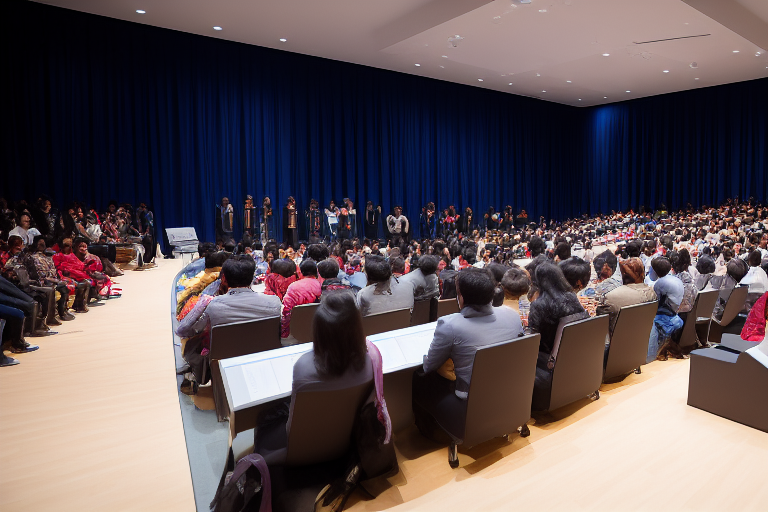
Last weekend, the grand finale of the 2026 HarmonyOS Collegiate Innovation Competition took place at Nanjing University, drawing nationwide attention from academia and the tech industry alike. Huawei Executive Director and Terminal BG CEO Richard Yu (He Gang) attended the ceremony to address the finalists and present awards, underscoring the strategic weight Huawei places on university ecosystems. Having recently secured a coveted spot on China’s official list of university discipline competitions, this event has evolved from a corporate outreach initiative into a recognized benchmark of technical achievement in higher education.
The competition challenged engineering students to move past traditional single-device mobile software paradigms. Instead, projects heavily emphasized HarmonyOS’s distributed architecture—utilizing cross-device task migration, unified distributed data management, and microkernel-level security features. The winning entries showcased practical ingenuity, targeting everyday inefficiencies through seamless collaboration between smartphones, tablets, smartwatches, and IoT endpoints.
Technical Analysis & Competitive Landscape
To understand the gravity of the HarmonyOS collegiate competitions, one must examine the fundamental challenge facing any emerging operating system: the cold-start problem of ecosystem building. Historically, operating system dominance has relied not purely on kernel performance or sleek user interfaces, but on the breadth and depth of its developer ecosystem. By embedding HarmonyOS into university curricula and high-profile competitions, Huawei is short-circuiting the standard adoption curve.
From an architectural standpoint, HarmonyOS Next represents a clean break from Android lineages, abandoning AOSP compatibility to run exclusively on native ArkTS and the Ark compiler. This technical purity demands a new generation of developers who understand distributed state management and declarative UI frameworks natively, rather than simply porting legacy Java or Kotlin code. The collegiate competition acts as an elite incubator, filtering and training developers who think in terms of “Super Devices” rather than isolated screen sizes.
Industry & Strategic Implications
The transition of HarmonyOS from an emergency contingency plan into a dominant commercial OS in China carries profound implications for enterprise IT, software vendors, and global tech competition. As millions of devices transition to native HarmonyOS builds, the corporate demand for developers proficient in ArkTS and distributed system orchestration is skyrocketing. By cultivating talent directly at the undergraduate level, Huawei ensures that graduating engineers enter the workforce as ready-made evangelists and architects of the HarmonyOS enterprise ecosystem.
Furthermore, this grassroots approach shifts the narrative from top-down corporate mandates to bottom-up utility. When university students focus on building applications that are genuinely “useful”—solving localized problems in healthcare, smart manufacturing, and daily productivity—they validate the practical utility of distributed operating systems to a skeptical broader market.
“The battle for operating system supremacy is ultimately a battle for the minds of the next generation of software architects. By institutionalizing innovation at the university level, Huawei is securing the human capital required for long-term ecosystem survival.”
Final Outlook
The 2026 HarmonyOS Collegiate Innovation Competition marks a maturation point for China’s indigenous software engineering pipeline. As HarmonyOS continues to displace legacy operating systems across consumer and industrial touchpoints in the region, the students competing at Nanjing University today will form the technical backbone of tomorrow’s digital infrastructure. For competitors and industry watchers alike, the message is clear: the future of application development is distributed, native, and deeply rooted in early academic engagement.
🚀 Custom Web Hosting & AI Automation Solutions
Need enterprise-grade web hosting, custom WordPress architecture, or automated workflow deployment for your business?



