
⚡ Executive Summary
- Core News: UN diplomatic negotiations in Geneva regarding the regulation of lethal autonomous weapons systems (“killer robots”) concluded without binding frameworks, resulting only in a vague consensus to “start discussing options.”
- Key Metric/Data: The International Committee of the Red Cross (ICRC) and global leaders demanded legally binding restrictions within a 12-month window, a timeline utterly bypassed by the diplomatic stalemate.
- Strategic Impact: The regulatory vacuum accelerates the dual-use AI arms race, moving military-grade edge computing and targeting algorithms forward without international guardrails.
Developing News & Core Details
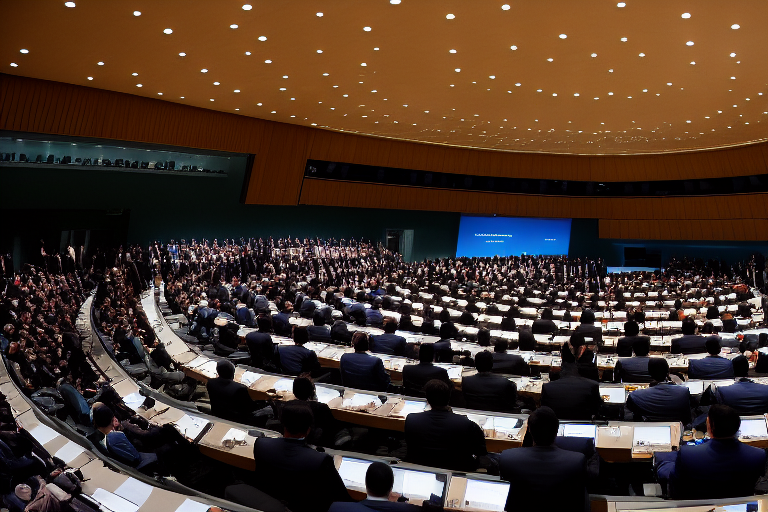
The recent diplomatic sessions in Geneva hosted by the United Nations laid bare a profound disconnect between humanitarian urgency and geopolitical self-interest. Despite impassioned pleas from the International Committee of the Red Cross—the historic guardian of the Geneva Conventions—alongside urgent warnings from the UN Secretary-General, state delegations failed to forge a coherent path toward legally binding restrictions on lethal autonomous weapons systems (LAWS). Instead of establishing actionable boundaries for artificial intelligence on the battlefield, the week-long summit dissolved into procedural compromises, leaving participants with nothing more than an agreement to “start discussing options.”
This inability to regulate autonomous warfare arrives at a critical technological inflection point. Modern combat systems increasingly rely on decentralized edge computing, advanced computer vision, and machine learning models capable of identifying, tracking, and engaging targets without direct human intervention. While international humanitarian organizations argue that delegating lethal decisions to algorithms strips away human empathy, proportionality, and accountability, major military powers view these capabilities as vital to maintaining strategic deterrence in high-speed, multi-domain conflicts where human reaction times are dangerously obsolete.
Technical Analysis & Competitive Landscape
From an architectural standpoint, the debate over killer robots intersects directly with the broader commercial and defense convergence of artificial intelligence. Modern autonomous weapons do not operate on static if-then programming; they leverage deep neural networks trained on vast synthetic and real-world datasets to process complex battlefield telemetry. This creates distinct technical layers:
- Sensor Fusion & Edge Processing: Military-grade hardware relies on radiation-hardened microprocessors executing low-latency inference at the tactical edge, operating independently of satellite communications or cloud infrastructure.
- Autonomous Target Recognition (ATR): Advanced computer vision models classify personnel and materiel, utilizing probabilistic scoring to determine threat levels under chaotic environmental conditions.
- Command-and-Control (C2) Decoupling: The architectural shift from “human-in-the-loop” (where a human explicitly authorizes every strike) to “human-on-the-loop” (where a human monitors automated systems and can intervene) introduces unprecedented latency challenges and systemic vulnerabilities.
In the global competitive landscape, major defense contractors and state-backed technology labs are heavily incentivized to refine these architectures. Because international law enforcement mechanisms are toothless in the absence of ratified treaties, nations leading the AI race view unilateral disarmament or self-imposed regulatory caps as an unacceptable tactical vulnerability. Consequently, the commercial development of dual-use perception algorithms flows seamlessly into classified military applications.
Industry & Strategic Implications
The failure of the UN to regulate LAWS carries profound implications for enterprise technology, venture capital investment, and global stability. As the boundaries between commercial enterprise AI and defense technology continue to blur, venture-backed startups specializing in computer vision, robotics, and edge computing face complex ethical and compliance landscapes. Investors must navigate shifting regulatory frameworks, export controls, and reputational risks associated with dual-use technologies.
Furthermore, the absence of international norms creates a dangerous security dilemma. Without transparent verification protocols or arms control agreements, nations will likely engage in a stealthy, high-stakes proliferation race. The risk of algorithmic escalation—where automated defense systems interact at machine speeds, triggering unintended kinetic conflicts—grows exponentially larger with every diplomatic impasse.
“The regulatory paralysis at the United Nations guarantees that the battlefield of the near future will be governed not by international humanitarian law, but by the raw velocity of machine learning innovation and tactical expediency.”
Final Outlook
The Geneva stalemate signals that formal international treaties governing autonomous weapons remain a distant and improbable prospect. As technological capabilities outpace diplomatic consensus, the burden of ethical oversight shifts downward to private-sector defense contractors, internal corporate governance boards, and national procurement agencies. Technology leaders and engineers working on foundational AI architectures must confront the reality that their innovations will inevitably be weaponized in the absence of global guardrails. Ultimately, until major geopolitical actors recognize mutual self-interest in limiting autonomous warfare, the international community will remain reactive, struggling to govern technologies that evolve far faster than the institutions designed to oversee them.
⚡ Featured Enterprise & AI Infrastructure Picks
Building high-throughput AI pipelines or upgrading your workstation? Explore our curated cloud hosting, GPU workstations, and enterprise software stack.



