
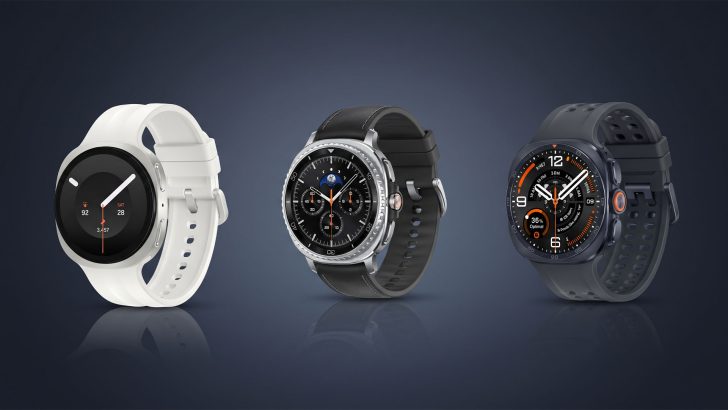
⚡ Executive Summary
- Core News: Samsung has activated aggressive pricing for its Galaxy Watch ecosystem on Amazon ahead of Black Friday 2026, with the Galaxy Watch 8 dropping 30% to $349.99 and the newer Galaxy Watch 9 priced at $373.99.
- Key Metric/Data: The Galaxy Watch Ultra2 remains a premium flagship at $699.99, while the entry-level Watch 8 offers substantial value retention. Bundle options are available for the Ultra2, suggesting a push toward ecosystem integration.
- Strategic Impact: This pricing tiering signals Samsung’s intent to defend market share against Apple and Google by maximizing hardware margins on older SKUs while maintaining premium allure for rugged models like the Ultra2.
Developing News & Core Details
In a significant move that underscores the cyclical nature of consumer electronics, Samsung Electronics has officially rolled out substantial discounts on its Galaxy Watch lineup via Amazon for Black Friday 2026. The headline-grabbing offer involves the Galaxy Watch 8, which is now available at $349.99—a full 30% reduction from its original list price of $499.99. This aggressive markdown applies to a device that has already served as a mid-tier option in Samsung’s hierarchy, effectively clearing inventory while retaining high perceived value for consumers seeking robust health tracking without the Ultra-series premium.
Simultaneously, the newer Galaxy Watch 9 is positioned at $373.99, creating an intriguing price gap that suggests a strategic recalibration of the product ladder. The inclusion of the Galaxy Watch Ultra2 in stock at $699.99 with bundle options highlights Samsung’s continued commitment to the rugged, outdoor-focused segment. These bundles likely include accessories or extended services, aiming to increase average order value (AOV) during the high-traffic holiday shopping period.
The technical specifications remain consistent with Samsung’s flagship standards: sapphire crystal Super AMOLED displays ensure durability and visual fidelity, while dual-frequency GPS provides precise location tracking for athletes. The BioActive sensor suite, a cornerstone of Samsung’s health strategy, continues to offer comprehensive metrics including heart rate variability (HRV), body composition analysis, and sleep coaching.
Technical Analysis & Competitive Landscape
The pricing architecture revealed by this Black Friday sale offers critical insights into the current state of the wearable market. The $30 discount on the Galaxy Watch 8 is not merely a clearance tactic; it reflects a maturing market where hardware differentiation has plateaued, and software ecosystems are becoming the primary battleground. By slashing prices on the previous generation (or mid-tier) model, Samsung effectively lowers the barrier to entry for users who may have been waiting for a “perfect” price point before committing.
Competitively, this pricing strategy directly challenges Apple’s Watch SE and Series 9/10 segments. Apple typically maintains tighter margins on older models, whereas Samsung’s willingness to drop prices by nearly $150 demonstrates a more aggressive approach to volume-driven revenue in the Q4 holiday quarter. The Galaxy Watch Ultra2, priced at $699.99, competes with the ruggedized Apple Watch Ultra and Google Pixel Watch 3 (if available), targeting outdoor enthusiasts who prioritize durability over software ecosystem lock-in.
Technologically, the shift to dual-frequency GPS across the lineup is a significant hardware upgrade that addresses one of the industry’s long-standing pain points: signal accuracy in dense urban environments or deep forests. This feature, combined with sapphire crystal glass, positions Samsung’s mid-tier devices as near-flagship in terms of build quality, justifying their price point even after discounts.
Industry & Strategic Implications
From an enterprise and consumer IT perspective, the availability of these watches at reduced prices during Black Friday 2026 could accelerate adoption rates for health monitoring in corporate wellness programs. The BioActive sensor’s ability to track stress levels (via HRV) and sleep quality makes it a viable tool for employee well-being initiatives, especially as companies look to integrate wearable data into their digital health platforms.
For investors and analysts, the pricing of the Galaxy Watch 9 at $373.99—only slightly higher than the discounted Watch 8—suggests that Samsung may be preparing a refresh cycle or anticipating supply chain constraints that could drive up component costs in early 2027. The “Ultra” series continues to serve as the halo product, maintaining high margins while the standard and mid-tier models absorb volume.
Furthermore, the bundling strategy for the Ultra2 indicates a shift toward ecosystem lock-in. By offering bundles, Samsung encourages users to purchase compatible accessories (bands, chargers) or services (Samsung Health Premium), thereby increasing customer lifetime value beyond the initial hardware sale.
“The aggressive pricing on the Galaxy Watch 8 and the strategic bundling of the Ultra2 suggest that Samsung is prioritizing market share consolidation over pure margin maximization in the short term, leveraging Black Friday as a critical inflection point to defend against Apple’s ecosystem dominance.”
Final Outlook
As we look toward 2027 and beyond, the Galaxy Watch lineup’s pricing trajectory will likely be influenced by advancements in on-device AI. If Samsung integrates more sophisticated local processing capabilities into future models—similar to Apple’s “Apple Intelligence” push—the hardware requirements may increase, potentially narrowing the price gap between tiers.
For consumers, Black Friday 2026 represents an optimal buying window for those interested in the Galaxy Watch ecosystem. The $349.99 price point for the Watch 8 makes it one of the most affordable premium smartwatches on the market today, offering a compelling alternative to iOS-exclusive devices for Android users.
In conclusion, Samsung’s Black Friday 2026 strategy is a masterclass in tiered pricing and inventory management. By balancing deep discounts on older models with stable pricing on new flagships, Samsung ensures it captures both price-sensitive buyers and premium enthusiasts, solidifying its position as a formidable competitor in the global smartwatch arena.



