
⚡ Executive Summary
- Core News: Amazon’s Black Friday 2026 sale has slashed the price of HP’s OmniBook 3 by 33%, bringing this ARM-based Windows laptop down from $599.99 to just $399.
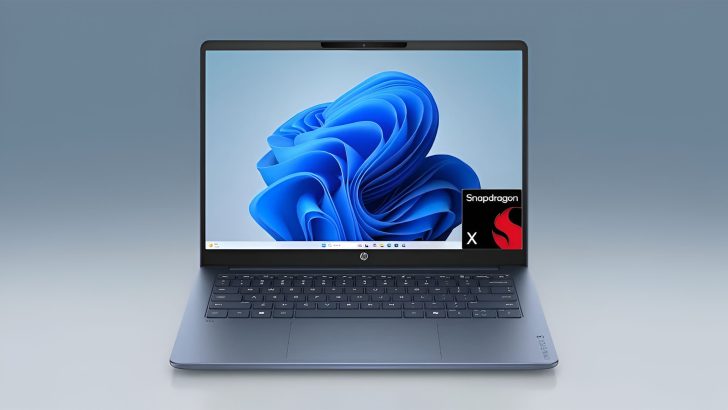
- Key Metric/Data: The device features a 14-inch 2K OLED display (1,920 x 1,200), an 8-core Qualcomm Snapdragon SoC, and a 60WHr battery cell capable of multi-hour usage.
- Strategic Impact: This pricing disrupts the sub-$500 laptop market by proving that premium display technologies like OLED can coexist with ARM efficiency at an entry-level price point, challenging Intel’s traditional dominance in budget Windows devices.
Developing News & Core Details
In a significant shift for the consumer electronics landscape, Amazon’s Black Friday 2026 sale has made high-end specifications accessible to a broader audience through HP’s OmniBook 3. Originally priced at $599.99, the laptop now retails for just $399—a reduction of 33 percent that transforms it from a mid-range contender into an undeniable budget king. This specific configuration is notable not merely for its cost-cutting measures but for its refusal to compromise on display technology or processing architecture.
At the center of this configuration lies Qualcomm’s Snapdragon X series SoC, marking HP’s continued pivot toward ARM-based Windows devices. While ARM laptops have historically struggled with software compatibility and gaming performance, the Snapdragon X architecture has matured significantly, offering near-Intel performance for productivity tasks while delivering exceptional battery life. Paired with a genuine 14-inch 2K OLED panel running at a 1,920 x 1,200 resolution, this device addresses two of the most common complaints in the budget laptop segment: poor screen quality and short battery runtime.
The inclusion of a 60WHr cell is particularly noteworthy. In the sub-$500 category, manufacturers often skimp on battery capacity to hit price targets, resulting in devices that barely last through a workday. The OmniBook 3’s substantial power cell ensures that users can rely on all-day productivity without constant tethering to a charger, effectively bridging the gap between premium ultrabooks and entry-level netbooks.
Technical Analysis & Competitive Landscape
The technical architecture of the HP OmniBook 3 represents a strategic evolution in how Windows laptops are engineered. By utilizing an 8-core Snapdragon SoC, HP is leveraging the efficiency cores of ARM processors to handle background tasks and foreground applications with minimal power draw. This contrasts sharply with traditional x86 architectures found in Intel Core i5 or AMD Ryzen 5 chips, which often require higher wattage to achieve similar performance levels.
From a display standpoint, the shift to OLED is transformative for this price bracket. Traditional LCD panels in budget laptops suffer from poor color accuracy, low contrast ratios, and significant backlight bleed. The OmniBook 3’s OLED panel offers infinite contrast, vibrant colors, and deep blacks that are typically reserved for devices costing twice as much. This suggests a trend where manufacturers are prioritizing visual fidelity over raw clock speeds or gaming capabilities in the entry-level market.
Competitively, this launch places HP in direct contention with legacy players like Dell’s Inspiron line and Lenovo’s IdeaPad series. Historically, these brands have dominated the sub-$500 space by offering x86 processors that support a wider range of legacy software. However, as Microsoft pushes Windows 11 toward ARM-native optimization, the compatibility gap is narrowing. The OmniBook 3 challenges Intel to innovate further in battery efficiency and display quality, as they can no longer rely solely on raw CPU performance to justify their premium pricing.
Furthermore, the presence of a genuine OLED screen at this price point signals that supply chains for high-quality displays have become more robust. Previously, OLEDs were often found only in flagship devices like the MacBook Pro or Surface Duo. Their integration into a $399 laptop indicates a maturing market where economies of scale are driving down costs without sacrificing quality.
Industry & Strategic Implications
The broader implications of this release extend beyond mere consumer savings; it signals a structural shift in the PC industry. The “Affordable Laptop” category is no longer defined by bare-bones specifications but by intelligent architecture that maximizes value per dollar. For enterprise IT departments, this means they can deploy devices with modern security features (inherent in ARM chips) and long battery life for field workers or remote employees without exceeding tight budgets.
For investors and tech analysts, the success of the HP OmniBook 3 at $399 could indicate a new baseline for the Windows laptop market. If this price point becomes sustainable with OLED displays, it forces competitors to either lower their prices or enhance their value propositions significantly. This could lead to a consolidation in the budget PC sector, where only those who can optimize ARM efficiency and secure high-quality supply chains survive.
Additionally, the 2K resolution on an OLED panel offers a compelling visual experience that rivals higher-end models. The 14-inch form factor ensures portability, making it ideal for students, digital nomads, and travelers who prioritize screen real estate and battery life over heavy gaming or video editing workloads.
“The HP OmniBook 3 at $399 proves that the era of ‘cheap but ugly’ Windows laptops is ending. With a genuine OLED display and Snapdragon X efficiency, this device sets a new benchmark for what entry-level hardware can achieve in terms of user experience and longevity.”
Final Outlook
As we move deeper into the holiday shopping season, the HP OmniBook 3 stands out as a rare find that combines modern ARM battery efficiency with a genuine OLED screen at an unheard-of price. The Black Friday 2026 sale has effectively democratized access to premium display technology and efficient computing architecture.
Looking ahead, we anticipate that this pricing strategy will influence the rest of the year’s laptop releases. Manufacturers may begin to incorporate similar ARM-based configurations into their standard product lines, moving away from purely x86-centric designs in the budget segment. For consumers, this presents an opportunity to upgrade to a modern, efficient device without breaking the bank.
In conclusion, if you are seeking a Windows laptop under $400 that pairs modern ARM battery efficiency with a genuine OLED screen, the HP OmniBook 3 is now your best option. With its vibrant display, robust battery life, and powerful Snapdragon SoC, it delivers a premium experience at an entry-level price point.



