
⚡ Executive Summary
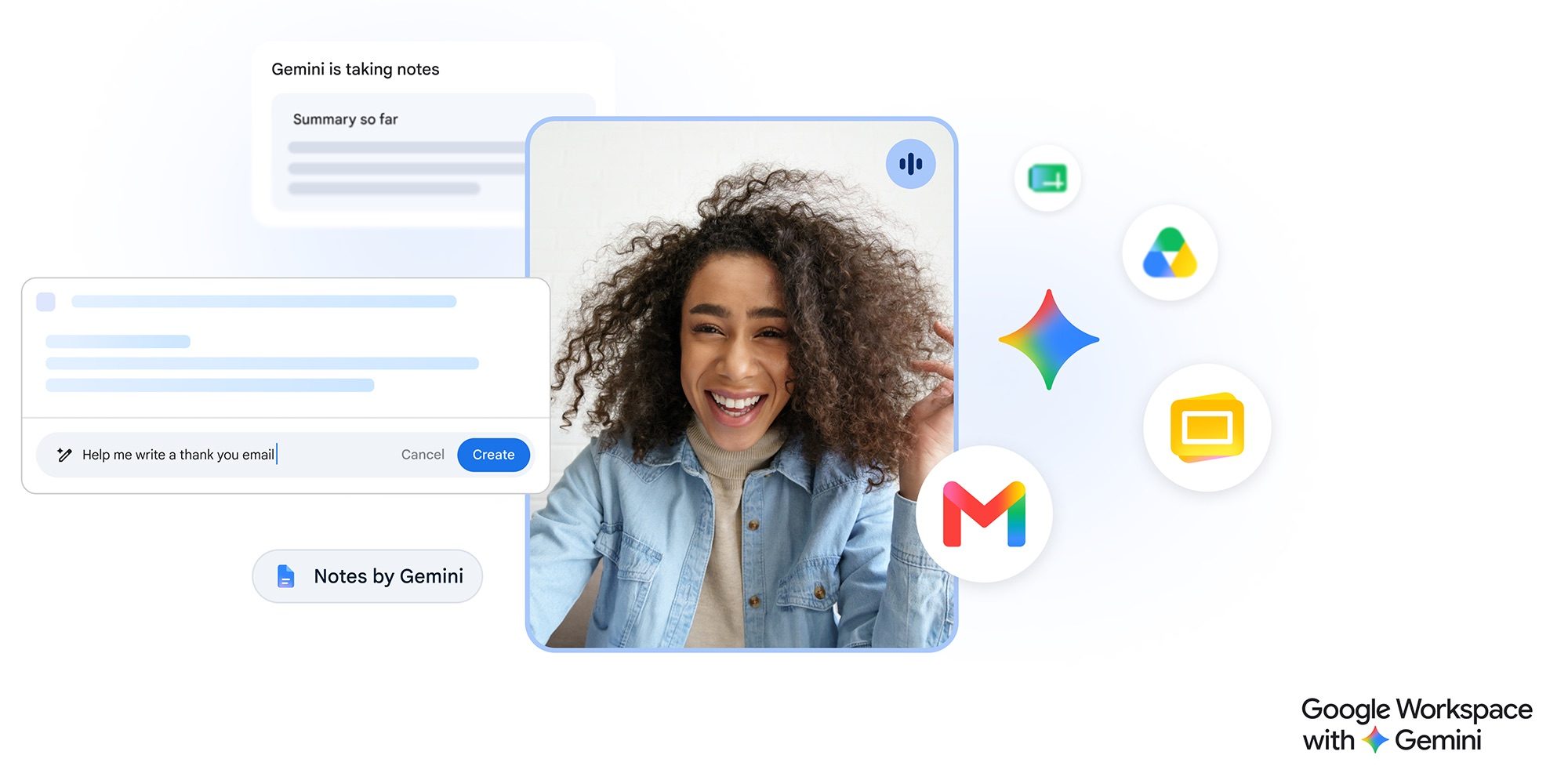
- Core News: Google has officially integrated the full suite of Gemini AI features directly into Google Workspace, targeting small and micro-businesses with a promotional offer of 20% off for the first six months across Business Starter, Standard, and Plus plans.
- Key Metric/Data: The promotion provides a significant cost reduction (up to $18/month savings on Standard plans) while unlocking advanced capabilities like ‘Magic Write’ in Docs, ‘Magic Present’ in Slides, and integrated AI chat for Gmail and Calendar.
- Strategic Impact: This marks the transition of Google Workspace from a productivity suite to an AI-native operating environment. It forces competitors like Microsoft 365 and Slack to accelerate their own generative AI integrations to prevent user churn in the SMB sector, where price sensitivity is high.
Developing News & Core Details
The latest iteration of Google Workspace represents a definitive pivot from offering “AI-ready” infrastructure to delivering a fully realized “AI-native” experience. The specific catalyst for this announcement is the deep integration of Google’s Gemini Large Language Model (LLM) directly into the core productivity applications—Google Docs, Sheets, Slides, Gmail, and Calendar. Unlike previous iterations where AI was an add-on or a separate sidebar tool, the new architecture embeds generative capabilities natively into the user interface.
For small businesses, this integration is not merely a feature drop but a structural change in how work gets done. The promotional offer of 20% off for the first six months serves as both an acquisition incentive and a retention strategy. By lowering the barrier to entry for Business Starter, Standard, and Plus plans, Google aims to capture market share from competitors who may be slower to adapt or more expensive at scale.
The technical implementation involves significant backend adjustments. The “Magic Write” feature in Docs, for instance, goes beyond simple grammar checking; it utilizes Gemini’s context-awareness to suggest entire paragraphs based on the document’s tone and structure. Similarly, “Magic Present” in Slides automates slide creation from raw text inputs, drastically reducing the time-to-value for new hires or small teams managing rapid content production.
Technical Analysis & Competitive Landscape
From a technical architecture perspective, embedding Gemini into Workspace signifies Google’s confidence in its model’s latency and context retention. The system now processes user interactions with a “long-term memory” capability, allowing the AI to reference previous emails or documents within the same workspace session. This is achieved through optimized vector databases that index user data securely within Google’s cloud infrastructure, ensuring that generative responses are both relevant and private.
Competitively, this move places immense pressure on Microsoft 365. While Microsoft has aggressively integrated Copilot into its suite, the sheer ubiquity of Google Workspace in the SMB sector—particularly among startups and remote-first companies—makes it a lucrative battleground. A 20% discount effectively narrows the price gap between Google’s Business Starter plan and Microsoft’s entry-level tiers, potentially swaying cost-conscious decision-makers.
Furthermore, the integration of AI into Gmail and Calendar represents a shift from reactive productivity to proactive management. The ability for Gemini to summarize long email threads or draft responses automatically reduces cognitive load, allowing small business owners to focus on high-value tasks rather than administrative overhead. This “cognitive offloading” is becoming a key differentiator in the enterprise software market.
Industry & Strategic Implications
The broader implication of this announcement is the democratization of enterprise-grade AI for small businesses. Historically, advanced AI features were reserved for large enterprises with dedicated IT budgets. By bundling these capabilities into standard Workspace plans and offering a substantial discount, Google lowers the total cost of ownership (TCO) for SMBs, effectively giving them access to tools previously available only to Fortune 500 companies.
For investors and industry analysts, this signals that the “AI winter” for productivity software is over. The market has moved past the hype phase into a utility phase, where AI features are expected as standard rather than optional. This could lead to a consolidation of smaller SaaS vendors who fail to integrate robust AI capabilities, as users migrate toward platforms like Google Workspace that offer an all-in-one, intelligent ecosystem.
Additionally, the focus on small businesses suggests that Google sees this segment as its primary growth engine for the next decade. As remote work continues and digital nomadism grows, the need for portable, intelligent productivity tools becomes critical. Google’s strategy of combining hardware (Pixel/Chromebook) with software (Workspace + AI) creates a sticky ecosystem that is difficult for competitors to displace.
“The integration of Gemini into Workspace transforms it from a document repository into an active co-pilot, fundamentally altering the economics of small business productivity by reducing labor hours and accelerating content creation.”
Final Outlook
Looking ahead, the 20% discount is likely a temporary measure to drive adoption, but the long-term value proposition lies in the continuous evolution of Gemini’s capabilities within Workspace. We expect Google to further refine its context-awareness and multi-modal processing (text-to-image, text-to-video) directly inside Docs and Slides, creating a seamless creative workflow.
Competitors will undoubtedly respond with their own aggressive pricing or feature bundles, potentially sparking a price war in the SMB sector. However, Google’s advantage lies in its massive data moat; the more users interact with Gemini within Workspace, the smarter the model becomes for that specific user base, creating a self-reinforcing loop of utility and retention.
In conclusion, this announcement marks a pivotal moment where AI ceases to be an experimental add-on and becomes the core engine of modern business operations. For small businesses, it offers a rare opportunity to upgrade their tech stack with enterprise-grade intelligence at a fraction of the cost, setting a new benchmark for what productivity software should look like in 2025 and beyond.



