
⚡ Executive Summary
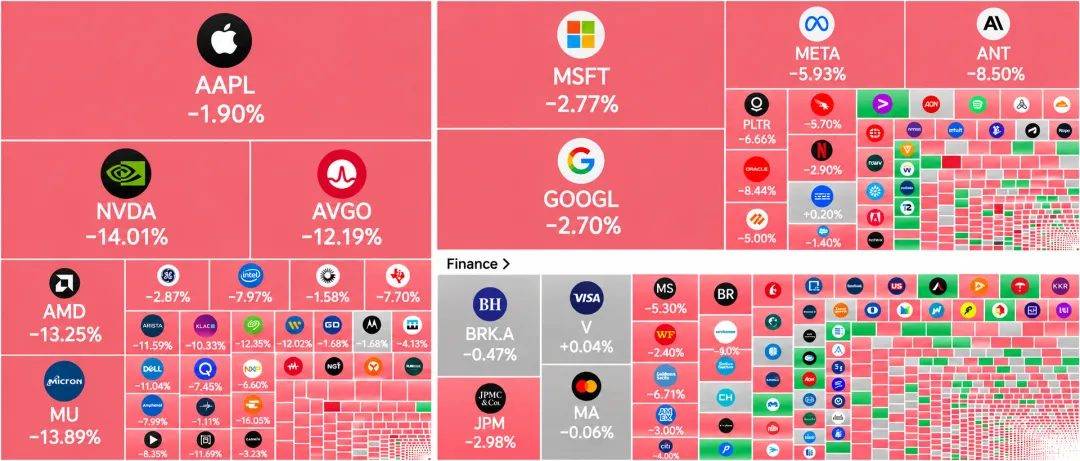
- Core News: US equities experienced a sharp, overnight correction, with Nvidia (NVDA) leading the decline as its stock price tumbled significantly following a period of extreme volatility and elevated expectations.
- Key Metric/Data: The S&P 500 and Nasdaq Composite faced downward pressure, while Nvidia’s market cap saw a substantial reduction in value, signaling investor fatigue regarding the current AI growth narrative.
- Strategic Impact: This event marks a critical inflection point where the ‘AI boom’ may be transitioning into a ‘valuation correction,’ forcing enterprise buyers and hardware vendors to reassess the immediate ROI of generative AI infrastructure.
Developing News & Core Details
The recent plunge in US technology stocks, anchored by a dramatic drop in Nvidia’s share price, represents more than just a routine market fluctuation. The event unfolded rapidly, catching even seasoned institutional investors off guard as the semiconductor giant—long viewed as the undisputed king of the artificial intelligence revolution—saw its valuation compressed sharply. This volatility was not isolated; it rippled through the broader Nasdaq Composite and S&P 500, dragging down mega-cap tech names that had previously enjoyed a near-monopoly on AI growth stories.
At the heart of this turbulence lies Nvidia’s recent performance trajectory. After months of soaring prices driven by insatiable demand for its H100 and upcoming Blackwell architecture chips, the stock entered a phase of extreme sensitivity to earnings guidance and forward-looking commentary. Investors, who had priced in near-perfect execution and continued hyper-growth, reacted aggressively to any hint of supply constraints or slowing demand velocity. The core news is clear: the market’s appetite for Nvidia’s current valuation has evaporated overnight, suggesting that the gap between AI hype and realized revenue growth may be wider than previously acknowledged.
Technical Analysis & Competitive Landscape
To understand the depth of this correction, one must look beyond the headline numbers to the underlying technical architecture of the market. Nvidia’s dominance is built on its CUDA software ecosystem, which creates a high barrier to entry for competitors like AMD and Intel. However, the recent volatility suggests that this moat may be under stress as hyperscalers (such as Microsoft, Google, and Meta) begin to diversify their supply chains or develop proprietary silicon to reduce dependency on Nvidia’s hardware.
Technically, the AI boom has been fueled by a specific set of constraints: memory bandwidth limitations in GPUs and the sheer cost of deploying clusters. As enterprises move from proof-of-concept pilots to production-scale deployments, the marginal utility of additional GPU capacity is diminishing. This shift from ‘build at all costs’ to ‘optimize for ROI’ is what triggered the sell-off. The competitive landscape is also evolving; if competitors can offer comparable performance with lower power consumption or better software integration, Nvidia’s pricing power could erode further, leading to a more fragmented hardware market.
Industry & Strategic Implications
The implications of this crash extend far beyond Wall Street. For enterprise IT leaders, the immediate question is whether their AI infrastructure investments are still justified. The rapid de-rating of Nvidia’s stock signals that the era of blind capital expenditure on AI might be ending. Companies that have been aggressively expanding their data centers may now face pressure to optimize workloads and improve efficiency before deploying new hardware.
For consumers, the impact could manifest in slower adoption rates for consumer-facing AI applications, as cloud providers tighten budgets or delay upgrades. In the investor community, this event marks a transition from the ‘growth-at-all-costs’ phase of the tech cycle to a more disciplined valuation regime. Investors will likely focus on cash flow generation and operational efficiency rather than just revenue growth multiples.
Key Analytical Takeaway
“The recent market crash is not necessarily a sign that AI has failed, but rather that the initial phase of speculative overvaluation is maturing into a more rational, utility-driven era. The technology remains robust, but the pricing models and deployment strategies must evolve to match reality.”
Final Outlook
The question of whether the ‘AI bubble’ has truly burst depends on how quickly the market can recalibrate expectations. If Nvidia’s earnings reports in the coming quarters show sustained demand despite lower valuations, the current correction could be viewed as a healthy consolidation before the next leg up. However, if supply chain issues persist or competitors gain significant ground, we may see a prolonged period of volatility.
In the short term, expect continued rotation out of high-multiple tech stocks and into defensive sectors. Long-term, the fundamental drivers of AI—automation, efficiency gains, and productivity improvements—remain intact. The market is simply demanding proof that these benefits can be monetized at scale without excessive capital expenditure. For now, the era of easy money in AI hardware may have ended, replaced by a more challenging but potentially more sustainable growth phase.



