
⚡ Executive Summary
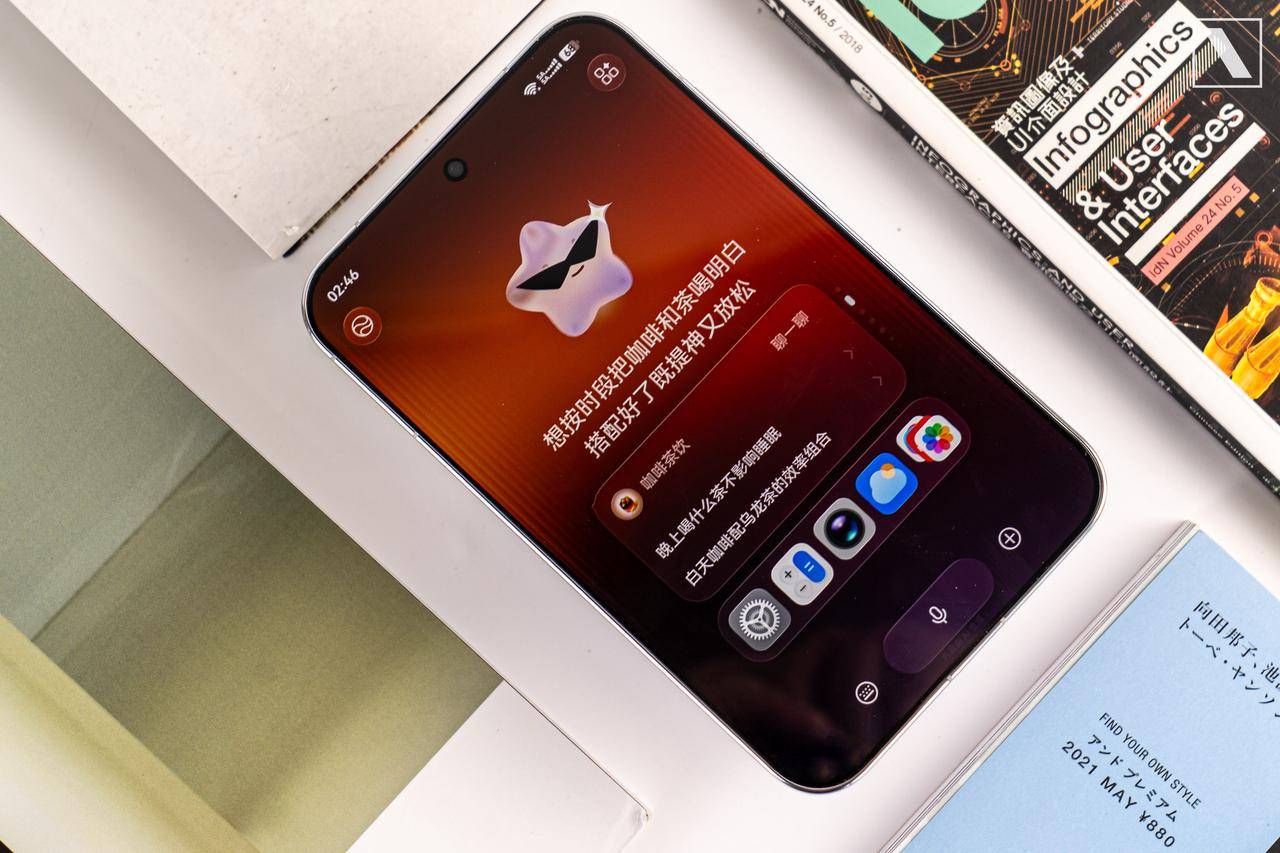
- Core News: Huawei has officially unveiled its first smartphone dedicated to the HarmonyOS ecosystem, branded under the new sub-label ‘OSTA Starlight’ (星芒), marking a significant evolution from its previous multi-brand strategy.
- Key Metric/Data: The device is positioned as a flagship-tier AI terminal, featuring deep system-level integration of Huawei’s proprietary large language models and advanced computational photography capabilities tailored for the HarmonyOS environment.
- Strategic Impact: This launch represents a critical shift from ‘multi-brand expansion’ to ‘ecosystem depth,’ aiming to solidify HarmonyOS as a standalone, AI-native operating system capable of challenging iOS and Android in specific verticals through superior local intelligence.
Developing News & Core Details
In a move that signals the maturation of its post-sanctions technology stack, Huawei has introduced the OSTA Starlight as its inaugural device under this specific sub-brand. While the Chinese media outlet iFANR reports on the launch, the implications extend far beyond a simple product reveal; it is the culmination of years of R&D into HarmonyOS NEXT (formerly Hongmeng) and the integration of generative AI directly into the kernel-level experience.
The ‘OSTA’ branding itself—derived from the phonetic approximation of ‘Starlight’ in Chinese contexts or potentially a new acronym for ‘Open System Technology Alliance’ within Huawei’s internal lexicon—suggests a focus on openness and future-forward design. The device is not merely running an AI wrapper; it is built around what Huawei terms its ‘Future Reinforcement Plan’ (增援未来计划). This initiative aims to leverage the unique architecture of HarmonyOS NEXT, which strips away Android dependencies, allowing for more efficient memory management and faster execution of local AI models.
Technically, the OSTA Starlight is expected to feature a dedicated NPU optimized for on-device inference. Unlike previous iterations where AI features were often cloud-dependent or limited by Android’s fragmented ecosystem, this device promises a ‘parallel universe’ experience where AI agents can natively access system resources like camera pipelines and calendar data without permission overheads. The hardware specifications likely include a high-density display with adaptive refresh rates managed by the OS to save power for background AI tasks.
Technical Analysis & Competitive Landscape
The introduction of OSTA Starlight places Huawei in a unique competitive position against Apple and Samsung. While Apple integrates Siri and on-device processing tightly within iOS, its ecosystem remains locked behind the A-series chip architecture. Samsung’s One UI offers robust customization but still relies heavily on Google’s Android services for core intelligence.
OSTA’s advantage lies in ‘System-Level AI.’ By decoupling from Android, HarmonyOS NEXT allows Huawei to optimize the entire stack—from the kernel to the application layer—for specific AI workloads. This means that tasks like real-time translation, document scanning, or video editing can be processed with lower latency and higher accuracy because the OS knows exactly where the data is coming from and how it should be routed.
Furthermore, the ‘Future Reinforcement Plan’ suggests a roadmap for cross-device intelligence. In a multi-device household, the OSTA Starlight could act as the central hub, coordinating with Huawei’s laptops, tablets, and smart home devices to create a seamless workflow. For instance, an AI assistant on the phone could seamlessly hand off a task to a laptop or control a smart light based on context, all orchestrated by HarmonyOS.
Competitively, this challenges the notion that a standalone OS needs a massive app ecosystem to succeed. By focusing on ‘AI-first’ applications—where the software is designed specifically for the hardware and OS capabilities—Huawei aims to create a niche where users prefer the native experience over third-party ports. This mirrors Apple’s strategy but with a more aggressive push into generative AI features that are currently limited by Android’s fragmentation.
Industry & Strategic Implications
For the broader tech industry, OSTA Starlight signals the end of the ‘Android or iOS’ binary choice for high-end consumers. It introduces a third viable option that is not just an alternative OS but one with its own distinct AI philosophy. This could force competitors to accelerate their own on-device AI strategies to prevent user migration.
For enterprise IT, the implications are profound. The ability of HarmonyOS to run complex local models means sensitive corporate data can be processed on-premise or within a secure enclave without needing to send it to a cloud server. This is particularly relevant for industries like finance and healthcare where data privacy is paramount.
Investors should watch the OSTA brand closely as a barometer of Huawei’s ability to monetize its HarmonyOS ecosystem beyond just hardware sales. If the ‘Future Reinforcement Plan’ succeeds, it could lead to software-as-a-service (SaaS) offerings that leverage the unique capabilities of the OSTA platform.
“The launch of OSTA Starlight is not just a product release; it is the declaration of HarmonyOS as a true AI-native operating system. By focusing on ‘Future Reinforcement,’ Huawei is betting that deep system integration will eventually outweigh brand loyalty in the consumer’s decision-making process.”
Final Outlook
The OSTA Starlight represents a bold step for Huawei, transitioning from a hardware manufacturer to an ecosystem architect. The success of this device will depend on how well it executes its ‘Future Reinforcement Plan’—specifically, whether the AI features are genuinely transformative or just incremental improvements over existing Android-based solutions.
Looking ahead, we expect to see more devices under the OSTA brand, potentially including foldables and even tablets, all optimized for HarmonyOS NEXT. The key metric to watch will be user retention and app adoption rates within the new ecosystem. If developers begin building native apps that leverage the unique AI capabilities of HarmonyOS, the ‘parallel universe’ concept will become a reality, offering users an experience that is distinct from anything currently available in the global smartphone market.
In conclusion, OSTA Starlight is more than just a phone; it is a strategic pivot point for Huawei’s future. It demonstrates that with sufficient R&D and system-level optimization, a standalone OS can compete effectively in the AI-driven mobile landscape, challenging the duopoly of Apple and Google while opening new possibilities for cross-device intelligence.



