
⚡ Executive Summary
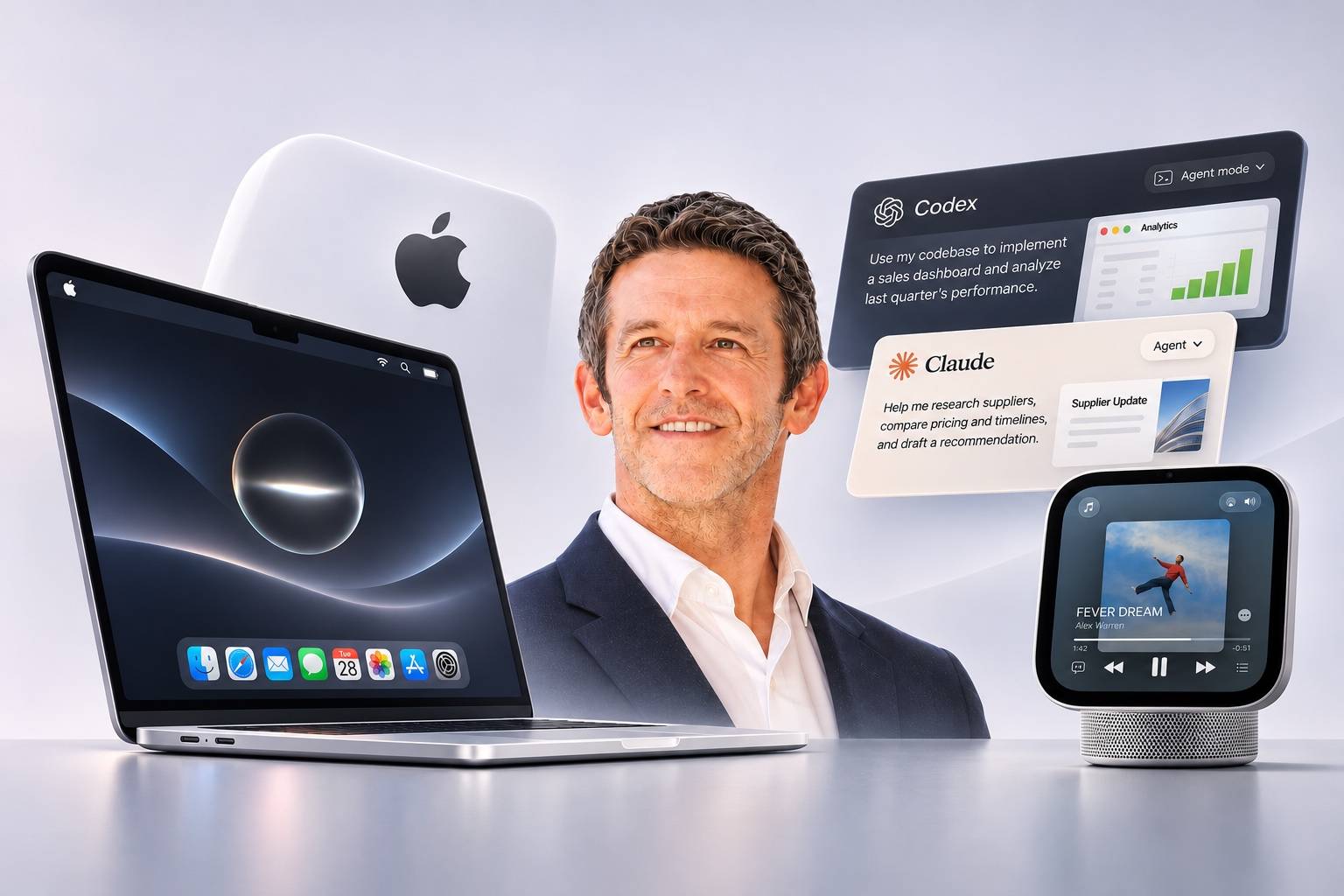
- Core News: Apple is accelerating its development of a native AI agent framework, signaling a decisive shift from passive Siri to proactive, autonomous digital assistants following the industry-wide “Year of AI Agents”.
- Key Metric/Data: While specific internal timelines remain classified, analysts project that Apple’s next-generation operating system will integrate deep learning models capable of multi-step task execution, memory retention, and cross-app orchestration.
- Strategic Impact: This move forces Microsoft and Google to defend their early-mover advantages in enterprise workflows while leveraging Apple’s unique hardware-software integration for a privacy-first agent ecosystem.
Developing News & Core Details
The tech industry has officially entered the “Year of AI Agents,” a phase where Large Language Models (LLMs) evolve from chat interfaces into autonomous entities capable of planning, executing, and learning. In this high-stakes race, Apple is widely regarded as the last major technology giant to fully commit to building a native, system-level agent architecture rather than relying solely on third-party integrations or cloud-based APIs.
Historically, Apple’s approach to artificial intelligence was characterized by caution and privacy-centric design. The legacy Siri assistant served primarily as an information retrieval tool—answering queries about weather, traffic, or contacts—but lacked the agency to perform complex workflows without human intervention. However, recent leaks and industry reports suggest that Apple is now prioritizing a “system 2” thinking model for its AI, moving beyond simple pattern matching to genuine reasoning capabilities.
The core of this development lies in the transition from Generative AI (which creates content) to Agentic AI (which performs tasks). Unlike Microsoft Copilot or Google’s Gemini, which are deeply embedded in productivity suites like Office and Docs respectively, Apple aims to weave its agent directly into the operating system kernel. This means the future Siri will not just “know” what you need but will actively organize your calendar, draft emails across multiple apps, and manage smart home devices without explicit prompts.
Technical Analysis & Competitive Landscape
The technical architecture behind Apple’s impending AI agent represents a significant departure from its cloud-first predecessors. While competitors like Microsoft Azure OpenAI Service rely heavily on massive data centers for inference, Apple is leveraging its custom silicon—specifically the Neural Engine in M-series chips—to enable local-first processing.
This hardware-software co-design offers two critical advantages:
1. **Latency Reduction:** By running complex agent loops locally, response times drop from seconds to milliseconds, creating a seamless user experience that feels instantaneous rather than conversational.
2. **Privacy as a Feature:** Enterprise clients often hesitate to send sensitive data to public cloud models. Apple’s architecture allows the agent to learn user habits and preferences on-device, training personalized models without uploading raw data to the cloud.
In terms of competitive landscape, Microsoft holds a formidable lead in enterprise adoption due to its deep integration with Windows and Office 365. Google dominates in search-driven discovery and multimodal capabilities. Apple’s entry disrupts this by offering a “walled garden” where agents can access every layer of the iOS ecosystem—from Mail to Maps to Health—creating a unified context that cloud-only competitors struggle to replicate.
The challenge for Apple lies in its historical aversion to rapid iteration. While Microsoft and Google release monthly updates with new agent features, Apple’s development cycles are notoriously long. The question is whether their late entry will result in a polished, robust product or if they will miss the initial wave of developer adoption that defines the current AI boom.
Industry & Strategic Implications
The implications of Apple joining the AI agent race extend far beyond consumer electronics. For enterprise IT departments, this signals a shift toward “ambient computing,” where software anticipates needs before they are articulated. Imagine an agent that automatically reconciles your bank statements, books travel based on calendar events, and updates project management tools—all triggered by a single voice command.
For investors, Apple’s move validates the thesis that hardware remains critical in the AI era. As models become more complex, the ability to run them efficiently on local devices becomes a key differentiator. This could lead to a new class of “edge agents” that operate independently of internet connectivity, ensuring reliability in critical infrastructure.
Furthermore, Apple’s entry forces a re-evaluation of data ownership. If an AI agent learns your entire digital life, who owns that knowledge? Apple’s strategy suggests a model where the user retains sovereignty over their data, potentially creating a new standard for “personal data trusts” in the future economy.
“Apple’s late entry into the AI agent space is not a delay but a strategic consolidation. By waiting until they could integrate deep learning directly into their silicon and OS, they are building an agent that is more autonomous, private, and context-aware than any cloud-based competitor currently available.”
Final Outlook
The “Year of AI Agents” will likely be defined by how quickly companies can move from chatbots to doers. Apple’s imminent launch of a native agent framework positions it as the final piece of the puzzle in the consumer tech market, completing the triad of Microsoft (Enterprise), Google (Search/Cloud), and Apple (Consumer/Hardware).
In the short term, expect Apple to focus on refining its “System 2” reasoning capabilities, ensuring that agents can handle multi-step tasks without hallucination or error. In the long term, this could lead to a convergence where all major platforms support interoperable agent standards, allowing your iPhone’s assistant to seamlessly collaborate with your Windows laptop.
Ultimately, Apple’s entry proves that in the AI race, being first is less important than being right. By leveraging its unique hardware advantages and privacy-first philosophy, Apple may well redefine what it means to be an intelligent assistant, turning the concept of “digital agency” into a reality for billions of users worldwide.



