
⚡ Executive Summary
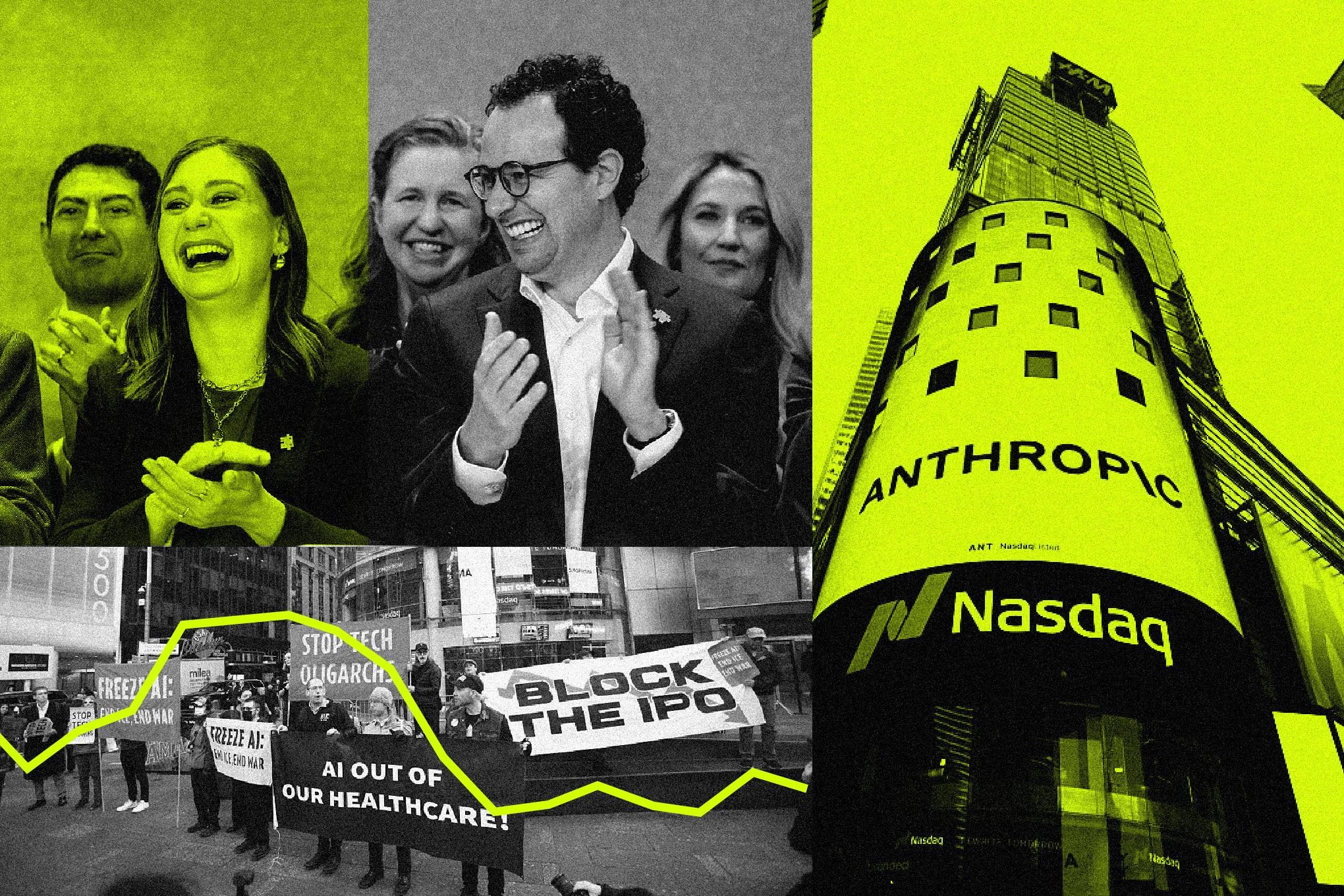
- Core News: Anthropic, the creator of Claude, successfully completed its IPO on Nasdaq, becoming the first pure-play AI lab to go public. The company priced at $83/share and saw demand push it higher, signaling massive investor appetite despite ongoing industry volatility.
- Key Metric/Data: Anthropic faces a projected 17-fold revenue increase requirement over the next decade to match traditional tech returns. Current compute costs are estimated in the hundreds of billions, creating immense pressure on margins.
- Strategic Impact: The company’s unique governance structure—featuring a ‘Long-Term Benefit Trust’ and seven founders holding 50.1% voting power via a single share—grants them unchecked control to prioritize safety or speed, potentially insulating them from short-term shareholder demands but raising questions about accountability.
Developing News & Core Details
The recent public offering of Anthropic marks a watershed moment in the artificial intelligence industry. Unlike traditional tech IPOs driven by user growth or cloud infrastructure, this debut centers on an entity whose primary product is ‘intelligence’ itself. The company went public with a valuation that solidified its status as one of the most valuable entities on the planet, effectively setting a precedent for how future AI-native companies will be valued.
While the market reaction was celebratory, with shares trading well above the initial price, the underlying economics reveal a stark reality. Anthropic operates in an environment where ‘peak hype’ meets brutal financial constraints. The company must generate enough revenue from token inference to cover the astronomical costs of training and renting compute capacity from hyperscalers like Microsoft Azure or AWS. As noted by industry analysts, the business model relies on selling tokens for more than their marginal cost, a challenge exacerbated by competitors like OpenAI and Microsoft pushing prices down through efficiency gains.
Furthermore, Anthropic’s market positioning is heavily reliant on its ‘safety-first’ branding. This narrative serves as a moat against commoditization; enterprise customers demand data sovereignty and trust, areas where Anthropic claims superiority over open-source alternatives or cheaper models. However, this brand equity is under pressure to deliver tangible financial returns, creating an inherent tension between the idealistic mission of ‘safe AI’ and the rapacious demands of public markets.
Technical Analysis & Competitive Landscape
The core technical challenge for Anthropic lies in its compute-constrained environment. In the current arms race, compute is the primary bottleneck. Anthropic must balance buying enough capacity to support inference for customers and fund R&D for next-generation models (like their upcoming ‘Super Intelligence’ or RSI) without overextending financially. This creates a delicate equilibrium: buy too little, and they fall behind in model capabilities; buy too much, and they risk financial collapse.
Competitively, Anthropic is navigating a landscape where OpenAI has effectively used its IPO as a ‘trial balloon’ to gauge market sentiment before potentially following suit. This dynamic allows OpenAI to ride Anthropic’s coattails while mitigating the risks of being the first mover in a volatile sector. Meanwhile, enterprise customers are increasingly sophisticated, creating internal benchmarks to optimize for cost-efficiency rather than just raw capability. They may split workloads between expensive frontier models (like Claude) and cheaper open-source alternatives, forcing Anthropic to prove that its ‘safe’ premium is worth the price difference.
Technically, the race is not just about model quality but also about inference efficiency. As Microsoft’s Satya Nadella indicated at Ignite, the industry trend is toward fungibility—making all AI vendors interchangeable so customers can pick the cheapest option for a given task. Anthropic must counter this by deepening its moat through proprietary safety features and enterprise-grade security tools that cheaper models lack.
Industry & Strategic Implications
The most profound implication of Anthropic’s IPO is its governance structure, which sets a new standard for Silicon Valley. The company employs a ‘Long-Term Benefit Trust’ (LTBT) composed of figures like former Federal Reserve Chairman Ben Bernanke and experimental physicist Christopher Stubbs. This body has the theoretical power to appoint or remove board members, ostensibly providing an external check on founder whims.
However, deep analysis reveals that this trust operates with limited authority, often requiring founder approval for significant actions. The real power lies with the seven founders, who hold a single share of stock granting them 50.1% voting control via ‘Founder LLC’. This structure grants them near-absolute control over strategic decisions, including whether to slow down model releases for safety or accelerate them for market dominance.
This mirrors the recent ‘Jensen Huang saga’ at Nvidia, where traditional corporate governance (a board firing a CEO) clashed with founder influence. At Anthropic, the founders are insulated from immediate shareholder pressure, allowing them to pursue long-term visions like AGI that might not yield quarterly profits. Yet, this insulation creates a risk: if the founders disagree on safety protocols or resource allocation, the company could fracture without an independent board to mediate.
Strategically, Anthropic’s survival depends on translating its ‘safety’ narrative into revenue. If they can successfully monetize their reputation as the most trustworthy AI provider—perhaps through government contracts or high-stakes enterprise deals—they can sustain their compute-heavy operations. Failure to do so could lead to a ‘reckoning’ where expensive safety initiatives are cut, and the company pivots toward raw speed, effectively becoming indistinguishable from its competitors.
“The real constraint on whatever impulses Anthropic has is going to be the fact that they need money. Compute is the deepest business dilemma; if you buy too much, you overextend, but if you buy too little, you can’t support inference or R&D.” — Industry Analysis
Final Outlook
Anthropic’s IPO represents a critical juncture where the ‘vibes’ of AI hype meet the hard math of semiconductor economics. The stock price will likely fluctuate based on market sentiment, but the true test lies in their quarterly earnings and strategic pivots. Investors should watch for signs that Anthropic is sidelining safety teams or discontinuing initiatives to boost margins.
In the short term, Anthropic’s unique governance allows it to weather the initial volatility of being a public AI company better than its peers. However, long-term success hinges on their ability to maintain a ‘moat’ against commoditization while managing the compute arms race. If they can prove that safety is not just a marketing slogan but a revenue driver, Anthropic could redefine the value proposition for the entire industry. Conversely, if financial pressure forces them to prioritize speed over safety, the ‘safe AI’ brand may crumble, leaving them vulnerable in a crowded market.
Ultimately, Anthropic’s journey will determine whether the next generation of AI companies can balance the trinity of safety, profitability, and innovation—or if they must choose one at the expense of the others. The coming quarters will reveal which path they take.



