
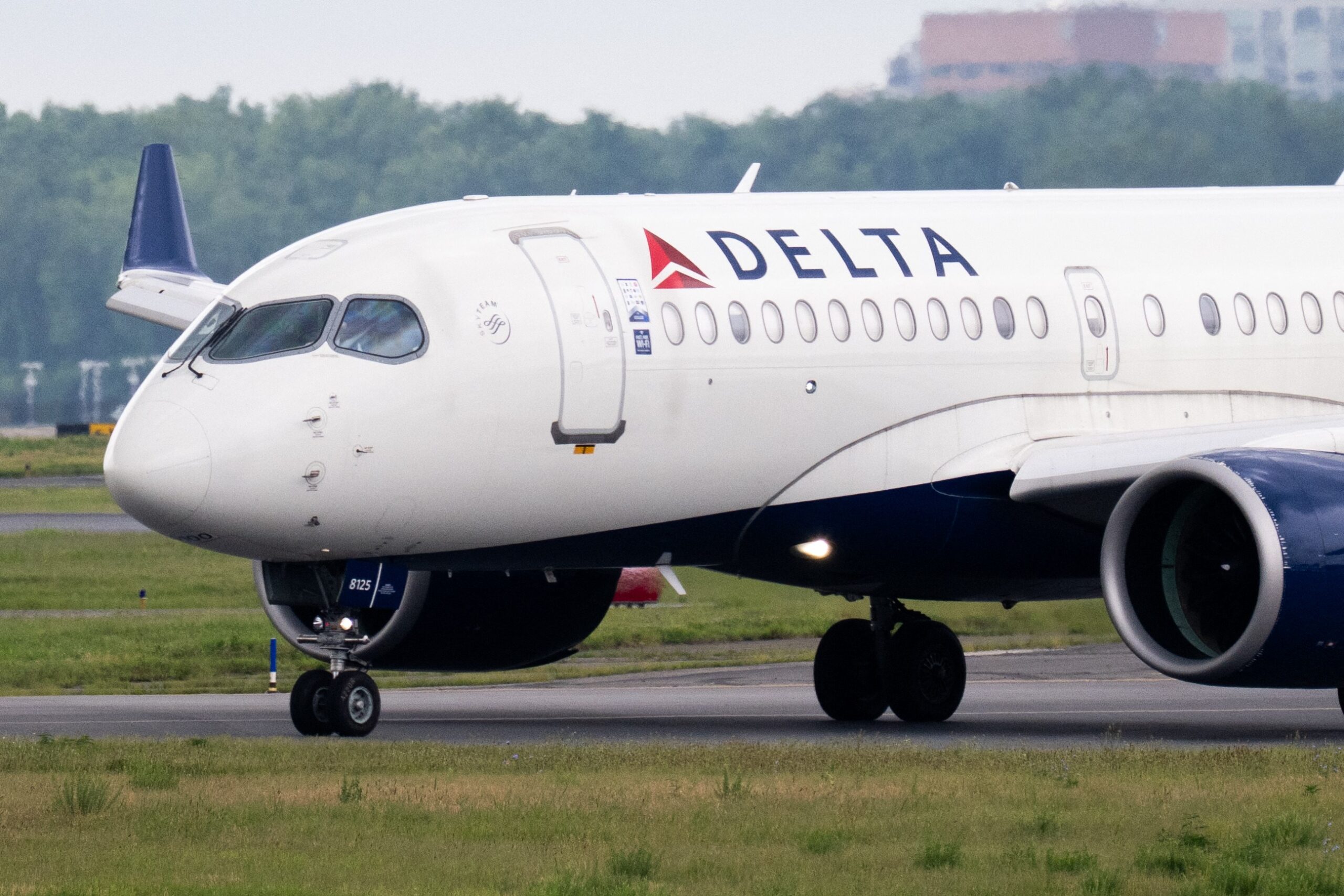
⚡ Executive Summary
- Core News: Delta Air Lines is experiencing a widespread ground stop affecting all flights in and out of its primary hub, Hartsfield-Jackson Atlanta International Airport (ATL), caused by a failure in the aircraft weight-and-balance calculation system.
- Key Metric/Data: The outage impacts 100% of Delta operations at ATL, creating a cascading risk for downstream connectivity across North America and Europe. This event occurs just one week after a major FAA-wide IT failure that grounded the entire US airspace.
- Strategic Impact: The incident underscores the fragility of legacy avionics software stacks in modern high-density hubs. It exposes the tension between rapid digital transformation (e.g., adopting new aircraft like the Airbus A220) and the stability of core operational systems that have not been fully decoupled from mainframe dependencies.
Developing News & Core Details
The current disruption at Hartsfield-Jackson Atlanta International Airport represents a significant escalation in Delta Air Lines’ operational volatility. Unlike typical weather-related delays or mechanical issues, this event stems from a specific software subsystem: the weight-and-balance calculation engine. In aviation logistics, determining an aircraft’s center of gravity and total load is not merely administrative; it is a fundamental safety constraint that dictates fuel burn, takeoff performance, and structural integrity.
When this system goes offline or returns erroneous data, flight crews cannot legally dispatch aircraft without manual verification for every single plane. Given Delta’s hub-and-spoke model at ATL—where thousands of flights originate, terminate, or transit daily—the inability to process weight manifests creates a bottleneck that paralyzes the entire network. The impact is immediate and total: all inbound and outbound flights are delayed as crews manually calculate loads or wait for system restoration.
This event is particularly alarming given its temporal proximity to the recent FAA-wide IT outage. Just one week prior, a failure in the FAA’s NextGen air traffic control systems forced a nationwide ground stop, halting thousands of flights across all carriers. The convergence of these two major IT failures within a ten-day window suggests that the aviation industry is currently navigating a period of heightened digital instability. While Delta was not directly impacted by the FAA outage, the cumulative effect of backlogged maintenance and passenger demand has left the system fragile. Now, a localized software failure at the world’s busiest airport threatens to ripple outward, potentially affecting connecting flights for other airlines that rely on ATL as a transfer point.
Technical Analysis & Competitive Landscape
The root cause of this outage likely lies in the architecture of Delta’s legacy IT infrastructure. Most major carriers still operate core operational systems—such as flight planning, weight-and-balance, and crew scheduling—on mainframe computers running decades-old operating systems (often IBM z/OS or similar). These systems are prized for their reliability but suffer from a lack of modularity. Integrating modern avionics, such as the new Airbus A220 fleet mentioned in reports, often requires complex middleware to bridge legacy code with contemporary digital twins and cloud-based data streams.
The weight-and-balance system is a critical path component. It ingests data from various sources: passenger manifests, cargo loads, fuel quantities, and aircraft configuration files. If the software fails to parse this data correctly or crashes due to memory leaks in legacy code, the entire dispatch process halts. The transition to newer aircraft models like the A220 introduces new variables; these planes may utilize different avionics suites that interact with Delta’s central systems differently than older Boeing 737s or Airbus A320s. This heterogeneity increases the attack surface for software bugs.
From a competitive standpoint, this outage highlights the “digital maturity gap” among legacy carriers versus newer entrants. While startups like JetBlue have invested heavily in cloud-native architectures that allow for easier scaling and patching, established giants like Delta face the challenge of maintaining 99.99% uptime on systems built over 40 years ago. The competitive landscape is shifting: airlines with more modular, microservices-based IT stacks can recover from localized outages faster because they can isolate failures without bringing down the entire network.
Furthermore, the reliance on a single vendor for core avionics software creates a monopoly risk. If Delta’s weight-and-balance system is proprietary and tightly coupled to specific hardware, fixing bugs requires deep collaboration with vendors like Thales or Rockwell Collins, potentially leading to long resolution times. This contrasts with airlines that have diversified their tech stack or developed in-house capabilities to manage these critical functions.
Industry & Strategic Implications
The broader implications of this outage extend beyond Delta’s balance sheet. For enterprise IT leaders in the transportation sector, this event serves as a stark reminder of the “legacy debt” problem. As airlines modernize their fleets and customer interfaces, they often neglect to refactor their core operational engines. The result is a system that works well under normal conditions but becomes brittle when faced with high-frequency transactions or unexpected data loads.
For investors, this volatility introduces new risk factors into airline valuations. Traditional models assume predictable weather patterns and mechanical failure rates, but software-induced outages are becoming more frequent and harder to predict. A single day of system downtime at a major hub can cost an airline millions in lost revenue, crew overtime, and customer compensation. Moreover, the reputational damage from repeated IT failures erodes consumer trust, which is increasingly digital-first.
Consumers face a dual threat: immediate inconvenience due to delays and long-term uncertainty about network reliability. As travel demand rebounds post-pandemic, passengers are more sensitive to disruptions. A week of instability at ATL could deter travelers from choosing Delta for transatlantic or domestic connections, potentially shifting market share to competitors with more resilient IT infrastructures.
Strategically, this crisis accelerates the industry’s push toward cloud-native migration and AI-driven predictive maintenance. Airlines are beginning to treat their IT stacks as critical infrastructure assets, investing in redundancy and automated failover mechanisms. The goal is to decouple core operations from single points of failure, ensuring that a bug in one module does not cascade into a network-wide ground stop.
“The convergence of legacy mainframe fragility with modern avionics complexity creates a ‘perfect storm’ for operational risk, where the cost of digital transformation is no longer just capital expenditure but existential stability.”
Final Outlook
As Delta works to restore its weight-and-balance systems and clear the backlog at ATL, the industry watches closely. If this outage proves isolated, it will be treated as a temporary glitch. However, if similar failures occur in other carriers or persist due to deeper architectural issues, we may see a wave of accelerated investment in cloud-based flight operations platforms.
Looking ahead, the aviation sector must prioritize “digital resilience” alongside traditional safety metrics. This involves not just patching code but redesigning system architectures to be more fault-tolerant and modular. The next 12 months will likely see increased collaboration between airlines and tech vendors to create open standards for weight-and-balance data, reducing dependency on proprietary black-box systems.
For Delta, the immediate focus is on clearing the backlog and restoring passenger confidence. Long-term, this event serves as a catalyst for modernizing its core IT stack, ensuring that future digital transformations are built on a foundation of robustness rather than legacy inertia. The airline industry stands at a crossroads: continue to patch aging systems or boldly invest in a cloud-native future that can withstand the pressures of high-frequency global travel.



