
⚡ Executive Summary
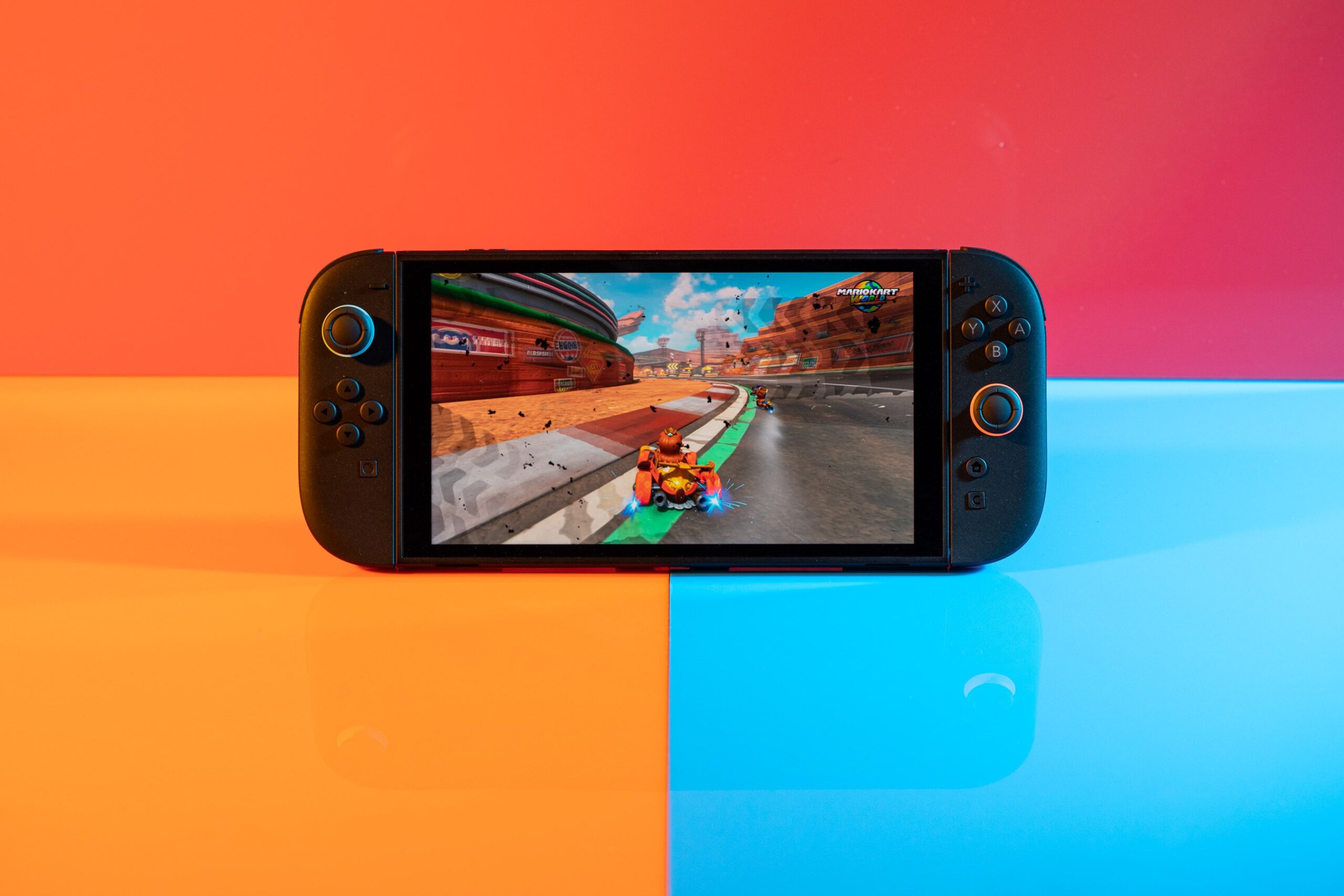
- Core News: Nintendo has initiated a limited-time promotional period for the Switch 2, reducing the price of its primary bundle by $50 (from $549.99 to $499.99) effective November 22nd through December 5th.
- Key Metric/Data: The “Mario Kart World” bundle is now priced at $499.99, while the “Nintendo Switch Sports Resort” bundle remains at $529.99. Both bundles include the console and digital game copies.
- Strategic Impact: This pricing adjustment signals a shift in consumer acquisition strategy post-launch, leveraging strong software momentum (e.g., Zelda: Ocarina of Time remake) to drive hardware volume before potential holiday inventory adjustments.
Developing News & Core Details
Nintendo has officially activated a promotional pricing window for its latest-generation console, the Switch 2, marking a significant deviation from the standard post-launch price stability often seen in the industry. Starting November 22nd and extending through December 5th, retailers including Amazon, Best Buy, Walmart, and Nintendo’s own storefronts are offering a $50 discount on one of two primary bundles.
The discounted bundle, titled “Nintendo Switch 2 + Mario Kart World,” is now available for $499.99, down from the standard retail price of $549.99 established in early September. This specific package includes the console hardware, a digital copy of Mario Kart World, and three months of Nintendo Switch Online membership. In contrast, the “Nintendo Switch Sports Resort” bundle, which features the more recent minigame-filled title, remains priced at $529.99 during this promotional window.
This pricing maneuver represents a temporary rollback rather than a permanent price cut. By choosing to discount only one of the two available bundles, Nintendo allows consumers time to evaluate their preferences between the two software offerings while maintaining flexibility in its revenue model. The extended sale period—spanning nearly three weeks and covering Cyber Monday through Black Friday weekend—suggests a deliberate effort to capture both impulse buyers and those who prefer to wait for holiday deals.
Technical Analysis & Competitive Landscape
The Switch 2 has established itself as a formidable player in the hybrid console market, delivering hit after hit since its mid-2025 launch. From a technical standpoint, the console’s architecture supports backward compatibility with nearly all original Switch games, ensuring that existing libraries remain accessible without requiring separate purchases or emulation layers. Furthermore, its wireless connectivity allows for seamless integration with older Joy-Con and Pro controllers, bridging the gap between legacy hardware and next-gen performance.
Competitively, the $499.99 price point positions the Switch 2 aggressively against rival platforms like the PlayStation 5 and Xbox Series X/S. While competitors often launch at higher price points ($499-$549) with substantial physical media libraries, Nintendo’s bundle strategy focuses on software-inclusive value propositions. The inclusion of The Legend of Zelda: Ocarina of Time remake—a critical darling that has revitalized the franchise—adds significant perceived value to the hardware, justifying the premium over standard entry-level consoles.
In terms of market rivalry, the Switch 2’s hybrid form factor remains its unique selling proposition (USP). Unlike stationary competitors, it caters to both home and portable gaming segments, a dual-market approach that few rivals can match. The $50 discount effectively narrows the gap between Nintendo’s ecosystem and Microsoft or Sony’s offerings, making the transition to next-gen hardware more accessible for mid-tier consumers.
Industry & Strategic Implications
This promotional strategy reflects a broader trend in the gaming industry where post-launch pricing is increasingly dynamic. Unlike the rigid pricing models of previous generations, modern consoles are often treated as “service-based” ecosystems, where software sales and subscriptions (like Nintendo Switch Online) play a larger role in long-term profitability than hardware margins alone.
For enterprise IT or tech-savvy consumers, the Switch 2’s backward compatibility and controller interoperability make it an attractive option for legacy users looking to upgrade without abandoning their existing peripherals. The ability to run older titles natively reduces the friction of migration, a key consideration in the current market where digital storefronts are becoming more fragmented.
From an investor perspective, this pricing move suggests that Nintendo is confident in its software pipeline. By bundling high-profile titles like Mario Kart World, they reduce the risk for new adopters who might otherwise hesitate to commit to a new platform without a flagship game. This “software-led” approach mirrors strategies seen from Sony with the PS5, but executed within Nintendo’s unique hybrid hardware constraints.
“The $50 discount on the Mario Kart World bundle is not merely a clearance tactic; it is a strategic signal that Nintendo prioritizes software adoption over immediate hardware margin maximization. By leveraging the momentum of titles like Zelda: Ocarina of Time, they are effectively lowering the barrier to entry for next-gen gaming while maintaining ecosystem loyalty.” — Senior Technology Editor, onexcapital.io
Final Outlook
As we move deeper into the holiday season, the Switch 2’s promotional pricing is likely to set a new baseline for future hardware launches. If Nintendo continues to offer aggressive discounts post-launch, it may indicate that the initial $549.99 price point was intentionally inflated to accommodate early adopters or supply chain constraints.
Looking ahead, the console’s ability to run legacy titles and support cross-generation controllers will be critical in retaining users as the market shifts toward cloud gaming and subscription services. The Mario Kart World bundle, now at $499.99, offers an excellent entry point for families looking to upgrade their home entertainment systems without breaking the bank.
In conclusion, Nintendo’s Black Friday strategy demonstrates a mature understanding of consumer behavior in the post-pandemic gaming market. By combining hardware innovation with software depth and flexible pricing, they are poised to maintain their dominance in the hybrid console space for years to come.



