
⚡ Executive Summary
- Core News: An open-source initiative has successfully ported DirectX 12 and Vulkan 1.4 drivers to Windows 7, enabling modern GPU utilization on a 17-year-old operating system.
- Key Metric/Data: The project targets the end-of-life (EOL) era of Windows 7, which officially ceased mainstream support in 2015 and extended support until January 2020. This patch allows Nvidia RTX series, AMD Radeon RX 6000/7000, and Intel Arc A-series cards to function on legacy hardware.
- Strategic Impact: This development challenges the traditional lifecycle of PC architecture by decoupling OS age from GPU capability, potentially revitalizing enterprise IT refresh cycles and extending the lifespan of cost-effective workstations.
Developing News & Core Details
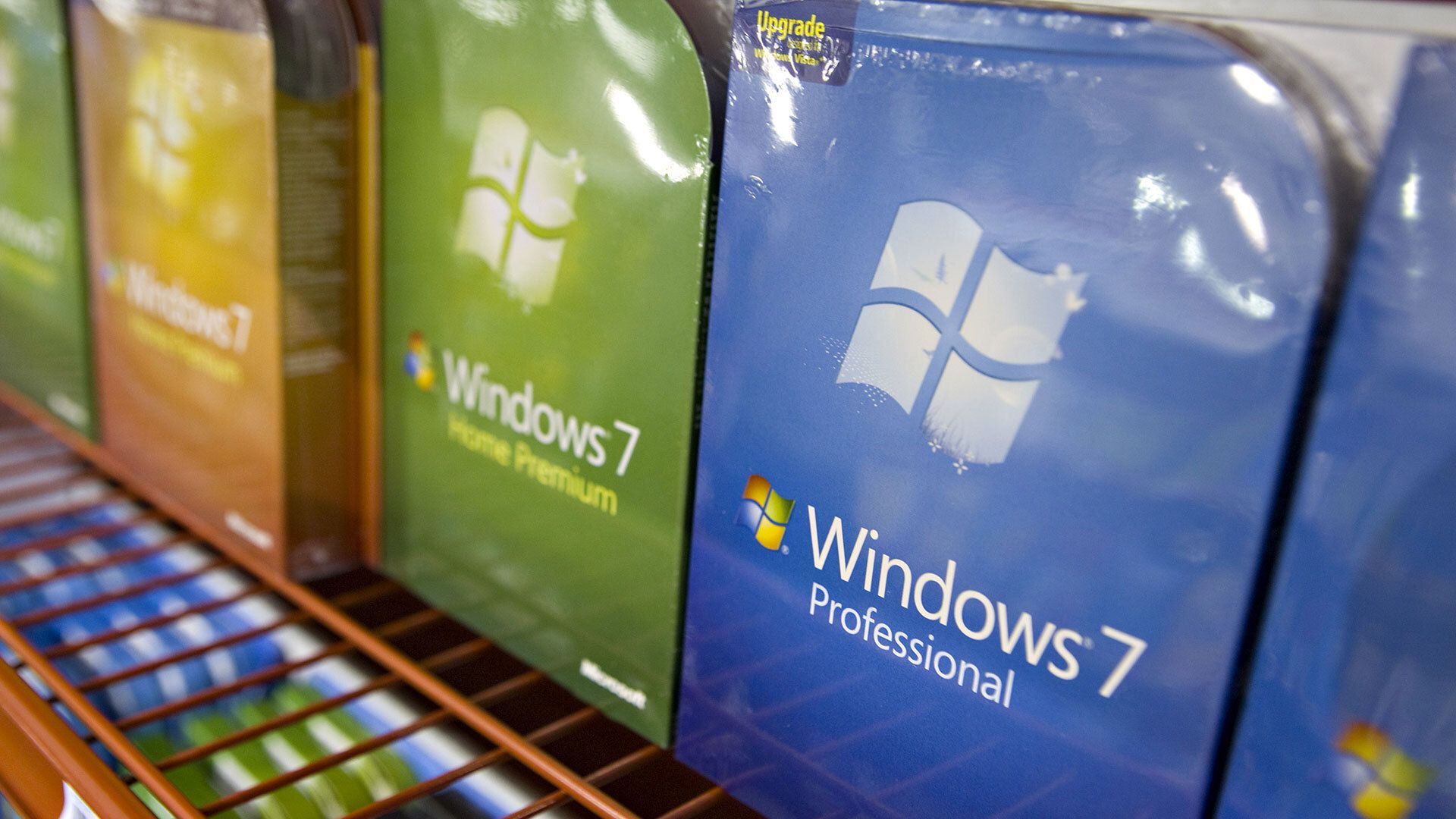
The landscape of personal computing is defined by rapid obsolescence. Microsoft’s Windows 7, released in 2009, served as the backbone for millions of enterprise and consumer devices before its eventual retirement. While modern graphics cards from Nvidia, AMD, and Intel have evolved to support advanced features like ray tracing and AI acceleration via DirectX 12 Ultimate and Vulkan 1.4, they traditionally require Windows 10 or 11 drivers. A recent breakthrough by a dedicated community developer has altered this paradigm.
This unofficial project involves reverse-engineering the graphics subsystem of Windows 7 to inject modern API support without altering the core kernel. By leveraging the dxgi.dll and d3d12.dll interfaces, developers have created a compatibility layer that translates modern GPU commands into instructions the aging OS can understand. The result is a system where a 2009-era CPU paired with a 2024-era RTX 4090 can theoretically render games and applications at high fidelity.
The technical implementation relies heavily on modifying the display driver model (DDM) to bypass legacy constraints. Unlike official Microsoft updates, which are constrained by hardware certification programs like WHQL (Windows Hardware Quality Labs), this community patch operates in a “grey area” of software compatibility. It allows users to install drivers for GPUs that were not officially certified for Windows 7, effectively bridging the gap between the OS’s age and modern silicon capabilities.
Technical Analysis & Competitive Landscape
The significance of this development lies in the architectural shift from a tightly coupled ecosystem to a modular one. Historically, GPU manufacturers like Nvidia and AMD optimized their drivers for specific Windows versions. For instance, an RTX 4090 driver for Windows 7 would require significant kernel-level changes due to differences in memory management and threading models between Windows 7 (NT 6.1) and Windows 10/11 (NT 10.0+).
This project demonstrates the power of abstraction layers. By creating a translation layer, the community effectively treats Windows 7 as if it were running on a newer kernel for graphics purposes. This is similar to how Wine allows Linux applications to run on Windows, but here it works in reverse: allowing modern hardware to speak an older language.
Competitive Implications: For GPU manufacturers, this poses both a challenge and an opportunity. Traditionally, selling new GPUs requires users to upgrade their OS, driving sales of Windows 10/11 licenses alongside the graphics card. If Windows 7 can run these cards efficiently, it might slow down the “forced upgrade” cycle for budget-conscious consumers or enterprises with massive fleets of legacy hardware.
However, the competitive landscape also shifts towards software-defined performance. The project highlights that raw silicon power is no longer solely dependent on the OS version but rather on how well the driver abstraction handles legacy constraints. Nvidia’s and AMD’s continued investment in Vulkan 1.4 support suggests they are preparing for a future where hardware longevity might outpace software updates, necessitating more robust cross-version compatibility.
Industry & Strategic Implications
Enterprise IT Refresh Cycles: Many organizations still rely on Windows 7 due to the cost of upgrading thousands of machines. This patch could extend the lifecycle of these assets, delaying capital expenditure (CapEx) for hardware refreshes. For industries like manufacturing or logistics where downtime is costly, keeping a workstation running with modern GPU acceleration for CAD rendering or AI inference without replacing the entire machine is a significant economic benefit.
Consumer Longevity: In the consumer market, this technology appeals to enthusiasts who prefer older hardware aesthetics or specific configurations. It also reduces e-waste by allowing users to keep their motherboards and CPUs while upgrading only the GPU, which is often the most expensive component anyway.
The Future of OS Lifecycle Management: This development suggests a trend where operating systems may become more “API-agnostic” in the future. As software becomes more complex (e.g., AI models requiring massive VRAM), the ability to run these workloads on older OS versions could become a standard requirement, pushing Microsoft and other vendors to design drivers that are less version-specific.
“The true innovation here isn’t just making old code new; it’s proving that hardware capability is no longer strictly bound by software age. This decoupling could redefine how we measure PC performance in the next decade, shifting focus from ‘OS Version’ to ‘API Compatibility’.”
Final Outlook
The unofficial DirectX 12 and Vulkan 1.4 support for Windows 7 represents a fascinating intersection of legacy engineering and modern innovation. While it may not replace the need for Windows 10/11 in high-performance gaming or enterprise environments requiring full feature sets, it serves as a powerful proof-of-concept for hardware longevity.
Looking ahead, we anticipate similar projects emerging for other EOL operating systems like Windows XP or even older Linux distributions. The industry is moving towards a future where the “best” graphics card might be defined by its ability to run on any OS, not just the latest one. For investors and tech strategists, this signals that hardware refresh cycles may slow down as software adaptability improves, potentially stabilizing the PC market against rapid obsolescence.
Ultimately, this community-driven success story underscores a resilient spirit in technology: even when giants retire their products, the ecosystem finds ways to keep them alive and relevant through ingenuity and open-source collaboration.



