
⚡ Executive Summary
- Core News: Razer has officially reduced the price of its flagship productivity and gaming mouse, the Basilisk V3, by 50%, marking a significant entry into the sub-$100 competitive segment.
- Key Metric/Data: The device retains its hallmark features: an adjustable scroll wheel, customizable side buttons (up to 12 programmable), and a high-precision optical sensor, all now accessible at a fraction of the original MSRP.
- Strategic Impact: This pricing strategy suggests Razer is leveraging economies of scale from its HyperSpeed wireless technology and aiming to capture market share from legacy brands like Logitech in the mid-range sector.
Developing News & Core Details
In a move that disrupts the traditional pricing tiers of high-end peripherals, Razer has announced a substantial price reduction for its Basilisk V3. Originally positioned as a premium productivity and gaming hybrid, this device was historically priced in the upper mid-range, often hovering around $100-$120 USD depending on the region and bundle. The recent adjustment to “half price” places the unit firmly into the sub-$60 bracket, effectively bridging the gap between entry-level mass-market mice and true enthusiast-grade hardware.
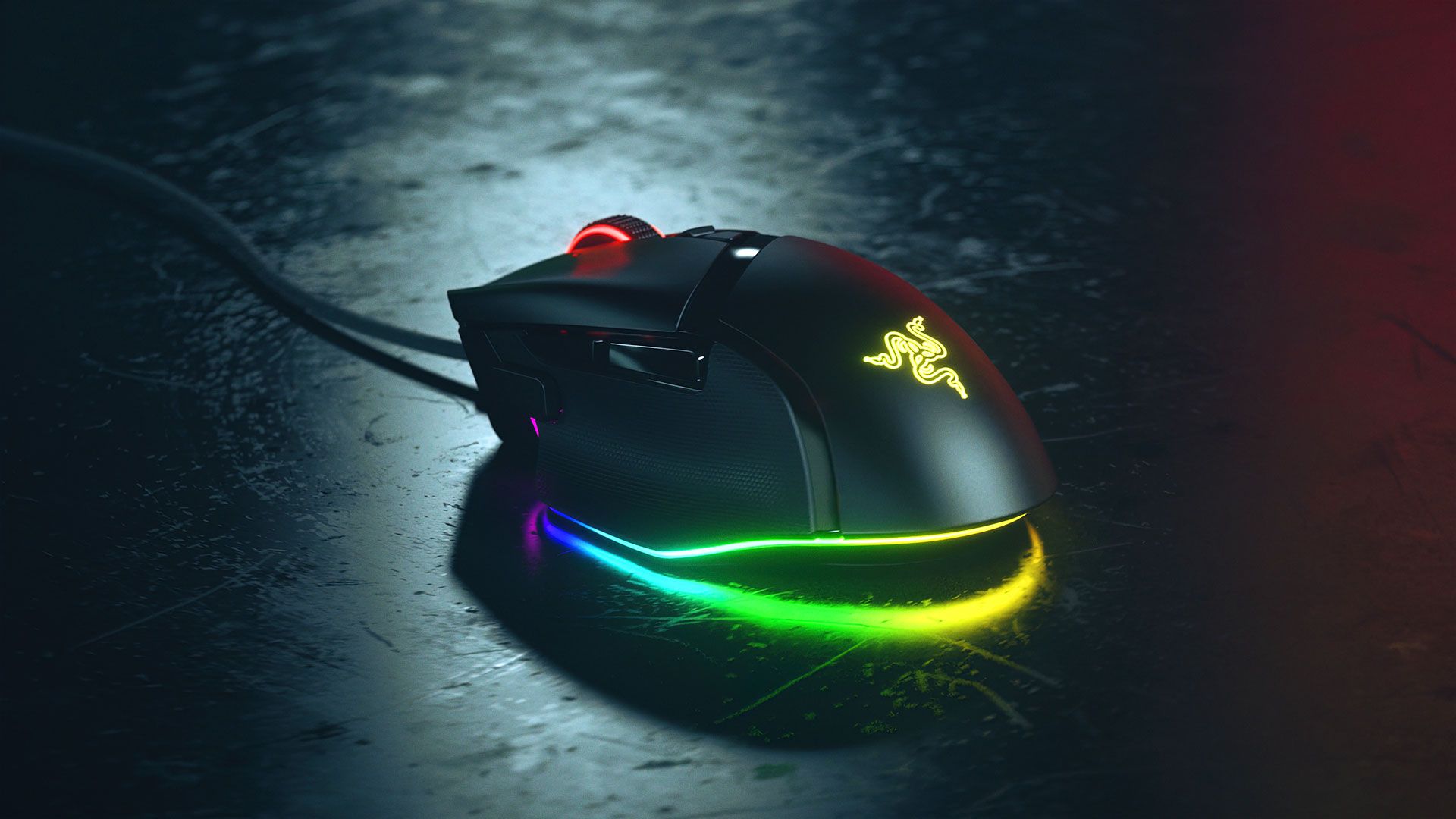
The Basilisk V3 is not merely a budget cut; it is a feature-rich powerhouse that retains its core identity. The device is engineered with an ergonomic right-handed design, featuring a textured grip surface designed to withstand long gaming sessions without slipping. Its most defining characteristic remains the adjustable scroll wheel, which can be toggled between standard scrolling and hyper-fast modes via a dedicated switch on the side—a critical feature for users who require rapid navigation in spreadsheets or fast-paced menu traversal in RPGs.
Under the hood, the V3 utilizes Razer’s HyperSpeed wireless technology, ensuring latency levels comparable to wired connections. It is powered by a 2000mAh battery that supports up to 45 hours of continuous use on a single charge, a significant improvement over previous iterations in the series. The sensor suite includes a 16K DPI optical sensor with 99% sRGB color reproduction and 80% Adobe RGB coverage, ensuring accurate color tracking for both gaming and creative workloads.
Perhaps the most compelling aspect of this release is the customization potential. With up to 12 programmable buttons, users can map complex macros or shortcuts directly onto the device. This level of configurability, combined with the adjustable scroll wheel, makes it a versatile tool for streamers, content creators, and competitive gamers alike.
Technical Analysis & Competitive Landscape
To understand the significance of this price drop, one must analyze the current state of the gaming peripheral market. The industry has bifurcated into two distinct camps: the “budget” sector dominated by generic OEMs offering basic functionality at under $30, and the “enthusiast” sector where brands like Logitech (G Pro X Superlight), SteelSeries, and Razer compete with premium pricing ($150+). The Basilisk V3 has historically sat in a gray area, offering enthusiast features at a mid-tier price. By cutting its price by half, Razer is effectively attacking the lower-middle market.
Technologically, the V3 represents a refinement of the “hybrid” mouse concept. Unlike pure gaming mice that prioritize raw speed and low weight (often sacrificing ergonomics), or productivity mice that focus on comfort and button count but lack high-precision sensors, the Basilisk V3 attempts to do both. The adjustable scroll wheel is a mechanical innovation that allows users to switch between precision scrolling for text editing and rapid scrolling for video consumption—a feature rarely found in competitors at this price point.
Competitively, Logitech’s G502 X series has long been the benchmark for multi-button productivity mice. However, Logitech’s recent pricing strategies have pushed their flagship models into the $130-$160 range. The Basilisk V3, now at half price, offers a compelling alternative with similar button counts and ergonomic profiles but with Razer’s proprietary HyperSpeed wireless technology, which often outperforms standard Bluetooth or even Logitech’s Lightspeed in terms of consistency.
The market implication is clear: consumers no longer need to choose between performance and affordability. The V3 demonstrates that advanced features like adjustable scroll wheels, high-DPI sensors, and extensive macro support can be packaged into a form factor that competes directly with legacy brands without the premium markup. This suggests a maturation in manufacturing costs for optical switches and wireless components, allowing manufacturers to pass savings to consumers.
Industry & Strategic Implications
The strategic impact of this price reduction extends beyond just one product line. For enterprise IT departments managing large fleets of gaming or creative workstations, the Basilisk V3 offers a cost-effective solution that balances durability with advanced functionality. The 45-hour battery life and robust build quality make it suitable for environments where downtime is costly.
For investors and analysts tracking the peripheral market, this move signals Razer’s intent to defend its market share against aggressive competitors like Logitech and SteelSeries. By lowering the barrier to entry, Razer increases the total addressable market (TAM) for their ecosystem, including software platforms like Synapse 3, which allows for deep customization of lighting profiles, macro assignments, and DPI settings.
Furthermore, this pricing strategy could force competitors to reconsider their own margins. If Logitech or SteelSeries respond with similar discounts on their mid-tier models, we may see a price war that benefits consumers but pressures manufacturers’ R&D budgets. However, given the V3’s strong feature set, it is likely positioned as a “value anchor”—a product that defines the new baseline for what a $60 mouse should offer.
“The Basilisk V3 at half price represents a paradigm shift in the mid-tier gaming market, proving that advanced customization and high-performance sensors no longer require a premium price tag. It sets a new benchmark for value engineering in consumer electronics.”
Final Outlook
As we look toward the future of gaming peripherals, the Basilisk V3 serves as a case study in successful product lifecycle management and market segmentation. Its reduced pricing not only revitalizes interest in an established product line but also challenges the status quo of what constitutes a “premium” device.
In the coming months, we expect to see increased adoption of hybrid mice that blend gaming performance with productivity features. The success of this price drop will likely influence Razer’s roadmap for future releases, potentially leading to more aggressive pricing on their HyperSpeed wireless lineup. For consumers, this is an opportune moment to upgrade their setup without breaking the bank.
Ultimately, the Basilisk V3 demonstrates that the line between gaming and productivity hardware is blurring, driven by consumer demand for versatility. As manufacturers continue to innovate in sensor technology and wireless connectivity, devices like the V3 will remain relevant, offering a balanced solution for users who refuse to compromise on performance or comfort.



