
⚡ Executive Summary
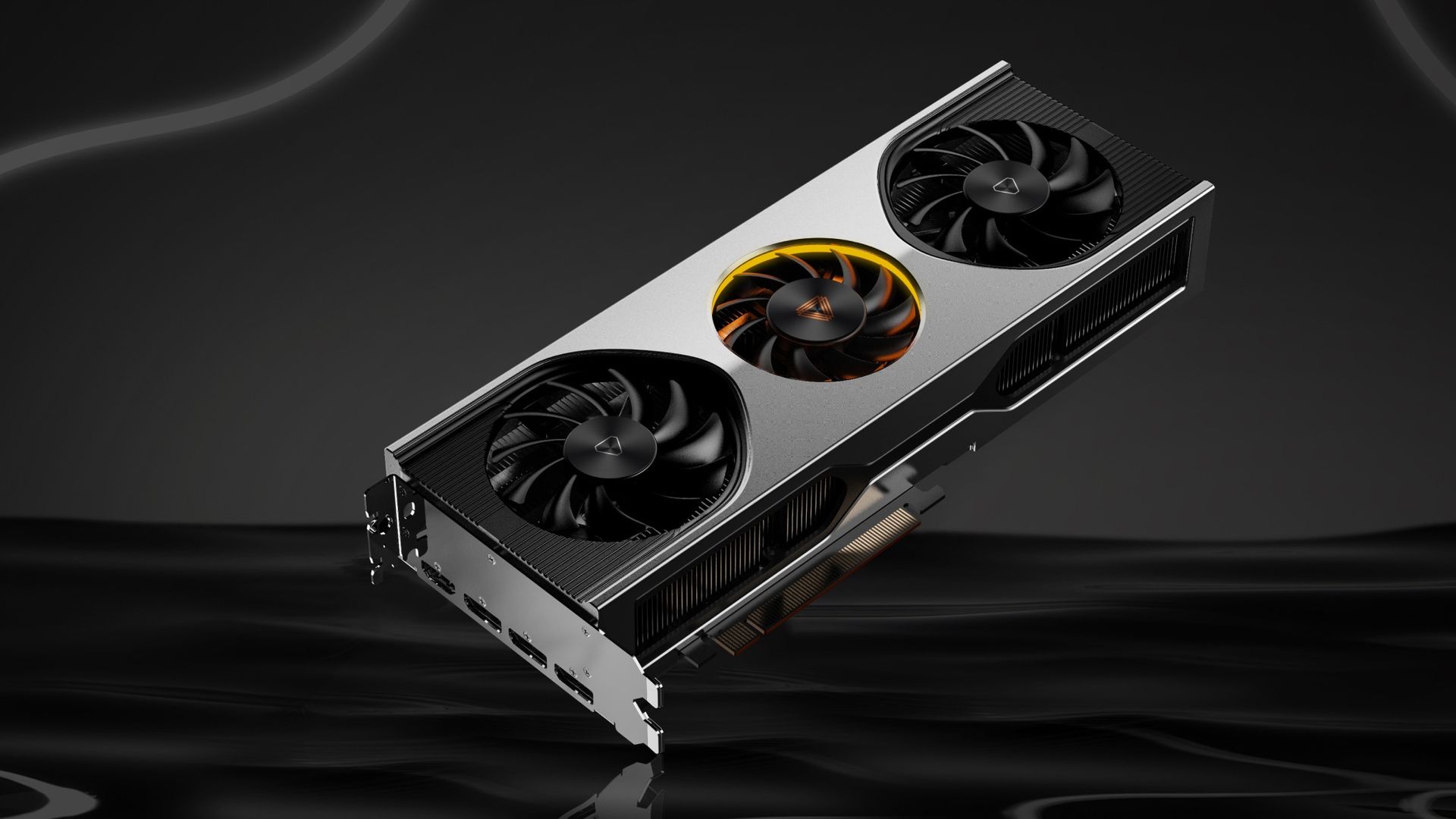
- Core News: Moore Threads has officially teased its upcoming Lushan gaming GPU ahead of MDC 2026, highlighting a groundbreaking 64GB VRAM configuration that sets a new record for consumer-grade graphics cards.
- Key Metric/Data: The Lushan series aims to deliver up to 64GB of unified memory, leveraging Moore Threads’ proprietary MT Arch architecture designed specifically for high-throughput AI and gaming workloads.
- Strategic Impact: This move represents a strategic pivot from pure compute density to massive memory capacity, directly targeting content creators, local LLM runners, and enterprise developers who require large context windows without cloud dependency.
Developing News & Core Details
In the rapidly evolving landscape of consumer hardware, Moore Threads has made a significant splash by teasing its next-generation Lushan gaming GPU. Scheduled for unveiling ahead of MDC 2026, this new entrant is not merely an incremental upgrade but a paradigm shift in how we define “consumer” graphics cards. The standout feature, as confirmed by the company’s product manager, is the inclusion of up to 64GB of VRAM—a figure that previously belonged exclusively to high-end workstation servers or enterprise AI accelerators.
Historically, consumer GPUs have been constrained by cost and power efficiency, typically capping out at 24GB (e.g., NVIDIA’s RTX 4090) before hitting diminishing returns for the average user. However, Moore Threads is challenging this norm. The Lushan series appears to be built on a philosophy where memory bandwidth and capacity are prioritized over raw rasterization speed alone. This suggests that the primary use case has shifted from traditional gaming (where 12-16GB is often sufficient) towards AI-native workloads, such as running large language models locally, 3D rendering for architecture, or high-fidelity simulation.
The announcement comes at a critical juncture where the line between “gaming GPU” and “AI accelerator” has blurred. By packing 64GB of VRAM into a consumer-facing product, Moore Threads is effectively creating a bridge that allows developers to run models like Llama-3-70B or Stable Diffusion XL with massive context windows directly on their desktops, reducing reliance on expensive cloud inference APIs.
Technical Analysis & Competitive Landscape
To understand the magnitude of Moore Threads’ 64GB claim, we must look at the architectural implications. In the current market, NVIDIA dominates with its HBM3E memory stacks and GDDR7 transitions, while AMD focuses on high-bandwidth GDDR6X. A 64GB consumer card implies a massive increase in die size or the use of advanced multi-chip packaging (MCP) technologies to fit multiple memory chips onto a single board.
Moore Threads’ MT Arch architecture is known for its efficiency in handling parallel compute tasks, which is essential for AI inference. The Lushan GPU’s focus on 64GB VRAM suggests that the chip is optimized for “memory-bound” workloads rather than purely “compute-bound” ones. In traditional gaming, rendering frames is limited by shader cores and cache; however, in generative AI, the bottleneck is almost always how fast data can be moved between the model weights and the memory. By doubling or tripling the standard consumer VRAM capacity, Moore Threads addresses this specific bottleneck.
Competitively, this places Moore Threads in a unique position against NVIDIA’s RTX 4090 (24GB) and upcoming Blackwell variants. While NVIDIA continues to push for higher clock speeds and ray-tracing performance, Moore Threads is betting that the future of high-end computing lies in sheer capacity. If the Lushan can deliver this memory at a price point significantly lower than NVIDIA’s enterprise-grade A-series or H-series cards, it could disrupt the mid-to-high-range market.
Furthermore, the inclusion of 64GB VRAM implies support for unified memory architectures where system RAM and GPU RAM are more seamlessly integrated. This is crucial for developers who need to load massive datasets into memory without swapping. The technical challenge here lies in thermal management; fitting that much silicon and memory on a consumer card generates immense heat, requiring advanced cooling solutions that may define the form factor of future desktops.
Industry & Strategic Implications
The strategic implications of Moore Threads’ Lushan GPU extend far beyond hardware specifications. For the enterprise IT sector, this signals a move towards “edge AI” where heavy processing happens locally rather than in the cloud. With data privacy concerns rising and latency costs increasing for cloud inference, having 64GB of local VRAM allows companies to run proprietary models on-premise without sending sensitive data over the internet.
For consumers, particularly creators and tech enthusiasts, this opens up new possibilities. Imagine running a 70-billion-parameter model locally with 128-bit context windows for complex reasoning tasks, or rendering photorealistic scenes in real-time with massive texture maps. The Lushan GPU effectively democratizes access to supercomputer-level memory resources.
From an investor’s perspective, Moore Threads is demonstrating a clear roadmap: moving away from competing solely on raw rasterization performance (where NVIDIA has a 10-year lead) and instead focusing on the “memory wall” that limits AI adoption. If they can scale this architecture to mass production with competitive pricing, they could capture a significant share of the growing local AI market.
“The Lushan GPU’s 64GB VRAM isn’t just about gaming; it’s a strategic declaration that memory capacity is the new bottleneck for AI, and Moore Threads is solving it before anyone else.”
Final Outlook
As we look toward MDC 2026 and beyond, the Lushan series represents a bold gamble by Moore Threads. If they can deliver on their promise of 64GB VRAM with acceptable power efficiency and thermal performance, they will redefine what a consumer GPU is capable of. The market is hungry for high-capacity memory solutions that don’t require enterprise budgets.
However, success depends not just on the spec sheet but on software optimization. Moore Threads’ driver stack and CUDA-like compatibility (via their MUSA architecture) must be robust enough to handle complex AI frameworks like PyTorch or TensorFlow without significant code refactoring. If they can achieve this, the Lushan could become a staple for developers worldwide.
In conclusion, Moore Threads is no longer just a niche player; with the Lushan’s 64GB VRAM, they are positioning themselves as a serious contender in the high-end AI hardware market. The next few months will reveal whether this record-breaking capacity translates into real-world performance or remains a theoretical marvel.



