
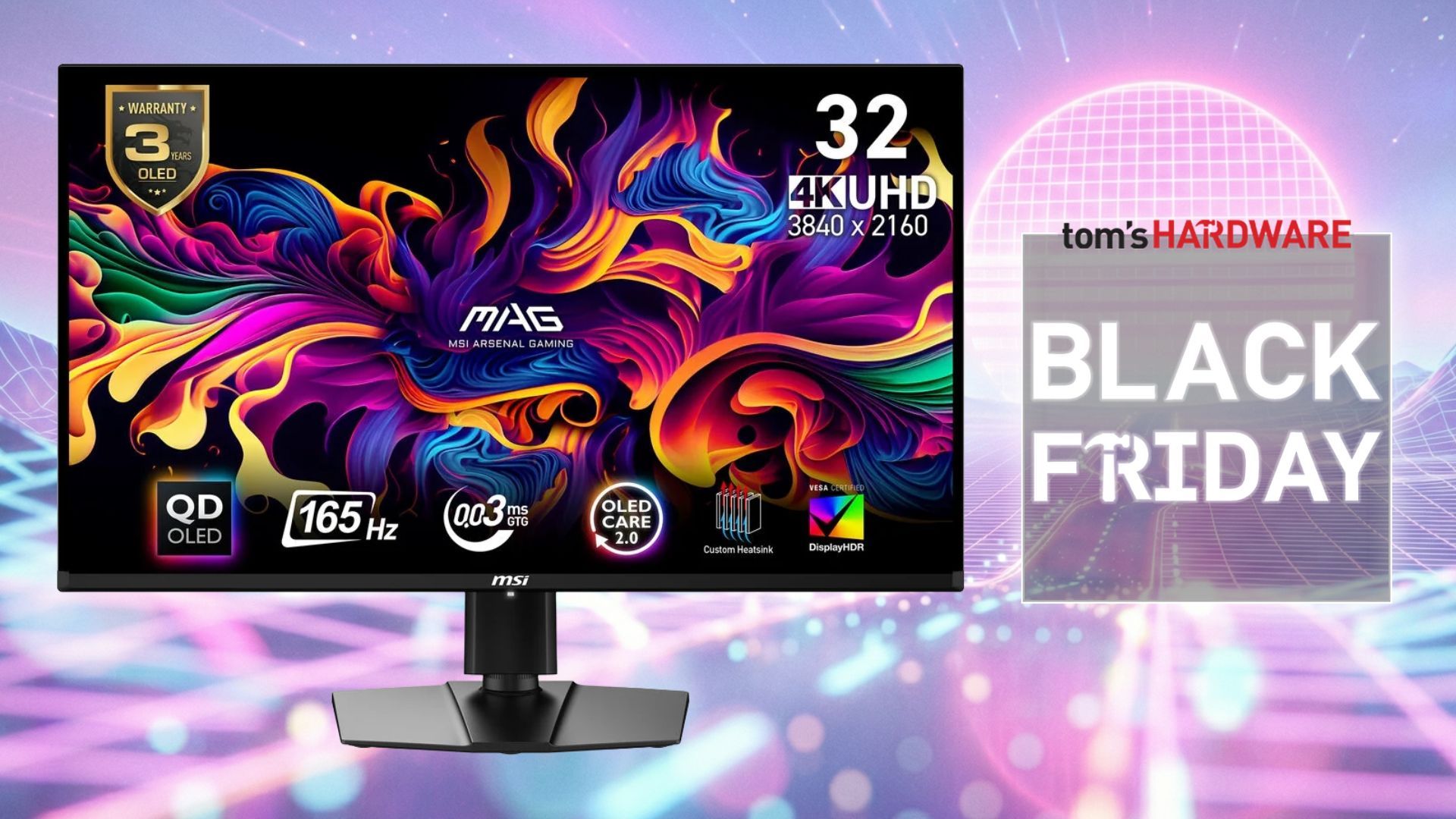
⚡ Executive Summary
- Core News: MSI has officially reduced the price of its 32-inch 4K QD-OLED gaming monitor by $130, bringing the retail cost down to a highly competitive $569.
- Key Metric/Data: The device features a native 4K resolution (3840×2160), supports up to 144Hz refresh rates with G-Sync compatibility, and utilizes Samsung’s Quantum Dot OLED panel technology for superior color accuracy.
- Strategic Impact: This price reduction signals a maturation of the QD-OLED supply chain and suggests that high-fidelity displays are transitioning from enthusiast-only hardware to mainstream professional and consumer standards.
Developing News & Core Details
In a significant move for the PC hardware market, MSI has announced a substantial price adjustment for its flagship 32-inch QD-OLED gaming monitor. Previously positioned as an ultra-premium display solution often hovering near or above $700, the new pricing tier of $569 represents a strategic pivot to capture a broader segment of the enthusiast and semi-professional market. This specific model is not merely a cosmetic refresh; it leverages the latest generation of Samsung’s QD-OLED panel technology, which combines Quantum Dot color enhancement with OLED self-emissive pixels.
The core specifications remain robust: a 32-inch diagonal screen delivering native 4K resolution (3840 x 2160) ensures that every pixel is accounted for in high-resolution content consumption. The panel supports refresh rates up to 144Hz, making it viable not just for static media but also for fast-paced competitive gaming where motion clarity is paramount. Crucially, the inclusion of G-Sync compatibility (and likely FreeSync Premium Pro) ensures tear-free visuals across a wide range of frame rates, bridging the gap between cinematic immersion and responsive gameplay.
What distinguishes this release from previous iterations is the refinement in color performance. QD-OLED technology addresses the historical “burn-in” concerns of standard OLEDs by utilizing Quantum Dots to create a more stable red sub-pixel emission, resulting in deeper blacks and higher peak brightness without sacrificing longevity. At $569, MSI is effectively challenging established competitors like LG and Samsung’s own monitor divisions, forcing a re-evaluation of the value proposition for 4K gaming monitors.
Technical Analysis & Competitive Landscape
To understand the magnitude of this price drop, one must analyze the underlying technological shifts. The transition from WOLED (White OLED) to QD-OLED represents a generational leap in display physics. Traditional WOLED panels suffer from slightly lower peak brightness and less vibrant reds due to the limitations of blue-emitting sub-pixels. By introducing Quantum Dots as an intermediate layer, MSI’s implementation achieves near-perfect color volume, with DCI-P3 coverage often exceeding 98%.
From a competitive standpoint, this $569 price point places the MSI monitor directly against LG’s UltraGear OLED series and Samsung’s Odyssey G9/G4 lines. Historically, these competitors have maintained higher price floors due to manufacturing costs associated with large-format OLED panels. A drop to $569 suggests that economies of scale are finally being realized in 32-inch QD-OLED production. This is a critical inflection point: the supply chain for Quantum Dot materials has stabilized, and panel yields have improved significantly.
Furthermore, the technical architecture supports hybrid use cases. The monitor’s high contrast ratio (infinite black levels) makes it ideal for content creation in post-production, where color grading accuracy is non-negotiable. Unlike IPS panels that may suffer from backlight bleed or lower contrast, QD-OLED offers a visual fidelity that rivals 4K HDR cinema displays at a fraction of the cost. The inclusion of USB-C connectivity with power delivery also positions it as a potential all-in-one hub for laptop users, reducing cable clutter—a feature increasingly demanded by remote workers and digital nomads.
Industry & Strategic Implications
The strategic implications of this pricing strategy extend beyond the immediate product launch. For enterprise IT departments and creative agencies, the $569 price point lowers the barrier to entry for deploying high-end QD-OLED monitors in bulk. Previously, these displays were often reserved for executive suites or lead artists; now, they become viable options for mid-tier workstations.
For investors and hardware analysts, this trend indicates a broader market correction where “flagship” features are becoming standard expectations rather than luxury add-ons. As the cost of manufacturing OLED panels decreases, we anticipate further price erosion in the 27-inch and 32-inch segments within the next 18 months. This could force legacy LCD manufacturers to either innovate rapidly or retreat from the high-end gaming monitor segment entirely.
Additionally, this move by MSI highlights the shifting power dynamics between panel makers (Samsung Display) and system integrators (MSI). As Samsung’s QD-OLED technology matures, it is becoming a commodity that multiple brands can leverage. MSI’s aggressive pricing suggests they are capitalizing on their brand reputation for gaming peripherals to capture market share from traditional display giants.
“The $569 price point for a 32-inch QD-OLED monitor marks the moment where infinite contrast and perfect color accuracy transition from enthusiast luxuries to mainstream necessities, fundamentally altering the competitive landscape of high-end PC displays.”
Final Outlook
Looking ahead, the MSI 32-inch 4K QD-OLED at $569 is poised to become a benchmark for value in the premium display market. As supply chains stabilize and competition intensifies, we predict that prices for similar specifications will continue to dip, potentially reaching the sub-$500 range by late 2024 or early 2025. This trajectory benefits consumers who can now access cinema-grade visuals without compromising on gaming performance.
For buyers, this is an optimal time to consider a QD-OLED monitor if they require high color accuracy and deep blacks for both work and play. The technology has matured enough that burn-in risks are minimal for typical usage patterns, and the visual fidelity offers a distinct advantage over LCD alternatives. As MSI continues to refine its software suite and driver support, this monitor stands as a testament to how rapid technological iteration can democratize high-end hardware, making the future of display technology accessible to a wider audience.



