⚡ Executive Summary
- Core News: Cyberpower’s high-performance prebuilt gaming desktop, featuring the cutting-edge NVIDIA GeForce RTX 5070 Ti 16GB, has hit Walmart’s Black Friday promotional line at a aggressive price of $2,479.
- Key Metric/Data: The system represents an immediate $730 discount off its standard retail valuation, resetting expectations for high-end enthusiast pricing heading into the holiday hardware cycle.
- Strategic Impact: This configuration signals the accelerated mainstream adoption of Blackwell architecture in prebuilt systems, forcing competitors to rethink margin strategies as component costs fluctuate.
Developing News & Core Details
The convergence of major retail promotional cycles and next-generation graphics architecture has produced one of the most compelling high-end prebuilt desktop offers of the current retail season. Cyberpower, a titan in the custom and prebuilt system integration market, has teamed up with retail giant Walmart to feature a top-tier configuration anchored by NVIDIA’s formidable GeForce RTX 5070 Ti 16GB. Priced at $2,479—a substantial $730 reduction from its baseline MSRP—this machine targets enthusiasts looking to bypass the complexity of individual component sourcing while securing top-tier performance.
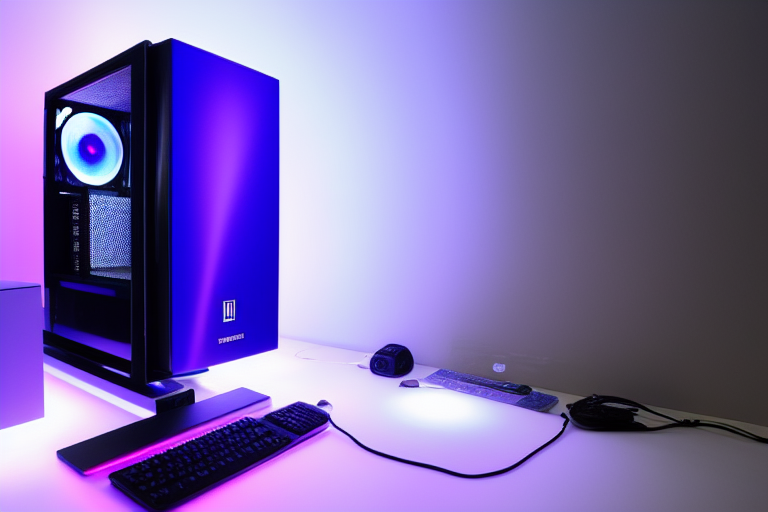
Beneath the tempered glass and RGB-lit chassis lies a hardware ecosystem engineered to handle the most demanding computational workloads. The inclusion of the RTX 5070 Ti with its generous 16GB frame buffer addresses the shifting VRAM demands of modern AAA titles and local AI workflows alike. By bundling this GPU with high-frequency DDR5 memory, a robust thermal cooling solution, and a high-capacity NVMe storage array, Cyberpower has eliminated the traditional performance bottlenecks often found in mid-tier prebuilt builds. Walmart’s aggressive positioning of this unit during the Black Friday window underscores a broader retail strategy: capturing the high-value enthusiast wallet share through immediate, high-impact discounting.
Technical Analysis & Competitive Landscape
Evaluating this Cyberpower configuration requires a granular look at the underlying silicon. The NVIDIA GeForce RTX 5070 Ti represents a critical inflection point in the consumer graphics market. Built on advanced process nodes, the Blackwell-derived architecture introduces architectural efficiencies that dramatically improve ray tracing performance and deep learning super sampling (DLSS) iterations compared to previous-generation Ada Lovelace cards. The 16GB VRAM allocation is not merely a gaming luxury; it is an operational necessity for rendering complex scenes, handling uncompressed textures, and running local large language models (LLMs) or generative diffusion tools.
In the broader competitive landscape, prebuilt system integrators (SIs) face intense pressure to balance component quality against volatile component pricing. Often, discounted prebuilts compromise on secondary components—such as utilizing lower-tier power supplies, restrictive motherboards, or subpar cooling solutions. However, Cyberpower’s specification profile for this Walmart exclusive maintains structural integrity across the board. The system avoids common pitfalls by pairing the high-end GPU with a balanced multi-core processor and sufficient thermal headroom. This technical competence places immense pressure on rival system builders who must now compete not only on raw price points but on component transparency and upgrade longevity.
Industry & Strategic Implications
From an enterprise and macroeconomic standpoint, aggressive pricing on RTX 50-series prebuilts illuminates shifting dynamics within the semiconductor supply chain. NVIDIA and its board partners are aggressively seeding the market with next-generation architecture to establish ecosystem dominance early in the product lifecycle. For consumers, this translates to accelerated generational turnover. Systems that traditionally commanded a severe early-adopter premium are seeing price compression much faster than historical averages.
Furthermore, the retail strategy executed by Walmart and Cyberpower points to an evolving consumer electronics market. As inflation and shifting discretionary spending habits alter buying patterns, hardware retailers must rely on headline-grabbing discounts—such as the $730 markdown seen here—to drive conversion rates among discerning tech enthusiasts. This trend benefits the consumer in the short term while forcing a margin squeeze on smaller system integrators who cannot leverage volume purchasing power to absorb similar price cuts.
“The arrival of aggressively priced Blackwell-powered prebuilts redefines what consumers expect from high-end retail configurations, turning next-gen performance from an exclusive luxury into an accessible benchmark.”
Final Outlook
The Cyberpower RTX 5070 Ti system featured in Walmart’s Black Friday lineup is more than just a seasonal bargain; it is a bellwether for the PC hardware market. By combining a top-tier 16GB graphics card with a steep $730 discount, the configuration successfully bridges the gap between enthusiast-grade performance and mainstream retail accessibility. As we look toward the remainder of the hardware cycle, this pricing benchmark will likely force competitors to recalibrate their own inventory strategies, ultimately accelerating the democratization of advanced ray tracing, high-refresh-rate gaming, and local AI capabilities for the everyday consumer.
⚡ Featured Enterprise & AI Infrastructure Picks
Building high-throughput AI pipelines or upgrading your workstation? Explore our curated cloud hosting, GPU workstations, and enterprise software stack.