⚡ Executive Summary
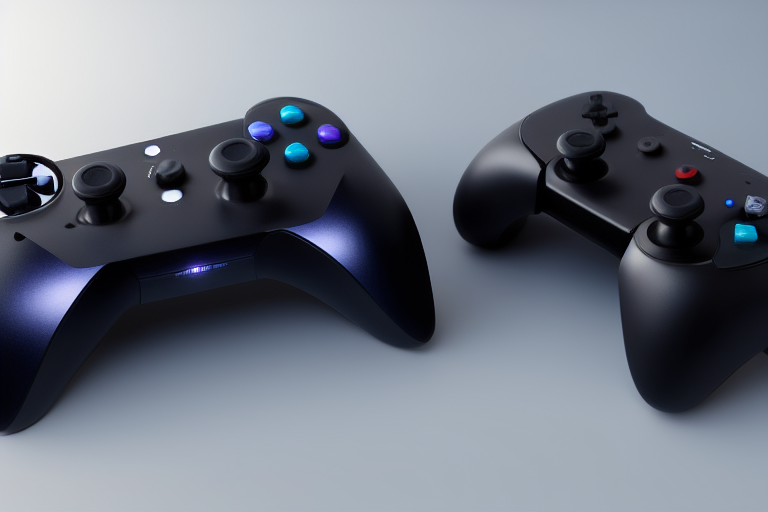
- Core News: Newly published Sony patents indicate the next-generation PlayStation 6 controller could feature a dedicated graphics settings button alongside automated, per-frame visual adjustment technology.
- Key Metric/Data: Moving beyond the physical immersion of the DualSense’s haptics, the shift addresses long-standing console compromises between fidelity (Ray Tracing) and performance (60+ FPS).
- Strategic Impact: This bridges the gap between traditional plug-and-play console simplicity and the granular customization native to PC gaming, fundamentally changing how console optimization is experienced.
Developing News & Core Details
Sony Interactive Entertainment is quietly plotting the next paradigm shift in hardware interaction. While the current PlayStation 5 generation defined its legacy through the tactile innovations of the DualSense controller—leveraging adaptive triggers and advanced haptic feedback to heighten sensory immersion—recent patent filings suggest a completely different design philosophy for the hypothetical PlayStation 6 ecosystem. Beyond standard iterative improvements and exploratory patents for purchasing digital storefront content directly via peripheral hardware, documentation has emerged detailing a system engineered to grant users direct, real-time control over application performance parameters.
At the center of this discovery is a patented input device designed to facilitate instant, manual switching between quality modes on the fly. Rather than requiring players to pause gameplay, navigate through nested system menus, and reload asset pipelines to alternate between a 4K/30fps fidelity mode and a 1080p/60fps performance mode, a dedicated hardware button on the controller could handle the transition seamlessly. More intriguingly, the patent outlines a companion backend architecture: an automated protocol capable of evaluating system load and tweaking visual settings dynamically on a frame-by-frame basis. This dual-pronged approach aims to marry the user-directed control favored by power users with the autonomous optimization traditionally managed by console firmware.
Technical Analysis & Competitive Landscape
To understand the technical weight of Sony’s patent, one must examine the perennial architectural compromises inherent to modern video game consoles. For decades, console hardware has operated on a static configuration model. Developers build games targeting a fixed profile, and players accept whatever trade-offs the development studio selects. While recent console generations introduced in-game toggles—allowing users to choose between ‘Performance’ and ‘Quality’ presets—the experience remains clunky, often forcing a complete state reload or disrupting the flow of gameplay.
By introducing a hardware-level shortcut backed by real-time algorithmic adjustment, Sony is effectively dismantling the barrier between PC-style customization and console-style simplicity. Technically, executing a seamless transition of graphical presets mid-frame requires sophisticated memory management and asset streaming. Shifting texture resolution, shadow cascades, global illumination models, and LOD (Level of Detail) biases instantaneously without triggering a memory crash demands massive memory bandwidth and intelligent caching. If Sony’s hardware can achieve this cleanly, it signals that future APU architectures from partners like AMD will rely heavily on advanced AI-driven upscaling, dynamic variable-rate shading (VRS), and instantaneous pipeline flushes.
In the broader competitive landscape, Microsoft and Nintendo have approached hardware ergonomics and software customization from divergent angles. Microsoft’s focus has largely remained tethered to ecosystem unification, cloud streaming, and backward compatibility via Xbox Game Pass, leaving hardware iteration on a standard cyclical path. Nintendo prioritizes novel form factors and gameplay mechanics over raw graphical settings. By focusing on deep-level performance governance via the controller, Sony is carving out a unique value proposition: giving players the keys to the engine room without requiring an engineering degree.
Industry & Strategic Implications
The implications of this patent stretch far beyond living room entertainment. As consumer electronics converge, the boundaries between dedicated gaming consoles, professional workstations, and mixed-reality devices continue to blur. For the enterprise and developer ecosystem, standardized APIs that allow real-time graphics scaling via peripheral hardware could transform how software developers test performance regressions, UI scaling, and rendering efficiency.
Furthermore, from a consumer psychology perspective, this feature directly addresses the anxiety modern gamers face when launching a new title. The eternal debate over whether to sacrifice frame rate for ray-traced reflections—or vice versa—often leads to decision paralysis. By placing an intuitive, rapid toggle directly under the player’s fingertips, Sony empowers the consumer to experiment with rendering states organically. If a chaotic battle sequence demands high frame rates, a quick tap shifts the priority; during a cinematic cutscene, instant fidelity enhancement elevates the presentation. This transforms graphics settings from a static administrative chore into an active, dynamic element of gameplay.
“Sony’s patent represents a philosophical turning point for console hardware: moving away from rigid, developer-dictated visual profiles toward a fluid, user-empowered ecosystem governed by intelligent, real-time automation.”
Final Outlook
Patents, by their very nature, do not guarantee commercial implementation. Tech giants routinely file intellectual property safeguards for experimental concepts that never make it past the prototyping phase. However, the directional trajectory of this filing is telling. As hardware scaling plateaus and consumers demand ever-higher visual fidelity paired with buttery-smooth refresh rates, pure brute-force silicon advancement must be augmented by clever software and hardware integration.
If Sony successfully integrates a dedicated graphics settings button and automated per-frame optimization into the PlayStation 6 controller ecosystem, it will establish a new benchmark for console design. It proves that the evolution of game controllers is not limited to physical touch and rumble motors, but can extend deep into the computational heart of the gaming experience. As we look toward the horizon of next-generation hardware, the convergence of AI optimization, user-driven customization, and ergonomic innovation will dictate which platforms capture the modern consumer’s attention.
⚡ Featured Enterprise & AI Infrastructure Picks
Building high-throughput AI pipelines or upgrading your workstation? Explore our curated cloud hosting, GPU workstations, and enterprise software stack.