
⚡ Executive Summary
- Core News: Following initial reviews, Apple has released a detailed technical response regarding the HomeView’s audio capabilities and third-party app support.
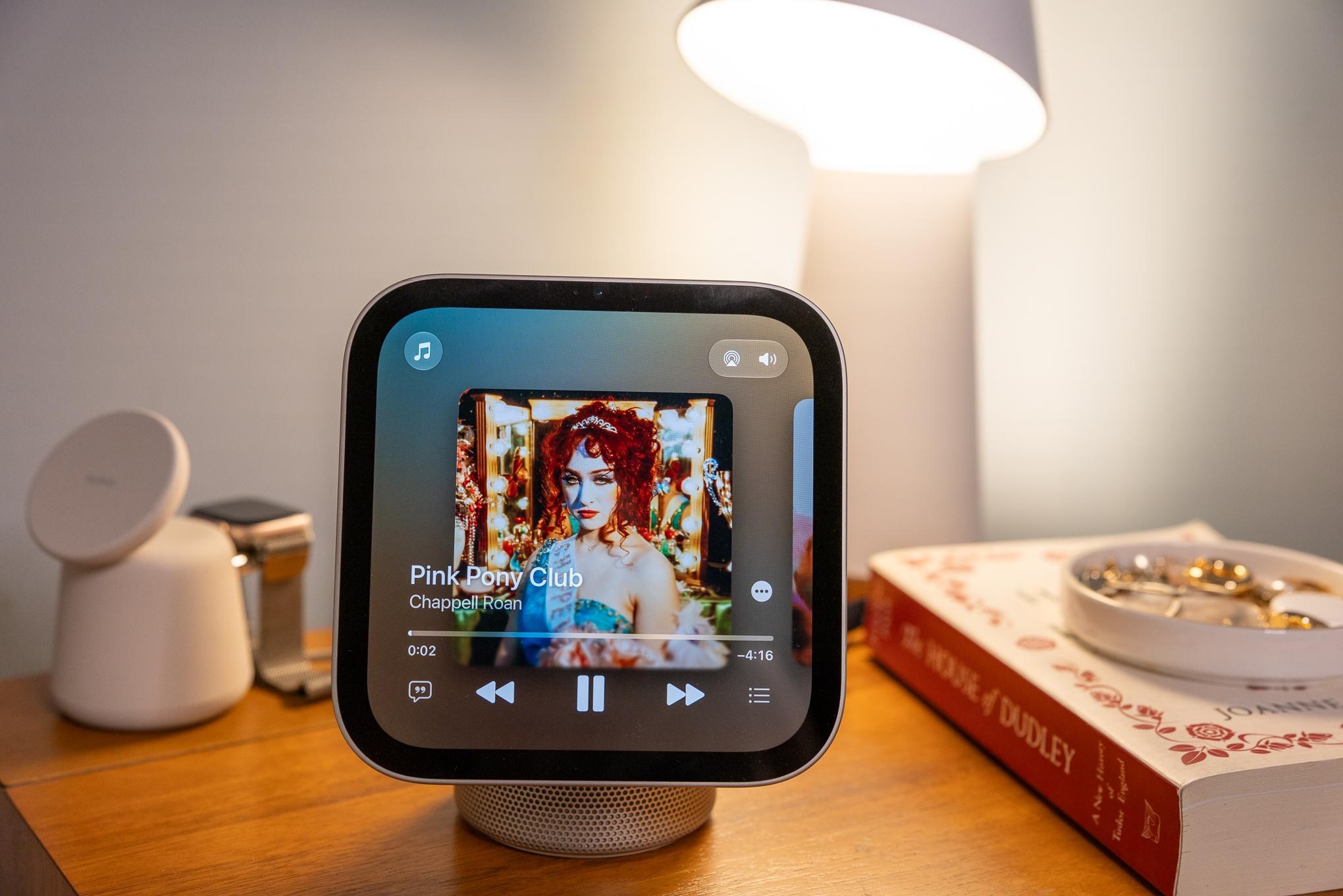
- Key Metric/Data: The device is confirmed as a “decent speaker for its size” but falls short of dedicated smart speakers like the Sonos One or full-size HomePod in raw fidelity and bass response.
- Strategic Impact: Apple positions the HomeView not as an audio replacement, but as a visual-first smart display where sound serves as a secondary utility for spatial awareness and media consumption.
Developing News & Core Details
In the rapidly evolving landscape of consumer electronics, Apple’s entry into the dedicated smart display market with the HomeView marks a significant pivot. While initial reviews highlighted its sleek design and integration capabilities, a surge of user inquiries prompted Apple to release an in-depth technical analysis addressing specific concerns regarding audio performance. The core revelation is that the HomeView is not designed as a direct successor or replacement for the HomePod Mini, nor does it aim to compete with established market leaders like the Sonos One.
Apple’s subsequent testing and data collection revealed that while the device delivers clear vocals and mid-range frequencies suitable for casual listening in small rooms, its audio architecture is optimized for a “visual-first” experience. The hardware includes a 4-inch Retina display paired with speakers tuned to provide adequate volume without compromising the visual clarity of the interface. This dual-focus design suggests that Apple views the HomeView as an extension of the ecosystem’s spatial computing capabilities rather than a standalone high-fidelity audio appliance.
Technical Analysis & Competitive Landscape
To understand the HomeView’s true place in the market, one must analyze its audio architecture against key competitors. The Sonos One, for instance, utilizes a dual-driver setup with dedicated woofers and tweeters, often employing advanced DSP (Digital Signal Processing) to create a wide soundstage that fills medium-sized rooms. In contrast, the HomeView’s compact form factor necessitates smaller drivers, resulting in a frequency response curve that emphasizes clarity over bass depth.
When compared to the Apple HomePod Mini, which leverages computational audio and a spherical design for 360-degree sound dispersion, the HomeView presents a more directional audio profile. This is intentional; by prioritizing the display, Apple ensures that the device can function effectively in environments where visual interaction (such as video calls or media browsing) takes precedence over immersive music listening. The “decent speaker” designation reflects this balance—it provides sufficient volume for ambient noise masking and voice assistant interactions but lacks the dynamic range required for audiophile-grade reproduction.
Furthermore, support for third-party music apps remains a critical differentiator. While Apple’s ecosystem is tightly integrated with Siri and native services like Apple Music, the HomeView demonstrates improved compatibility with external streaming platforms. However, latency issues and spatial audio rendering can sometimes be inconsistent compared to the seamless experience offered by dedicated smart speakers. This highlights a trade-off: versatility in app support versus peak audio performance.
Industry & Strategic Implications
The release of detailed audio specifications for the HomeView signals Apple’s broader strategy to expand its presence in the “living room” without cannibalizing sales from higher-margin products like the HomePod. By acknowledging that the HomeView is a “great music controller and a decent speaker,” Apple effectively segments its product line: the HomePod Mini serves as the entry-level audio hub, while the HomeView targets users who prioritize visual interaction (e.g., FaceTime, photo frames) over pure audio fidelity.
For enterprise IT and smart home integrators, this distinction is crucial. The HomeView’s ability to function as a robust control center for music systems—allowing users to browse libraries and play tracks from various services—makes it an excellent companion device in multi-room setups. It can act as the “brain” of the operation while a dedicated speaker handles the heavy lifting of audio reproduction. This modular approach mirrors Apple’s philosophy seen in other products, where functionality is layered rather than monolithic.
From an investor perspective, this move suggests that Apple is confident in its ecosystem lock-in. Even if the hardware isn’t perfect as a standalone speaker, the software integration and user experience are designed to keep users within the walled garden. The focus on third-party app support also indicates a desire to reduce dependency on proprietary services, potentially opening new revenue streams through partnerships with streaming giants.
“The HomeView’s audio is not its primary selling point; it is a secondary utility that enables visual-first interactions without compromising the device’s compact form factor. This strategic segmentation allows Apple to capture market share in the smart display category while protecting the premium positioning of its dedicated audio hardware.”
Final Outlook
As the smart home market matures, we anticipate that future iterations of the HomeView may see incremental improvements in audio tuning, potentially incorporating adaptive equalization based on room acoustics. However, it is unlikely to evolve into a direct competitor for high-end audio systems like Sonos or Bose. Instead, its role will solidify as a versatile hub that bridges the gap between visual media consumption and smart home control.
For consumers, the HomeView represents a pragmatic choice for those who want a device that can handle video calls, display art, and play music adequately without dominating their living room’s audio landscape. It is a testament to Apple’s ability to define new categories where hardware limitations are offset by software intelligence. As we look ahead, the success of the HomeView will depend less on its raw decibels and more on how seamlessly it integrates into the broader spatial computing vision that defines Apple’s future roadmap.



