
⚡ Executive Summary
- Core News: UN diplomats in Geneva concluded a largely fruitless week of negotiations, agreeing only to “start discussing options” regarding legally binding rules for autonomous weapons (LAWS) rather than finalizing a treaty.
- Key Metric/Data: The International Committee of the Red Cross (ICRC) had urged drafting urgent legal frameworks within 12 months; Pope Leo XIII and UN Secretary-General António Guterres backed this timeline, yet consensus remains elusive.
- Strategic Impact: The stalemate underscores a critical lag between exponential AI development cycles and the rigid, consensus-based nature of international law, potentially leaving future warfare unregulated for years.
Developing News & Core Details
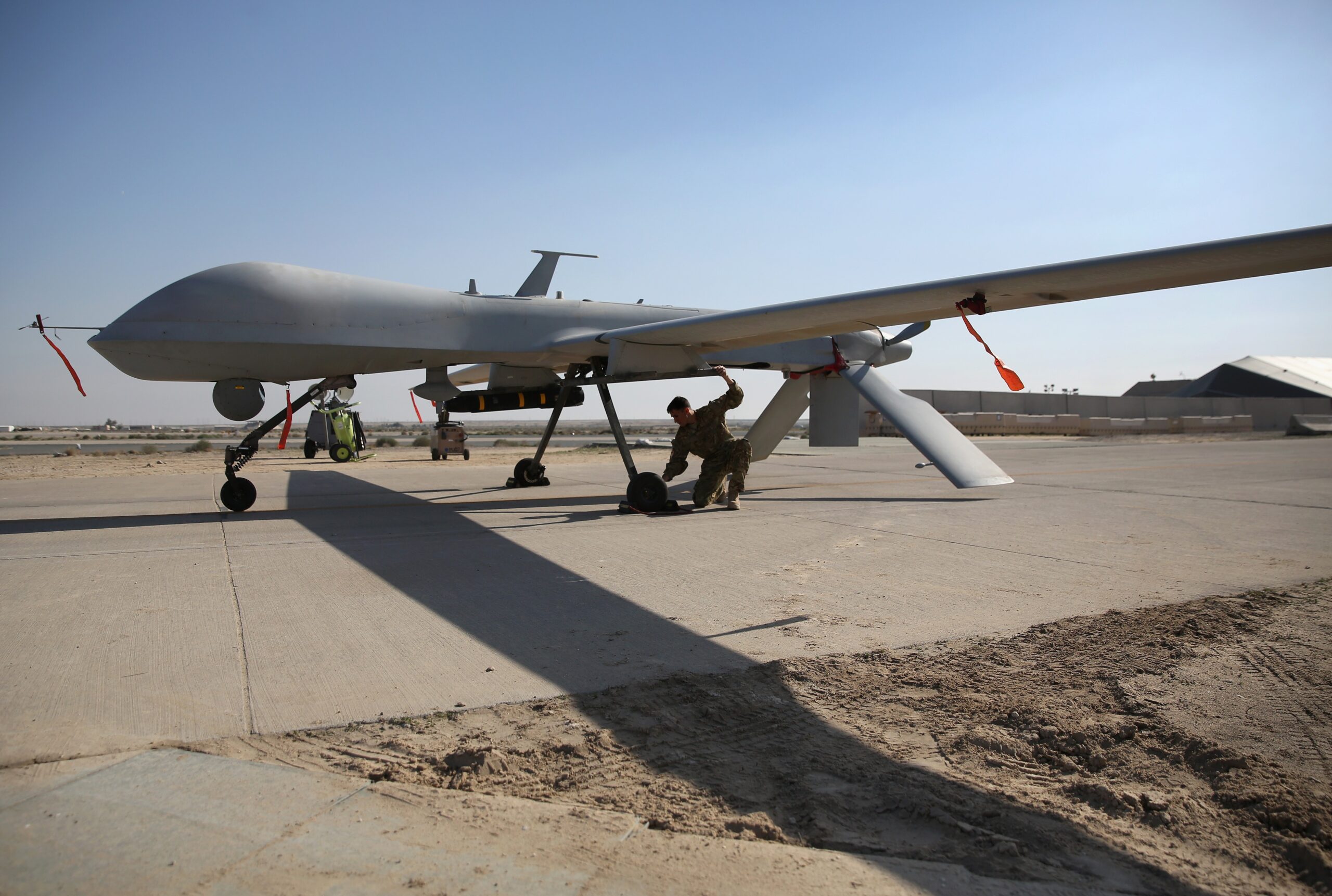
The recent session in Geneva marked another chapter in a decades-long struggle to define the legal boundaries of “killer robots”—a colloquial term for Lethal Autonomous Weapons Systems (LAWS). While the agenda item focused on regulating these systems, representatives departed without a concrete agreement, settling instead on a vague mandate to explore future options. This outcome follows intense pressure from humanitarian organizations like the International Committee of the Red Cross (ICRC), which argued that legally binding rules must be drafted within a year to keep pace with technological evolution.
The urgency stems from the rapid maturation of artificial intelligence in military applications. Unlike traditional weapons, LAWS can select and engage targets without real-time human intervention. Before negotiations began, high-profile advocates including UN Secretary-General António Guterres and Pope Leo XIII (referencing historical continuity in humanitarian law) emphasized that waiting for technology to mature before regulation is a dangerous gamble. The compromise reached—merely agreeing to “start discussing options”—suggests that while the political will exists, the technical definitions required for a treaty remain fractured.
Technical Analysis & Competitive Landscape
The core friction in these negotiations lies not just in ethics but in architecture. Modern LAWS rely on sensor fusion (radar, optical, thermal) and machine learning algorithms to identify targets. The technical debate centers on the “human-in-the-loop” vs. “human-on-the-loop” distinction. Proponents of regulation argue that current AI lacks the contextual understanding required for complex combat scenarios, such as distinguishing between a soldier holding a weapon versus one surrendering. Opponents, often citing national security interests, argue that over-regulation stifles innovation and cedes strategic advantage to rivals who can deploy autonomous systems faster.
From an industry perspective, this regulatory vacuum creates a “first-mover” race among major defense contractors. Companies developing advanced autonomy stacks for drones or ground vehicles are effectively operating in a gray zone where liability is undefined. If a system malfunctions and causes civilian casualties, determining responsibility—whether it lies with the software developer, the military operator, or the algorithm itself—remains legally ambiguous. The Geneva stalemate implies that without clear standards on data provenance for training sets (e.g., how an AI learns to recognize a tank), future treaties may struggle to enforce compliance.
Furthermore, the competitive landscape is shifting toward “swarm” technologies, where hundreds of small drones coordinate autonomously. Regulating these systems requires defining what constitutes a single “decision-making unit,” which complicates traditional legal frameworks designed for singular weapon platforms. The inability to agree on definitions in Geneva suggests that the industry is moving faster than the legislative process can accommodate.
Industry & Strategic Implications
The failure to reach a consensus has profound implications for enterprise IT and defense procurement. For technology firms, it signals an extended period of regulatory uncertainty, potentially delaying investment in next-gen autonomy until a framework is established. However, this ambiguity also allows agile startups to capture market share by deploying proprietary solutions before standardized compliance requirements emerge.
For investors, the sector presents a dual narrative: immediate growth driven by current capabilities versus long-term risk from potential future restrictions. A binding treaty could force a re-architecture of existing hardware and software stacks, creating short-term disruption but potentially stabilizing the market in the long run. Conversely, if nations adopt a “wait-and-see” approach, the technology may become entrenched in global arsenals before strict rules are applied, similar to how nuclear weapons were deployed before the Non-Proliferation Treaty was fully operationalized.
Strategically, the Geneva outcome highlights the challenge of governing emergent technologies. As AI systems become more adaptive and less predictable, static legal definitions may prove insufficient. Future regulations might need to evolve from rule-based compliance to performance-based standards, ensuring that autonomous systems meet specific reliability thresholds regardless of their internal architecture.
“The Geneva stalemate reveals a critical lag between exponential AI development cycles and the rigid, consensus-based nature of international law, potentially leaving future warfare unregulated for years.”
Final Outlook
As diplomats leave Geneva with only a promise to discuss options, the window for shaping the foundational rules of autonomous warfare is narrowing. The next 12 months will be pivotal; if the ICRC’s call for urgent action goes unheeded, we may witness the deployment of fully autonomous systems in conflict zones before a robust legal framework exists. This could set precedents that are difficult to reverse later.
Looking ahead, expect increased pressure from civil society and humanitarian groups to leverage public opinion as a tool for negotiation. Simultaneously, major powers may push for “soft law” guidelines—non-binding recommendations—that allow flexibility while establishing norms of behavior. For the tech industry, this era demands not just technical innovation but also proactive engagement with policymakers to define the ethical boundaries of their own creations before those boundaries are drawn by others.



