
⚡ Executive Summary
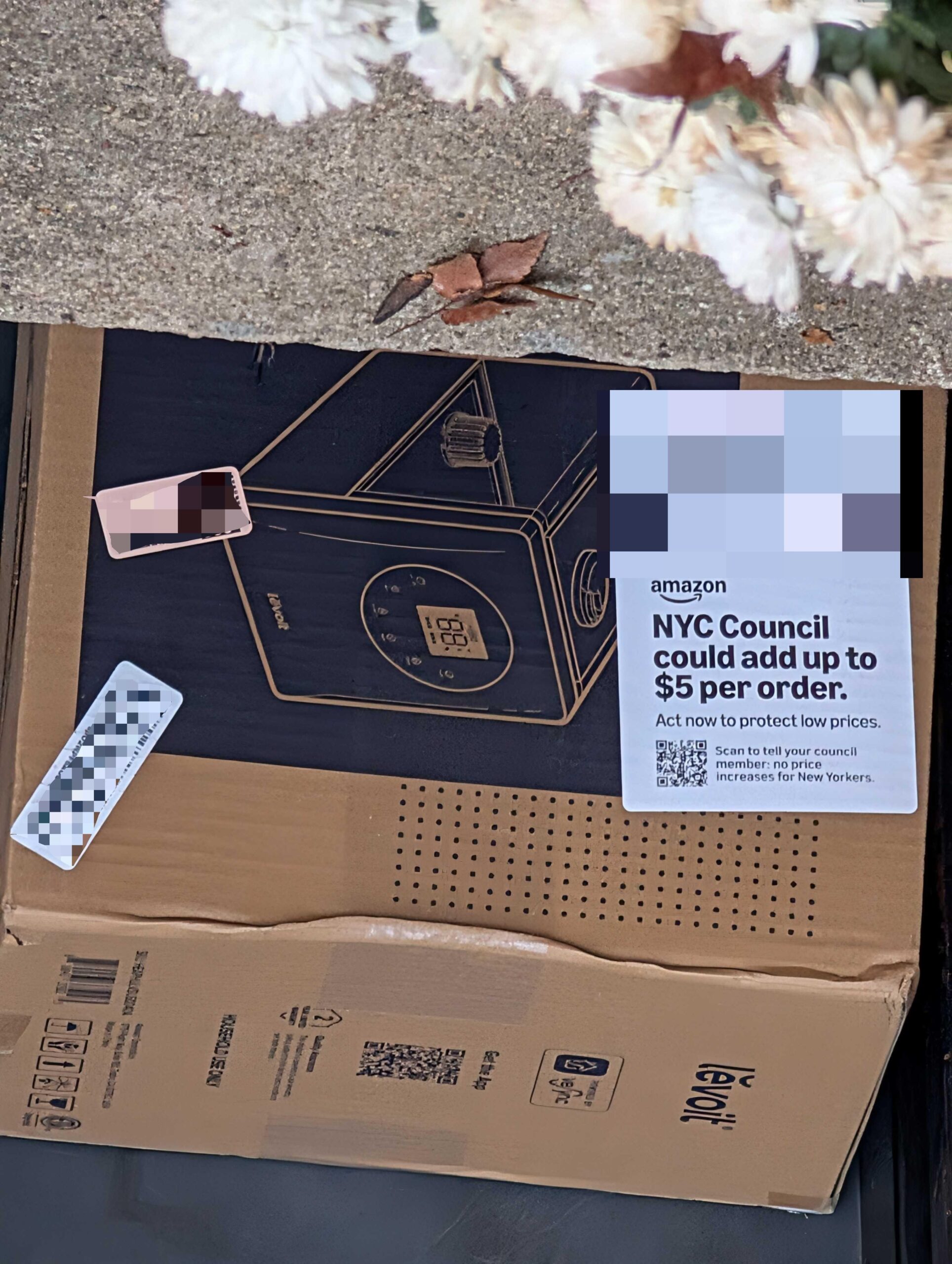
- Core News: Amazon has escalated its legal and public relations war against the New York City Council following the introduction of the Delivery Protection Act, which mandates direct employment for last-mile delivery workers. The company is now actively labeling shipments to warn customers that the new regulations could add up to $5 per order.
- Key Metric/Data: The proposed legislation requires third-party logistics firms operating warehouses in NYC to be licensed and directly employ their workforce, effectively banning current arrangements where Amazon utilizes independent contractors or small local companies for final delivery.
- Strategic Impact: This marks a significant shift from passive lobbying to active consumer-facing disruption. If passed, the act could force Amazon to restructure its entire last-mile network in NYC, increasing operational costs and potentially slowing delivery speeds as it transitions from an asset-light model back to direct labor management.
Developing News & Core Details
The conflict between Amazon and the New York City Council has moved beyond traditional lobbying into a phase of aggressive consumer communication. Earlier this week, notifications began appearing within Amazon’s mobile application and on its website, alerting users to the “Delivery Protection Act.” These alerts explicitly state that the legislation could result in an additional cost of up to $5 being added to any order placed within New York City.
The root of this friction lies in the Delivery Protection Act itself. The legislation aims to modernize labor standards for the gig economy by requiring last-mile delivery firms operating warehouses within NYC to be licensed by the city and directly employ their workers. Currently, Amazon relies heavily on a hybrid model involving third-party logistics providers (3PLs) and independent contractors to manage its massive volume of small-package deliveries. The act effectively bans these third-party arrangements for local operations, forcing a return to direct employment models similar to those used in traditional retail or large-scale distribution centers.
Amazon’s response has been swift and multifaceted. By placing physical labels on shipments that highlight the potential surcharge, Amazon is leveraging its massive customer base as a distributed lobbying force. This tactic serves two purposes: it educates consumers about the impending cost increase, thereby managing expectations, and it creates a psychological pressure point where customers may demand their representatives or local businesses advocate against regulations they perceive as costly.
Technical Analysis & Competitive Landscape
From an architectural and operational standpoint, the Delivery Protection Act represents a fundamental shift in how e-commerce giants manage their supply chain infrastructure. Amazon’s current success relies on an “asset-light” last-mile strategy where it aggregates demand and sells delivery services to smaller carriers or utilizes independent contractors. This model allows for rapid scaling without the overhead of managing a massive, dispersed workforce.
The technical implications are profound. Transitioning from third-party arrangements to direct employment requires Amazon to rebuild its human resource management systems specifically for NYC operations. This includes integrating new payroll software, updating time-tracking algorithms, and potentially re-engineering route optimization software to account for the different labor laws and scheduling requirements of full-time employees versus gig workers.
In terms of competitive landscape, this regulatory pressure creates a wedge between Amazon and its smaller competitors like FedEx Local or UPS Access Point partners. Smaller logistics firms may find it easier to adapt to direct employment models as they already operate with leaner structures. However, for Amazon, the sheer volume of packages makes the fixed cost of direct labor significantly higher than the variable cost of contracting.
Furthermore, this battle highlights a broader trend in tech regulation: the move from “innovation-friendly” zones to “labor-first” jurisdictions. Cities like NYC are increasingly viewing gig economy platforms not just as service providers but as de facto employers that must bear the social costs of their workforce. Amazon’s aggressive labeling suggests it views these regulations as an existential threat to its margin structure in one of its most lucrative markets.
Industry & Strategic Implications
The broader implications for enterprise IT and investors are significant. For enterprise clients, this sets a precedent where location-specific labor laws can drastically alter the Total Cost of Ownership (TCO) for cloud-based logistics solutions. Companies relying on Amazon’s fulfillment network in NYC may see their unit economics degrade if they cannot pass these costs to consumers.
For investors, the case study of Amazon vs. NYC offers a glimpse into the future of “RegTech”—regulatory technology. We are likely to see an arms race where tech giants deploy AI-driven compliance tools to navigate increasingly fragmented local laws. The ability to dynamically adjust pricing and labor models in real-time based on municipal codes will become a key differentiator.
Consumer behavior is also at stake. If Amazon successfully passes these costs, it may lead to a bifurcation of the market: premium delivery services with guaranteed direct employment (and higher prices) versus slower, cheaper options using third-party networks in less regulated areas. This could force consumers to trade off between speed and cost, fundamentally altering the expectations set by the “Prime” promise.
“The shift from passive lobbying to active consumer labeling marks a new era of ‘consumer-facing regulation,’ where tech giants use their user interfaces as battlegrounds to influence public opinion on legislative outcomes.”
Final Outlook
If the NYC Council passes the Delivery Protection Act, we can expect Amazon to respond with further innovations in its supply chain architecture. This might include building dedicated micro-fulfillment centers staffed directly by employees to bypass third-party restrictions entirely. The company may also explore cross-border logistics solutions where packages are delivered from just outside NYC jurisdiction before entering the city.
Ultimately, this conflict underscores the tension between the scalability of digital platforms and the rigidity of physical labor laws. As cities continue to tighten regulations on gig work, tech giants will be forced to evolve their operational models, moving away from pure asset-light strategies toward more integrated, direct-employment infrastructures. The next few months will reveal whether Amazon can absorb these costs or if it will pass them directly to the consumer, reshaping the e-commerce landscape in one of America’s most dynamic markets.



