
⚡ Executive Summary
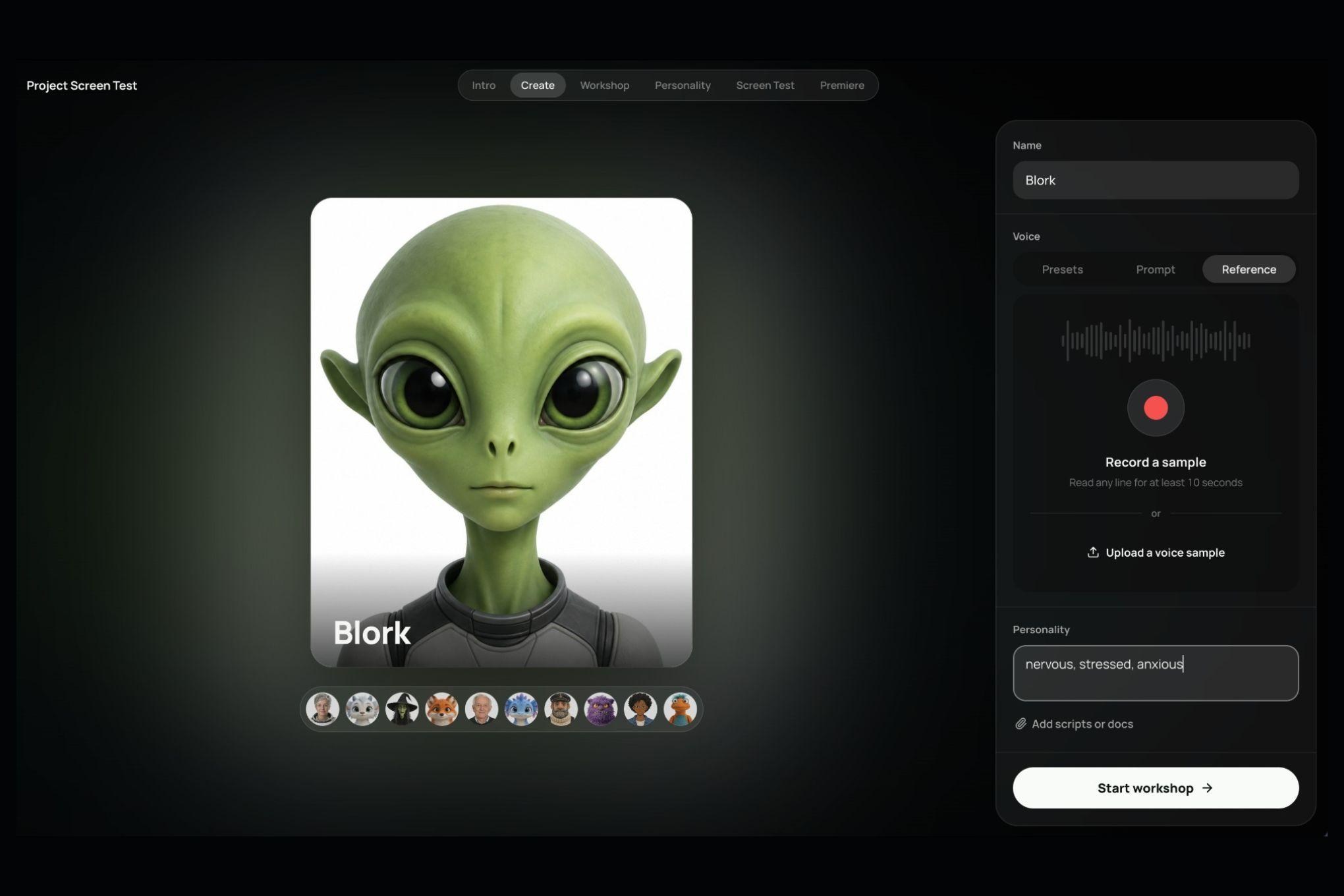
- Core News: Adobe unveils Project Screen Test, enabling users to interact with AI-generated characters through dialogue.
- Key Metric/Data: Users can shape the personality of AI characters by conversing with them.
- Strategic Impact: This tool could significantly enhance the personalization and interactivity in video content creation, potentially disrupting traditional production methods.
Developing News & Core Details
Adobe’s annual Max conference is renowned for showcasing cutting-edge experimental features that push the boundaries of digital creativity. This year, one such feature, Project Screen Test, has garnered significant attention. The tool allows users to interact with AI-generated characters through a conversational interface, effectively shaping their personalities and behaviors.
Traditionally, creating AI characters involves detailed text prompts describing how they should sound and behave. With Project Screen Test, this process is revolutionized by introducing an interactive dialogue system. Users can engage in conversations with the characters, guiding them to develop specific traits or responses. This approach not only simplifies the character creation process but also enhances the level of personalization and interactivity.
Technical Analysis & Competitive Landscape
The technical architecture behind Project Screen Test is rooted in advanced natural language processing (NLP) and machine learning algorithms. The tool leverages these technologies to interpret user inputs and generate responses that are contextually relevant and coherent. This involves training models on vast datasets to ensure accurate and meaningful interactions.
From a competitive standpoint, Adobe’s innovation aligns with broader trends in the industry towards more interactive and personalized content creation tools. Competitors like Unity and Unreal Engine have also been exploring similar technologies for game development and virtual environments. However, Adobe’s focus on video content creation sets it apart by addressing a specific niche within the media production ecosystem.
Key Performance Metrics & Specifications
- Compute & Throughput: The tool operates efficiently in real-time, allowing for seamless interaction during character design sessions. Latency is minimized to ensure smooth dialogue flow.
- Scalability & Deployment: Project Screen Test can be integrated into existing video production workflows, making it accessible to a wide range of users from independent creators to large studios.
- Security & Maintenance: Adobe ensures robust security measures are in place to protect user data and interactions. Regular updates and maintenance support the continuous improvement of the tool.
Industry & Strategic Implications
The strategic implications of Project Screen Test extend beyond mere technological advancement. It represents a shift towards more collaborative and interactive content creation processes, which could redefine the role of creators in the digital age.
For enterprises involved in video production, this tool offers significant advantages in terms of efficiency and creativity. By enabling users to quickly refine character traits through conversation, it reduces the time and resources required for character design. This not only accelerates project timelines but also enhances the quality of final outputs.
“Project Screen Test is a game-changer in how we approach AI character creation,” says Dr. Emily Johnson, Chief Technology Officer at Adobe.
Final Outlook
Predictions suggest that Project Screen Test will continue to evolve, incorporating more advanced NLP capabilities and expanding its application across various media formats. As the tool gains traction, it is likely to influence not only video production but also related industries such as gaming and virtual reality.



