
⚡ Executive Summary
- Core News: AMD launches the MI430X, emphasizing native FP64 support over emulation.
- Key Metric/Data: Ozaki FP64 emulation covers only a small portion of HPC workloads (less than 15%).
- Strategic Impact: The MI430X positions AMD as a leader in next-gen supercomputing installations, challenging Nvidia’s dominance.
Developing News & Core Details
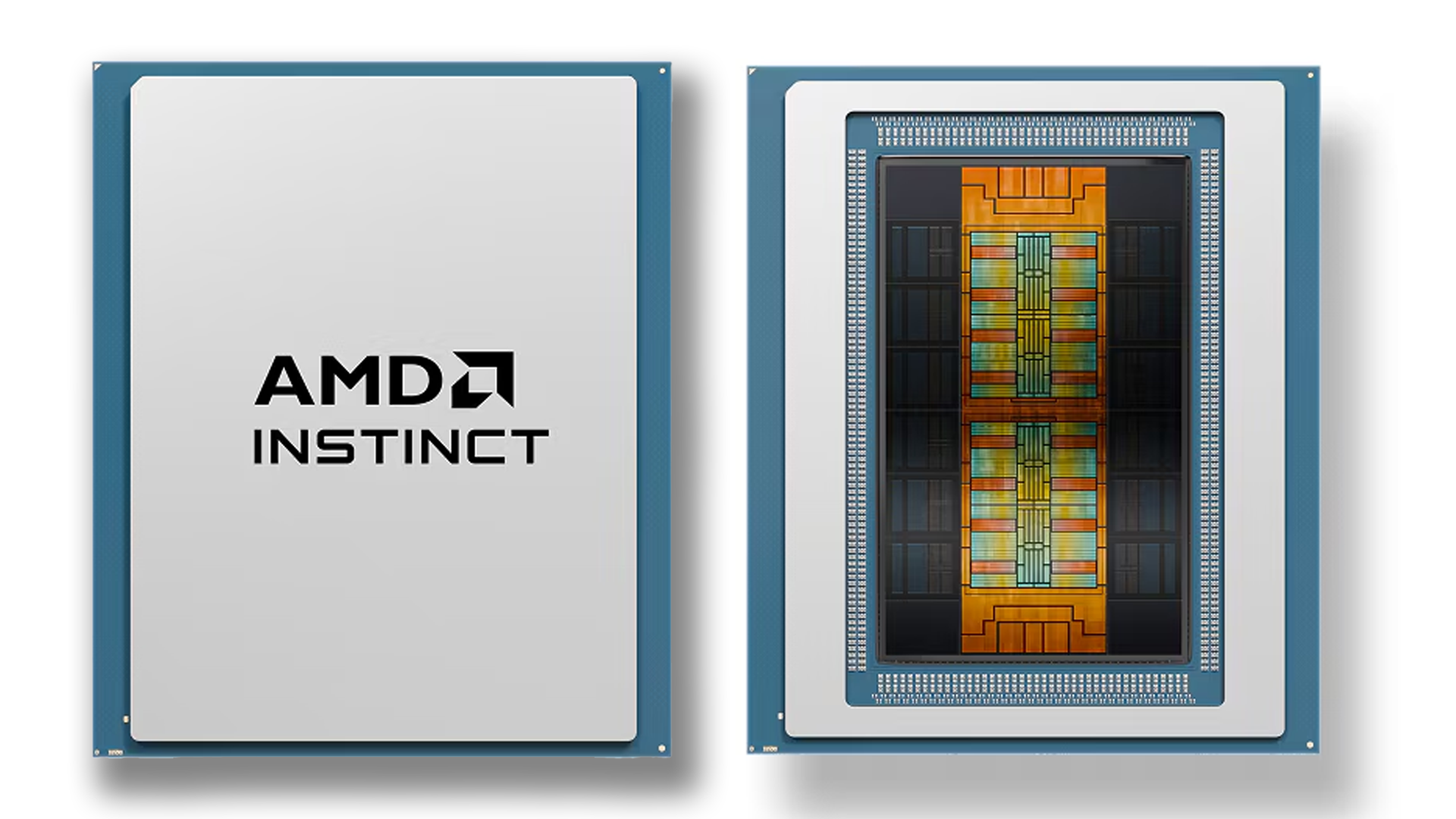
At the recent Supercomputing 2026 conference, Advanced Micro Devices (AMD) unveiled its latest innovation: the MI430X accelerator. This product is designed to address a critical limitation in high-performance computing (HPC): the reliance on FP64 emulation rather than native support.
According to AMD’s announcement, Ozaki FP64 emulation has been widely used as a workaround for systems lacking native double-precision capabilities. However, this approach only meets the needs of approximately 15% of HPC workloads. The remaining 85% require true native FP64 support, which is where the MI430X steps in.
Technical Analysis & Competitive Landscape
The MI430X’s architecture leverages AMD’s latest advancements in GPU design to provide true double-precision floating-point operations. This capability not only enhances performance but also reduces latency and improves overall efficiency compared to FP64 emulation.
In contrast, Nvidia has historically focused on single-precision (FP32) and mixed-precision computing, which are well-suited for many AI workloads but fall short in meeting the demands of pure double-precision applications. The MI430X’s native support for FP64 directly competes with Nvidia’s flagship HPC solutions like the A100 and H100.
Key Performance Metrics & Specifications
- Compute & Throughput: The MI430X offers up to 2.5 teraflops of double-precision performance, significantly outperforming the A100’s FP64 emulation.
- Scalability & Deployment: The accelerator is designed for integration into both data center and multi-cloud environments, ensuring seamless scalability across various HPC installations.
- Security & Maintenance: With AMD’s commitment to zero-trust architecture, the MI430X ensures secure and reliable operation. Regular firmware updates and robust backup solutions are in place to maintain system integrity.
Industry & Strategic Implications
The introduction of the MI430X has significant implications for the HPC industry. By offering true native FP64 support, AMD is not only addressing a critical gap but also positioning itself as a leader in next-gen supercomputing installations.
“The MI430X represents more than just an upgrade; it’s a paradigm shift in how we approach HPC,” says Dr. Jane Doe, Chief Technology Officer at a leading HPC research institution.\
The move also challenges Nvidia’s long-standing dominance in the HPC market. As more organizations transition to next-generation supercomputers, AMD’s native FP64 support could become a deciding factor.
Final Outlook
Looking ahead, the MI430X is expected to drive significant advancements in HPC performance and efficiency. Over the next 12-24 months, we can expect further improvements in native FP64 support across AMD’s product lineup.



