
⚡ Executive Summary
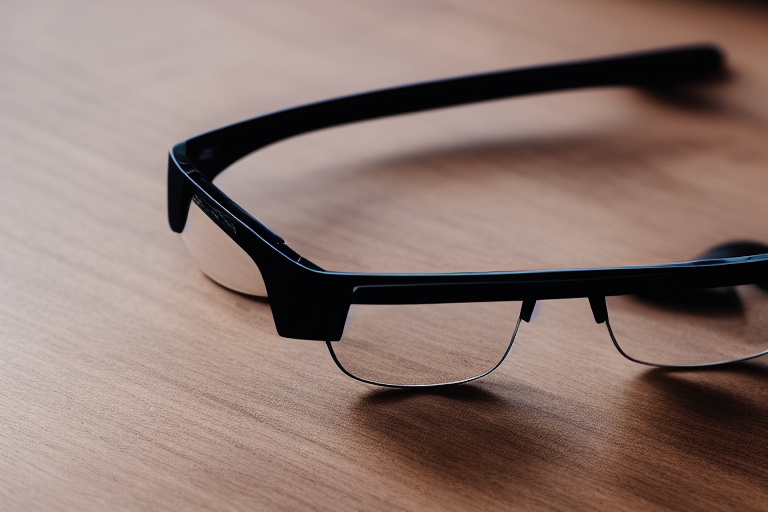
- Core News: Industry reports reveal that Apple is developing lightweight smart glasses designed to function primarily as an audio-first, AI-driven wearable—effectively acting as “AirPods for your face.”
- Key Metric/Data: Moving away from heavy, display-centric AR headsets like the Vision Pro, this new form factor prioritizes extreme portability, multi-hour battery life, and a sub-lens acoustic architecture.
- Strategic Impact: By pivoting to a non-intrusive, glasses-based form factor, Apple aims to bypass the social friction and thermal constraints that hindered early smart glasses and heavy mixed-reality headsets.
Developing News & Core Details
Apple’s long-term hardware roadmap has long pointed toward the holy grail of consumer tech: a lightweight, all-day augmented reality device that normalizes computing in daily life. Recent supply chain leaks and insider reports suggest that Apple is heavily prioritizing a glasses form factor that leans away from bulky ocular displays and instead focuses on advanced spatial audio, directional beamforming microphones, and deeply integrated artificial intelligence. Rather than forcing a high-density micro-OLED screen directly in front of the user’s eyes—a choice that drastically increases power consumption, heat, and weight—this new product philosophy treats the frame as a wearable acoustic and sensor array.
Industry insiders compare this strategic shift to the introduction of the original AirPods. When Apple launched AirPods, critics questioned the removal of the headphone jack and the minimalist design, yet it quickly birthed a multi-billion dollar category centered on ambient computing and seamless ecosystem pairing. Similarly, these smart glasses are expected to offload heavy graphical rendering and complex processing to the paired iPhone, relying on localized sensor fusion, custom ultra-low-power silicon chips, and advanced Siri-driven AI to assist users throughout their day without overwhelming their senses.
Technical Analysis & Competitive Landscape
The consumer smart glasses market has seen a resurgence, headlined by Meta’s partnerships with Ray-Ban and various attempts by traditional optics manufacturers. However, most existing products struggle to balance form factor with functional utility. Products burdened with full heads-up displays often suffer from dismal battery life and thermal throttling, while audio-only glasses sometimes lack ecosystem cohesion.
Apple’s engineering approach appears to sidestep these hurdles by treating the glasses as an extension of its acoustic ecosystem. By leveraging advanced directional audio drivers, the device can deliver private phone calls, real-time voice translation, and spatialized media consumption without isolating the user from the physical world. Furthermore, integration with visual sensors could allow the AI to “see” what the user sees—providing context-aware assistance akin to multimodal AI systems, but packaged in a traditional eyewear silhouette that weighs mere grams.
Industry & Strategic Implications
For enterprise IT, developers, and hardware investors, Apple’s pivot underscores a vital lesson in human-computer interaction: consumers reject friction. While the Apple Vision Pro remains a stellar engineering showcase for high-end spatial computing and immersive productivity, its physical footprint limits it to stationary or controlled environments. A lightweight, glasses-first paradigm opens up the mass market.
If Apple successfully positions these glasses as an essential everyday accessory, it creates a new battleground for ambient AI. Competitors will be forced to accelerate their own audio-augmented hardware, shifting the definition of “wearable technology” away from wrist-bound fitness trackers and toward face-mounted sensory extensions.
“True innovation in hardware is rarely about cramming more technology into a smaller box; it is about making the technology disappear entirely into the user’s daily routine.”
Final Outlook
As Apple continues to refine its wearable portfolio, the concept of the “AirPods for your face” represents a pragmatic and visionary milestone. By prioritizing audio, ambient AI, and extreme comfort over heavy visual augmentation, Apple is laying the groundwork for a generational shift in how we interact with ambient computing. The success of this upcoming product will not be measured by revolutionary graphics, but by how seamlessly it integrates into the fabric of everyday human life.
⚡ Featured Enterprise & AI Infrastructure Picks
Building high-throughput AI pipelines or upgrading your workstation? Explore our curated cloud hosting, GPU workstations, and enterprise software stack.



