
⚡ Executive Summary
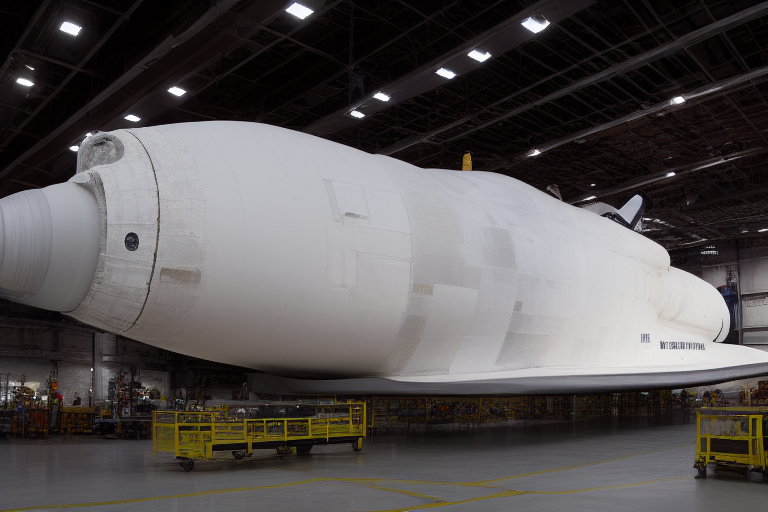
- Core News: A renowned artist has undertaken the largest art project of their career, repurposing a historic Space Shuttle external fuel tank into a monumental public installation.
- Key Metric/Data: Spanning over 154 feet in length and weighing roughly 66,000 pounds when empty, the external tank presents unprecedented structural and logistical engineering challenges.
- Strategic Impact: This initiative redefines the cultural intersection of aerospace legacy, industrial repurposing, and modern public art, inspiring a new generation to engage with space exploration history.
Developing News & Core Details
The transformation of a retired Space Shuttle external tank into a permanent piece of public art represents a masterclass in massive-scale logistical engineering and creative vision. Unlike the orbiters themselves or solid rocket boosters, the orange external fuel tanks—officially known as the External Tank (ET)—were expendable components, designed to disintegrate upon re-entering Earth’s atmosphere. However, a select few survived or were preserved in various stages of completion, offering a rare canvas for large-scale creative interpretation.
Working with an object of this scale demands specialized industrial techniques, meticulous surface preparation, and structural reinforcement. The artist, known for pushing the boundaries of monumental installations, described the endeavor as the most complex and physically demanding project of their career. Preserving the integrity of the iconic lightweight thermal protection system (TPS) foam while transforming its aesthetic identity required a delicate balance between artistic expression and aerospace artifact preservation.
Technical Analysis & Competitive Landscape
From an engineering perspective, repurposing aerospace hardware of this magnitude pushes the envelope of modern installation art. The external tank is essentially a massive, thin-skinned aluminum-lithium alloy pressure vessel designed to withstand extreme cryogenic temperatures and aerodynamic stress during launch, yet it is surprisingly fragile when subjected to localized ground loads.
In the broader landscape of aerospace preservation, institutions like the California Science Center have famously transported and displayed entire shuttle stacks, but integrating an ET directly into an active, interactive artistic narrative is a distinct paradigm shift. While traditional aerospace museums focus strictly on historical fidelity, this art project leverages the visceral, awe-inspiring scale of industrial hardware to evoke emotional and philosophical reflections on human ingenuity, waste, and cosmic ambition.
Furthermore, the project highlights advances in protective coatings and structural stabilization. Because the original spray-on foam insulation degrades under ultraviolet light and weather exposure, the creative team had to develop innovative, archival-grade encapsulation methods that maintain the historic orange visual signature while ensuring long-term structural viability in public spaces.
Industry & Strategic Implications
As the commercial space industry accelerates into a new era characterized by reusable rockets, private space stations, and lunar return missions, cultural touchstones from the Space Shuttle era risk fading from public consciousness. Projects like this serve as vital cultural bridges, maintaining public enthusiasm and emotional investment in space exploration.
For investors, civic planners, and cultural institutions, the initiative demonstrates the untapped potential of large-scale industrial repurposing. Transforming retired aerospace assets into public landmarks revitalizes urban spaces, drives tourism, and fosters STEM education by bringing tangible pieces of high-tech history directly into communities.
“The intersection of aerospace engineering and public art does not just preserve our past; it recalibrates how we measure the scale of human ambition and creativity.”
Final Outlook
The successful revitalization of a Space Shuttle external tank as a monumental work of art establishes a new benchmark for creative industrial reclamation. As more legacy hardware from the Apollo, Shuttle, and early commercial space eras reaches the end of its functional lifecycle, we can expect to see an increase in collaborative ventures between artists, engineers, and aerospace agencies.
Ultimately, this project proves that discarded technological titans can find a powerful second act. By turning a symbol of expendable propulsion into an enduring cultural monument, the initiative ensures that the sheer scale and audacity of humanity’s journey to orbit remain visible, tangible, and deeply inspiring for decades to come.
🚀 Custom Web Hosting & AI Automation Solutions
Need enterprise-grade web hosting, custom WordPress architecture, or automated workflow deployment for your business?



