
⚡ Executive Summary
- Core News: GeekPark Innovation Festival (IF) 2027 has officially released its comprehensive speaker roster, featuring industry-defining creators and founders from Manus, Insta360, 影视飓风 (Motion Pictures Hurricane), and OPPO AI.
- Key Metric/Data: Early-bird tickets for the flagship main stage sold out in days, signaling explosive anticipation as the event pivots around the theme “Revaluation: Another Answer” on December 5-6 at Beijing’s 798 Art District.
- Strategic Impact: The convergence of foundational AI agents, quantum-classical hybrid systems, and physical AI hardware marks a structural shift from experimental algorithms to monetizable, native-AI execution architectures.
Developing News & Core Details
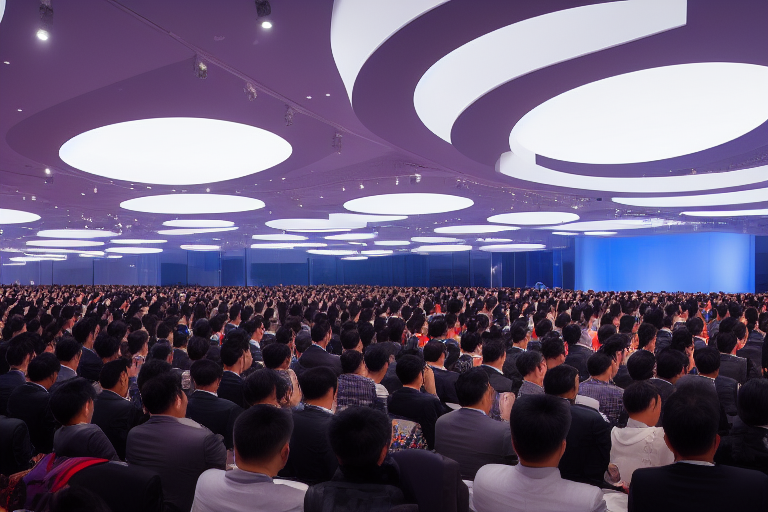
The GeekPark Innovation Festival 2027 (IF 2027) has galvanized the Asian technology ecosystem by revealing its comprehensive speaker lineup, anchored by the theme “Revaluation: Another Answer.” Following the rapid sell-out of its early-bird ticket allocation, the conference—scheduled for December 5–6 at Beijing’s iconic 798 Art District—is positioning itself as the definitive crucible for founders navigating the post-generative AI landscape. This year’s agenda deliberately eschews abstract speculation, instead focusing on the operational execution of Artificial Intelligence Native (AI Native) paradigms, agentic workflows, and the collision between digital compute and physical hardware.
The newly announced roster reflects an unprecedented cross-pollination of domains. From Insta360 founder Liu Jingkang addressing the existential threat and creative rebirth of optical capture in the age of neural video generation, to Manus co-founder sharing deep architectural insights into enterprise AI-native organizational workflows, IF 2027 aggregates the sharpest operators at the vanguard of commercial technology. Additional heavyweights include OPPO AI New Hardware Laboratory head Jiang Yuchen, consumer exoskeleton pioneer Ji Ke, and flying-robot innovator Zhang Yunuo, mapping out a hardware-software continuum that reaches far beyond the conventional smartphone screen.
Technical Analysis & Competitive Landscape
The technological undercurrent of IF 2027 highlights an aggressive market transition: the migration from passive conversational models to active, autonomous agentic systems capable of programmatic environmental interaction. This structural evolution is epitomized by platforms like Manus, which has emerged as a global benchmark for AI Agent execution. By bridging deterministic software layers with probabilistic large language models, these frameworks are rewriting the operational logic of enterprise SaaS and personal productivity.
Concurrently, the hardware ecosystem is undergoing a radical hardware-software co-design phase. Innovations highlighted by speakers such as Violoop’s cross-border agentic desktop interfaces and Alloop’s personal health agents demonstrate that modern AI demands bespoke form factors. Rather than squeezing intelligence into legacy glass-and-metal slabs, developers are architecting spatial computing, modular wearables, and physical robotic pets (such as Orbi) equipped with native spatial awareness. Furthermore, infrastructural advancements—exemplified by quantum-classical hybrid architectures from startups like Shuyao Quantum—signal an impending architectural breakthrough designed to shatter the algorithmic ceilings imposed by classical silicon during intensive model training and recursive self-evolution cycles.
Industry & Strategic Implications
For enterprise IT leaders, venture capitalists, and hardware manufacturers, IF 2027 serves as a strategic barometer for capital allocation over the next 500 days. As venture veterans like Linear Capital’s Wang Huai note, the macroeconomic environment no longer rewards peripheral software wrappers; instead, venture capital is systematically concentrating on foundational infrastructure, robotics, and edge hardware capable of compounding proprietary operational data.
Simultaneously, the monetization of AI is encountering structural maturation. Cross-border payment architects like Adyen’s engineering teams are actively redesigning payment gateway conduits to accommodate machine-to-machine transactions, where autonomous agents initiate purchases and negotiate digital services on behalf of humans. This infrastructural plumbing is critical: as AI shifts from a cost center burning astronomical token compute into a revenue-generating asset, the underlying transactional rails must evolve in tandem to support non-human economic actors.
“When old rules fail and AI rewrites the baseline of digital and physical production, the defining question is no longer what technology can generate, but what human value remains genuinely scarce.”
Final Outlook
GeekPark IF 2027 arrives at a historical inflection point where the initial novelty of generative AI has evaporated, replaced by the sober, high-stakes engineering of autonomous socio-technical systems. The scheduled discourse between content creators, hardware engineers, and agent architects underscores an undeniable reality: the future belongs to those who successfully fuse foundational intelligence with physical-world execution. As standard tickets go on sale following the early-bird sellout, the conversations in Beijing’s 798 Art District will undoubtedly set the directional vectors for global technology development well into the next decade.
⚡ Featured Enterprise & AI Infrastructure Picks
Building high-throughput AI pipelines or upgrading your workstation? Explore our curated cloud hosting, GPU workstations, and enterprise software stack.



