
⚡ Executive Summary
- Core News: Genesis AI has successfully closed a massive $500 million Series A funding round to advance and commercialize its innovative, glove-wearing dexterous robotics platform.
- Key Metric/Data: The $500 million injection represents one of the largest Series A raises in deep tech and robotics history, signaling an aggressive push toward immediate industrial deployment.
- Strategic Impact: By blending human-like tactile feedback through specialized end-effectors with advanced machine learning, Genesis AI is bridging the critical gap between rigid automation and versatile human labor.
Developing News & Core Details
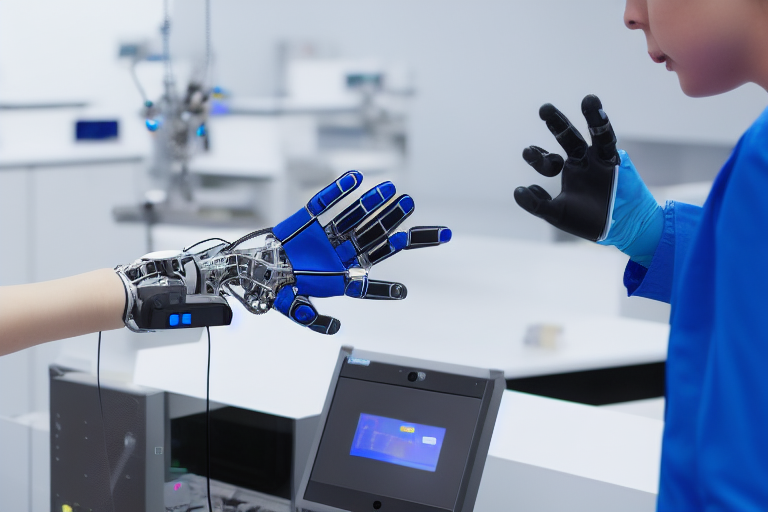
In a watershed moment for the venture capital and robotics landscape, Genesis AI has formally announced the completion of a $500 million Series A financing round. The capital will be channeled directly into scaling the deployment of its flagship robotic systems, which are distinguished by a novel approach to physical interaction: the use of dexterous, glove-wearing robotic manipulators. Unlike conventional industrial robotic arms engineered for rigid, repetitive point-to-point movements, Genesis AI’s hardware architecture is explicitly optimized to mimic the nuanced grasp, variable pressure application, and tactile agility of human hands.
The core innovation lies in the integration of specialized, compliant tactile coverings—colloquially referred to as “gloves”—that house dense sensor arrays. These tactile skins allow the robots to evaluate surface textures, estimate slippage in real time, and dynamically adjust grip force. By combining this hardware with proprietary imitation learning and reinforcement learning models, Genesis AI has bypassed the traditional programming bottlenecks that have long constrained industrial automation in unstructured environments.
Technical Analysis & Competitive Landscape
The physical intelligence sector has experienced a dramatic resurgence, yet most market participants remain divided between wheeled mobile manipulators and humanoid bipedal platforms. Genesis AI has taken a pragmatic, utility-first approach. By focusing heavily on the end-effector—the hand and its tactile interface—the company avoids the massive energy consumption and balancing complexities of full bipedal locomotion while retaining the dexterity required for complex assembly and logistics tasks.
When evaluated against the broader competitive landscape—which includes humanoid robotics startups backed by major cloud providers and legacy automation giants—Genesis AI’s reliance on glove-wearing end-effectors provides a distinct advantage in retrofitting. Traditional manufacturing plants and warehouses are engineered for human hands. By designing robotic limbs that operate within these human-centric ergonomic parameters, Genesis AI minimizes the need for costly facility overhauls.
Furthermore, the data collection loop enabled by their tactile gloves represents a profound technical moat. Every interaction generates high-dimensional sensory feedback data, feeding neural networks that continuously refine the robot’s intuition for handling fragile, deformable, or irregularly shaped objects.
Industry & Strategic Implications
A $500 million Series A round is exceptionally rare, reflecting a profound shift in investor sentiment toward capital-intensive, high-reward physical AI. For enterprise IT and operations leaders, this development signals that general-purpose robotics is transitioning rapidly from research laboratories to commercial deployment pipelines.
As labor shortages persist across manufacturing, warehousing, and logistics sectors, the economic viability of dexterous automation becomes undeniable. However, this influx of capital also raises the stakes for governance, safety certification, and workforce integration. Deploying robots capable of human-level object manipulation in shared workspaces requires rigorous safety standards and transparent human-robot interaction protocols.
“The future of industrial automation will not be defined by how fast a robot can move a rigid box, but by how sensitively it can handle the delicate, unstructured reality of the physical world.”
Final Outlook
Genesis AI’s massive funding milestone marks the beginning of a new phase in the commercialization of physical intelligence. As these glove-wearing robots hit factory floors and distribution centers over the next 18 to 36 months, the metrics for success will shift from laboratory demonstrations to sustained operational uptime and economic return on investment. If Genesis AI can successfully scale its manufacturing and deployment pipelines, it will fundamentally redefine the boundaries of human labor and machine capability in the modern enterprise.
⚡ Featured Enterprise & AI Infrastructure Picks
Building high-throughput AI pipelines or upgrading your workstation? Explore our curated cloud hosting, GPU workstations, and enterprise software stack.



