
⚡ Executive Summary
- Core News: Google launches Tabletop AI to create customized collaborative hubs.
- Key Metric/Data: Users can generate tools like savings trackers, chore charts, and event plans by describing them.
- Strategic Impact: Enhances personal productivity and team coordination; potential for enterprise applications in project management.
Developing News & Core Details
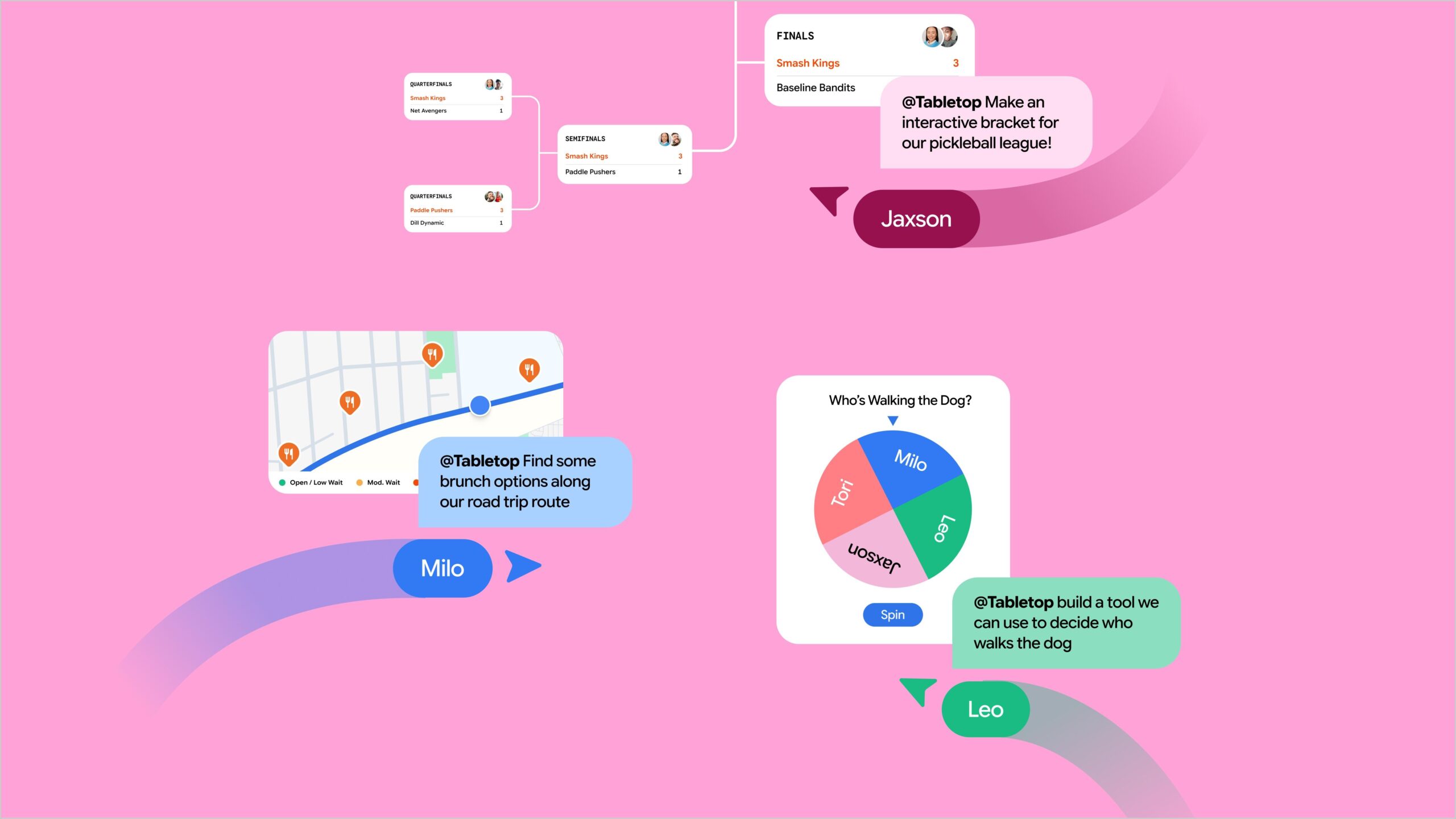
Google has unveiled Tabletop, an experimental AI tool designed to streamline collaboration by generating personalized interactive tools. This platform leverages natural language processing (NLP) to interpret user descriptions and create customized collaborative hubs tailored for tasks such as savings trackers, chore charts, event plans, expense splitters, and tournament brackets.
Technical Analysis & Competitive Landscape
Tabletop’s architecture is built on advanced NLP algorithms that parse user inputs and generate interactive applications. The tool’s ability to interpret complex descriptions and translate them into functional software components represents a significant advancement in AI-driven application development. This approach contrasts with traditional methods where developers must manually code each feature.
Key Performance Metrics & Specifications
- Compute & Throughput: Tabletop processes user inputs efficiently, generating applications within seconds. The platform supports real-time updates and collaborative editing by multiple users simultaneously.
- Scalability & Deployment: Designed for both personal use and enterprise environments, Tabletop can be integrated into existing cloud infrastructures with minimal disruption. Its modular design allows for easy scaling to accommodate larger user bases or more complex applications.
- Security & Maintenance: Tabletop adheres to zero-trust principles, ensuring that all data exchanges are secure. Regular updates and maintenance ensure the platform remains up-to-date with the latest security protocols.
Industry & Strategic Implications
The introduction of Tabletop signals a shift towards more user-friendly AI tools in collaborative environments. For enterprises, this could mean reduced development costs and faster time-to-market for custom applications. However, it also poses challenges regarding data privacy and the potential for misuse.
“Tabletop represents a significant leap forward in democratizing AI-driven application creation.”
Final Outlook
In the coming years, Tabletop is likely to influence how businesses approach project management and team coordination. Its ability to generate personalized tools could lead to increased productivity and better resource allocation. However, it will be crucial for Google to address concerns around data privacy and ensure that the platform remains accessible while maintaining robust security measures.



