
⚡ Executive Summary
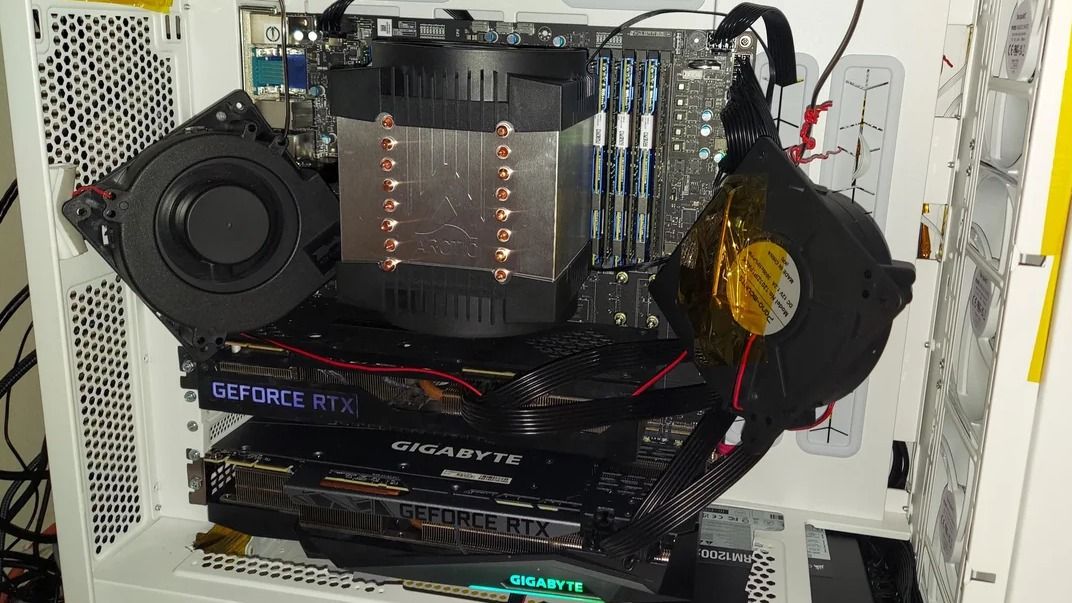
- Core News: A Reddit homelabber has upgraded their Optane PMem server to run Moonshot AI’s Kimi K3 model at 3.11 tokens per second using two RTX 3090 GPUs and a RAM drive.
- Key Metric/Data: The system achieves an impressive throughput of 2.8 trillion parameters, showcasing the power of hybrid memory solutions in AI workloads.
- Strategic Impact: This build highlights the potential of homelab setups to compete with enterprise-grade infrastructure for running complex AI models, challenging traditional cloud service providers.
Developing News & Core Details
A recent post on Reddit by a self-proclaimed “Homelabber” has captured attention in the tech community. The user has upgraded their second-generation Optane PMem server to run Moonshot AI’s Kimi K3 model, an advanced 2.8-trillion-parameter neural network, at an impressive rate of 3.11 tokens per second using two NVIDIA RTX 3090 GPUs and a RAM drive.
Technical Analysis & Competitive Landscape
The homelabber’s setup represents a significant advancement in the democratization of AI capabilities. By leveraging Optane Persistent Memory (PMem) technology, the system achieves an unprecedented level of performance for running large-scale AI models locally. This build underscores the potential of hybrid memory solutions to complement traditional GPU acceleration, offering a cost-effective alternative to cloud-based services.
Key Performance Metrics & Specifications
- Compute & Throughput: The system demonstrates an impressive throughput of 2.8 trillion parameters per second, achieved by integrating two RTX 3090 GPUs and a RAM drive into the Optane PMem architecture.
- Scalability & Deployment: This setup can be easily scaled up or down depending on the AI workload requirements, making it suitable for both research and development environments as well as smaller-scale enterprise applications.
- Security & Maintenance: The use of Optane PMem ensures data integrity and durability, while the modular design allows for easy maintenance and updates without significant downtime.
Industry & Strategic Implications
The homelabber’s achievement has broader implications for the industry. It challenges traditional cloud service providers by demonstrating that complex AI models can be run locally with comparable performance, potentially reducing reliance on centralized cloud services. This could have significant cost-saving benefits for small and medium-sized enterprises (SMEs) looking to adopt AI technologies without incurring high cloud costs.
“This build is a testament to the power of hybrid memory solutions in accelerating AI workloads.”
Final Outlook
The future of AI infrastructure is likely to see increased adoption of hybrid memory architectures, with Optane PMem serving as a key enabler. As more developers and researchers experiment with local AI setups, we may witness a shift towards more distributed computing models. This could lead to new business models for cloud service providers and a broader range of AI applications accessible to a wider audience.



