
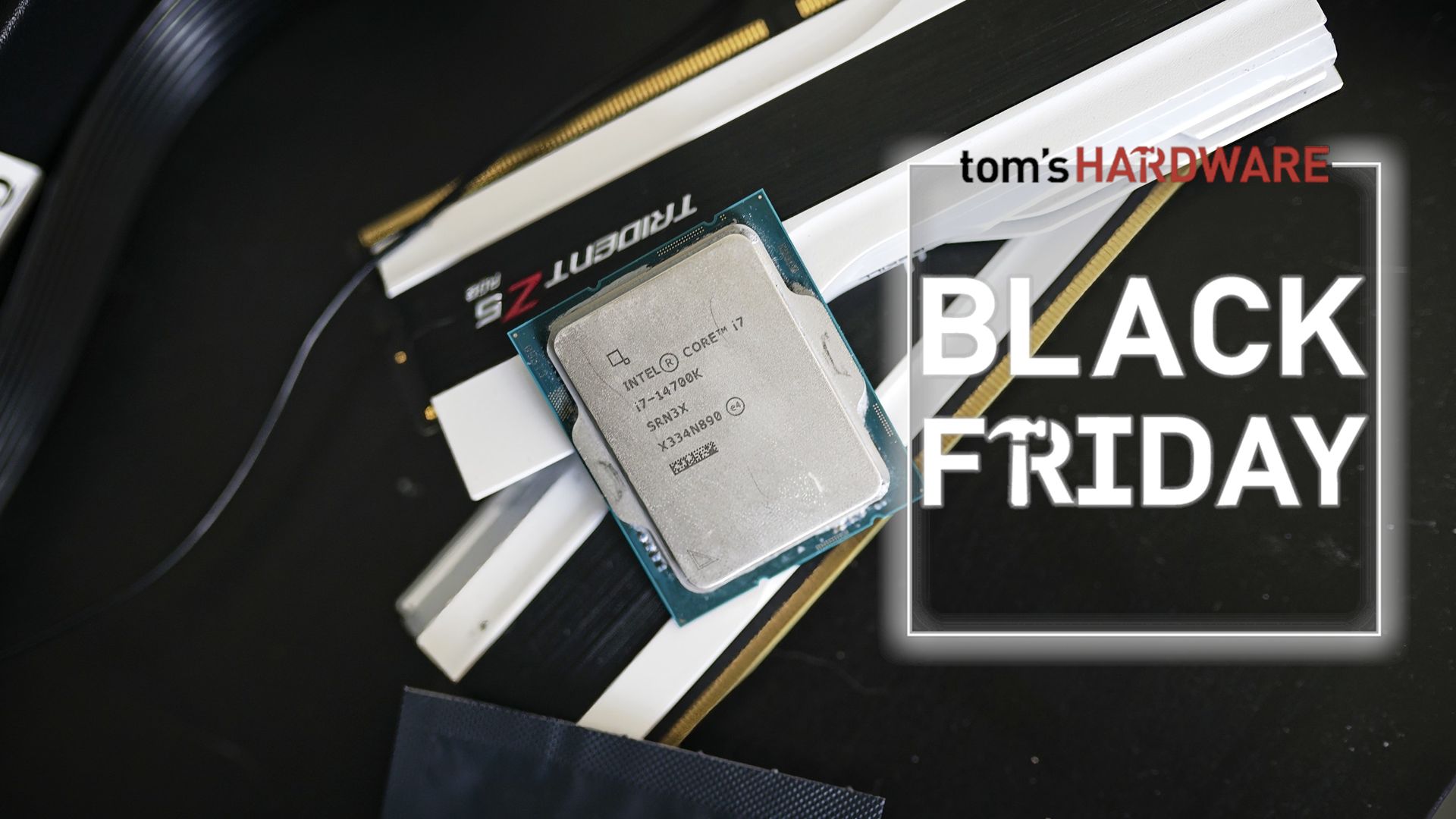
⚡ Executive Summary
- Core News: Intel’s Core i7-14700K has reached its all-time lowest price of $249.99, driven by aggressive channel inventory liquidation and the impending end-of-life for the LGA 1700 socket.
- Key Metric/Data: The processor supports both DDR4 and DDR5 memory platforms via compatible motherboards, offering a rare cost-performance bridge in the current market. This price point represents approximately a 25-30% discount from MSRP levels seen earlier in 2024.
- Strategic Impact: This pricing event marks the definitive “clearance phase” for Intel’s 14th Gen Raptor Lake Refresh, forcing consumers to weigh immediate value against the upcoming Arrow Lake-S architecture and AMD’s Ryzen 9000 series dominance in the mid-range segment.
Developing News & Core Details
The market for high-performance desktop computing is currently undergoing a significant correction, characterized by the sudden availability of Intel’s Core i7-14700K at an unprecedented price point. After months of volatile pricing and inconsistent stock levels across major retailers, the 14th Gen flagship has settled into a new equilibrium: $249.99. This specific SKU represents the upper-tier of the Raptor Lake Refresh lineup, featuring 20 cores (8 Performance-cores + 12 Efficiency-cores) and 28 threads.
Historically, the i7-14700K commanded prices well above $350, often hovering near $400 during peak demand periods. The descent to $249.99 is not merely a promotional anomaly but a structural shift in the supply chain. Intel has been aggressively clearing out LGA 1700 inventory as manufacturing capacity shifts toward its next-generation Arrow Lake architecture (codenamed Lunar Lake for mobile and Arrow Lake-S for desktop). This transition creates a “last call” scenario where retailers, including major partners like Newegg and Amazon, are liquidating stock to free up warehouse space for upcoming SKUs.
Crucially, this price drop applies to variants supporting both DDR4 and DDR5 memory. While DDR5 is the standard for new builds, the availability of DDR5-compatible motherboards at reduced prices alongside these CPUs allows users to upgrade older LGA 1700 systems without a full platform overhaul. This dual-support capability provides a unique value proposition: a near-flagship performance chip that can still run on legacy memory platforms, effectively extending the lifecycle of existing hardware investments.
Technical Analysis & Competitive Landscape
To understand the significance of this price drop, one must analyze the architectural context. The Core i7-14700K utilizes Intel’s hybrid architecture, combining high-frequency Performance-cores (P-cores) with power-efficient Efficiency-cores (E-cores). At $249.99, it competes directly against AMD’s Ryzen 7 7800X3D and the upcoming Ryzen 7 9800X3D. The 14700K offers superior multi-core throughput for content creation tasks like video rendering and 3D modeling due to its higher core count, whereas AMD’s X3D variants excel in gaming workloads through their massive 3D V-Cache technology.
From a thermal perspective, the i7-14700K remains power-hungry. It typically draws between 250W and 280W under load, requiring robust cooling solutions like high-end air coolers or 360mm AIO liquid coolers. At this discounted price, the cost-per-core ratio improves significantly, making it a viable option for budget-conscious creators who need raw compute power but may not require the absolute lowest latency of an X3D chip.
Competitively, AMD’s Ryzen 7000 series has established itself as the preferred platform for gamers due to lower power consumption and better PCIe 5.0 implementation on motherboards. However, Intel retains a stronghold in the workstation and creator space with its QuickSync video encoding capabilities integrated into the iGPU. The $249.99 price point narrows this gap, making the LGA 1700 platform an attractive “last chance” buy for professionals who need immediate deployment without waiting for the uncertain release dates of Intel’s Arrow Lake-S desktop processors.
Industry & Strategic Implications
The flood of i7-14700K units at $249.99 signals a broader industry trend: the rapid obsolescence of legacy sockets. The LGA 1700 platform, introduced in 2021 with Alder Lake and refreshed in 2023/2024 with Raptor Lake, is nearing its natural conclusion. As Intel transitions to TSMC’s 4nm process for Arrow Lake, the manufacturing costs will likely decrease, but the packaging and socket changes (LGA 1851) will force a new platform purchase.
For enterprise IT departments and system integrators, this price drop presents an opportunity to refresh mid-tier workstations without incurring the full cost of a next-gen platform. The ability to pair these CPUs with DDR4 motherboards reduces the total cost of ownership (TCO) for large-scale deployments where memory bandwidth is less critical than raw core count.
Investors and analysts should view this as a “clearance event” rather than a permanent price floor. Once Arrow Lake-S launches, we expect to see the i7-14700K drop further or disappear from mainstream channels entirely. The strategic implication is that Intel is prioritizing market share retention in the mid-range segment by bleeding inventory, effectively ceding ground to AMD in terms of long-term platform loyalty.
“The $249.99 price point for the Core i7-14700K represents the final gasp of the LGA 1700 era—a rare opportunity to acquire near-flagship performance at a budget-tier cost before the inevitable platform migration to Arrow Lake and DDR5-only ecosystems.”
Final Outlook
In conclusion, the Core i7-14700K’s descent to $249.99 is a definitive marker of the end-of-life cycle for Intel’s 14th Gen processors. For consumers, this is an optimal window to purchase if immediate performance needs outweigh the desire for cutting-edge architecture. The dual DDR4/DDR5 support adds flexibility, allowing users to maximize their existing hardware investments.
Looking ahead, the competitive landscape will shift as AMD’s Ryzen 9000 series and Intel’s Arrow Lake-S launch. These next-gen chips promise improved efficiency and higher clock speeds but at a premium price point. The $249.99 i7-14700K serves as a bridge technology, offering high performance for a fraction of the cost of future iterations. As we move into 2025, expect to see this specific SKU become increasingly scarce, making today’s purchase a strategic decision rather than just a transactional one.



