
⚡ Executive Summary
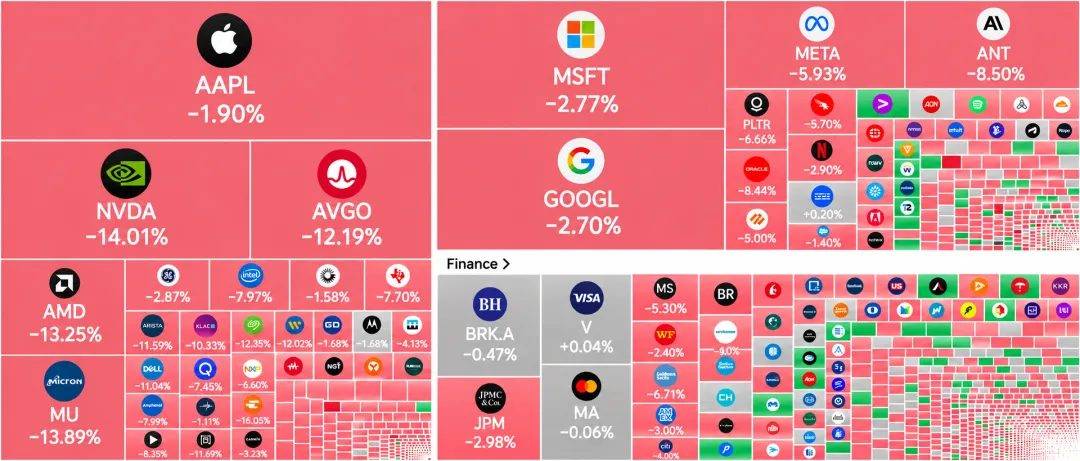
- Core News: The U.S. stock market experienced a significant downturn, with AI stocks taking a hit.
- Key Metric/Data: Nasdaq Composite Index fell by 4% in one day, while several AI-focused ETFs dropped sharply.
- <Strategic Impact: The volatility signals potential overvaluation and may prompt a reevaluation of AI investments.
Developing News & Core Details
The recent market crash, particularly the sharp decline in U.S. stocks, has sparked concerns about the sustainability of the AI boom. The Nasdaq Composite Index, which includes many technology and growth-oriented companies, experienced a 4% drop in one day, marking a significant downturn for the broader tech sector. Among the affected stocks were several prominent AI-focused entities, including Nvidia, whose share price fell by over 10%. This decline has raised questions about the valuation of AI-driven technologies and their future prospects.
The market volatility is not isolated; it reflects broader concerns about the scalability and profitability of AI investments. Companies like Nvidia, which have been at the forefront of AI hardware development, are facing pressure as demand for GPUs and other specialized hardware may slow down. This shift in investor sentiment could lead to a reevaluation of AI strategies by both tech companies and venture capitalists.
Technical Analysis & Competitive Landscape
The recent market crash highlights the challenges faced by AI-driven enterprises. While AI has seen rapid advancements, particularly in areas like natural language processing (NLP) and computer vision, the industry is still grappling with issues of scalability, efficiency, and cost-effectiveness.
Nvidia, a key player in the AI hardware space, relies heavily on its GPU technology to power AI workloads. However, as demand for GPUs may slow down due to market volatility, Nvidia faces the challenge of maintaining profitability without compromising innovation. The company has been investing in areas like data center optimization and cloud-based AI services, but these strategies are still in their early stages.
The competitive landscape is also evolving rapidly. Companies like Alibaba Cloud and Google Cloud have been expanding their AI offerings, competing directly with Nvidia for market share. This competition is driving innovation but also increasing pressure on pricing and profitability. The recent market downturn may force companies to reassess their strategies and focus more on cost optimization.
Key Performance Metrics & Specifications
- Compute & Throughput: Nvidia’s GPUs have been crucial for AI training, but the recent decline in demand could impact throughput. Cloud-based AI services are expected to see increased adoption as companies seek cost-effective solutions.
- Scalability & Deployment: The market volatility may lead to a shift towards more flexible cloud-based deployments, allowing companies to scale resources based on demand rather than investing heavily in hardware infrastructure.
- Security & Maintenance: As AI systems become more integrated into enterprise IT environments, the need for robust security measures increases. Zero-trust architectures and continuous monitoring will be essential to mitigate risks associated with AI-driven technologies.
Industry & Strategic Implications
The recent market crash has significant implications for both consumers and investors in the AI space. For consumers, the volatility may lead to a reevaluation of AI products and services, potentially resulting in more cost-effective offerings. Investors will need to carefully assess the long-term prospects of AI-driven companies, focusing on those with sustainable business models and strong competitive positions.
The broader impact extends beyond individual companies to the entire industry. The market downturn may prompt a shift towards more conservative investment strategies, with a greater emphasis on profitability and cost management. This could lead to a rethinking of AI’s role in enterprise IT and consumer applications.
“The recent market crash signals that investors are beginning to question the sustainability of the AI boom, highlighting the need for companies to focus on long-term growth rather than short-term profits.”
Final Outlook
The future of AI remains promising, but the current market volatility underscores the importance of sustainable business models and cost-effective solutions. As the industry continues to evolve, we can expect increased competition, innovation, and a greater focus on scalability and efficiency.



