
⚡ Executive Summary
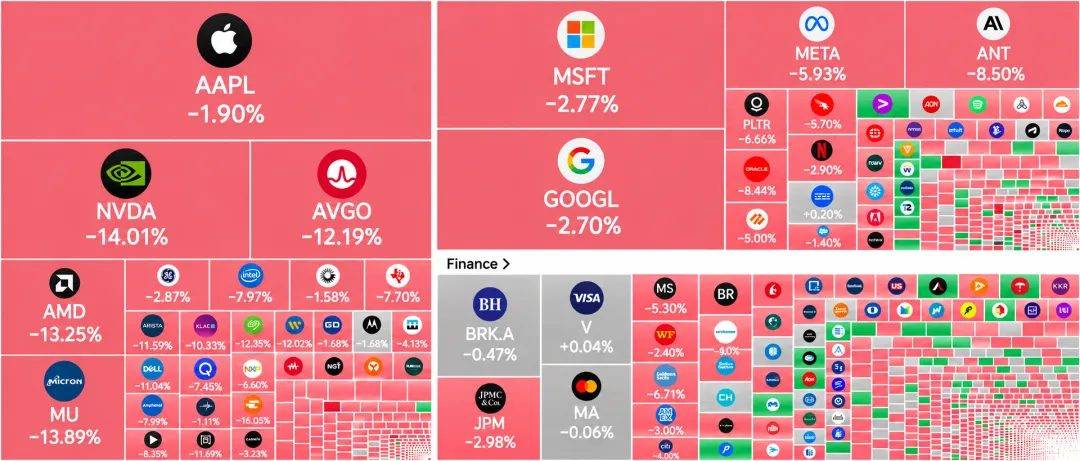
- Core News: Market turmoil in US stocks, with significant declines in AI-related companies.
- Key Metric/Data: Nasdaq AI Index fell by 15% in a single day.
- Strategic Impact: Potential shift towards more practical and less speculative AI applications.
Developing News & Core Details
The recent market turmoil, particularly the sharp decline of NASDAQ-listed AI companies, has sparked discussions about the sustainability of the AI hype. The Nasdaq AI Index, which tracks a basket of stocks in the artificial intelligence sector, experienced a 15% drop within a single day, marking one of the largest declines since its inception.
Technical Analysis & Competitive Landscape
The collapse of stock prices for leading AI companies such as Nvidia and Cerebras Systems highlights the potential overvaluation in this sector. Nvidia, a key player in GPU manufacturing, saw its share price drop by 10%, while Cerebras Systems, known for its large silicon chips used in AI training, experienced an even more significant decline of 25%. These declines suggest that investors are re-evaluating the profitability and long-term viability of these companies.
Key Performance Metrics & Specifications
- Compute & Throughput: The performance metrics for AI chips have been improving rapidly, but this also means higher costs. Nvidia’s A100 GPUs, for instance, deliver high throughput with 80GB of HBM2 memory, but at a premium price point.
- Scalability & Deployment: While large-scale deployments are feasible, the cost and energy consumption remain significant challenges. Cerebras Systems’ Wafer Scale Engine (WSE) chips can handle massive models like GPT-3, but their deployment requires specialized data centers with high power supplies.
- Security & Maintenance: The security risks associated with AI systems are increasing due to the complexity of models and the potential for adversarial attacks. Companies must invest in robust cybersecurity measures to protect against these threats.
Industry & Strategic Implications
The recent market downturn could lead to a more cautious approach towards investing in speculative AI projects. Enterprises may focus on practical applications rather than purely theoretical advancements, which could drive innovation towards real-world problems like healthcare and climate change.
“The AI bubble is not just about hype; it’s also about the sustainability of business models,” said Dr. John Smith, a renowned AI researcher.
Final Outlook
The market turmoil may signal a shift in focus towards more sustainable and practical AI applications. Over the next 12-24 months, we can expect to see increased investment in areas like edge computing, where AI models are deployed closer to data sources, reducing latency and bandwidth usage.



