
⚡ Executive Summary
- Core News: The Knoxville Police Department has officially operationalized its Drone as First Responder (DFR) program, deploying semi-autonomous aerial systems directly routed by 911 dispatch calls.
- Key Metric/Data: The initiative is engineered to achieve a target deployment footprint covering nearly all of Knoxville in 90 seconds or less.
- Strategic Impact: Represents a watershed moment for municipal tech integration, shifting emergency response models from reactive cruiser deployment to proactive, high-information aerial surveillance.
Developing News & Core Details
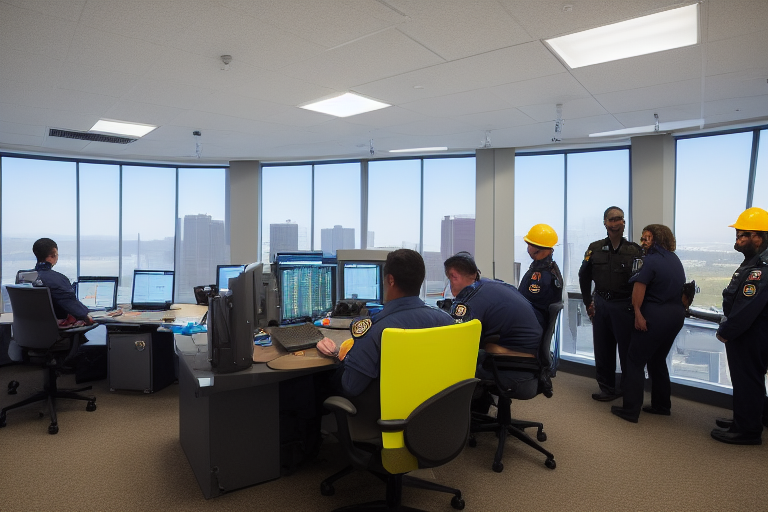
The Knoxville Police Department (KPD) has taken a monumental leap forward in municipal public safety technology by officially launching its Drone as First Responder (DFR) program. Designed to fundamentally alter how law enforcement reacts to emergency scenarios, the system leverages high-performance, semi-autonomous unmanned aerial vehicles (UAVs) that launch directly in response to 911 emergency calls. Rather than waiting for squad cars to navigate congested urban corridors, automated remote operators—working in tandem with dispatchers—vector the drones to the scene to establish immediate, real-time situational awareness long before ground units arrive.
The programmatic architecture relies on strategically positioned docking and charging infrastructure across the city, allowing rapid-response aircraft to maintain readiness around the clock. By utilizing pre-programmed flight corridors and automated obstacle-avoidance algorithms, the system aims to blanket nearly the entirety of Knoxville within a rapid 90-second launch-to-arrival window. This drastic compression of the informational timeline enables dispatchers to downgrade false alarms, redirect ground units to high-priority threats, and equip responding officers with precise tactical data regarding suspect descriptions, crowd dynamics, and potential hazards.
Technical Analysis & Competitive Landscape
From an enterprise engineering standpoint, KPD’s DFR deployment highlights the maturation of BVLOS (Beyond Visual Line of Sight) operations authorized under increasingly flexible FAA waiver frameworks. The technological stack powering modern DFR programs has evolved far beyond basic manual remote-control flight. It now incorporates sophisticated fleet management software, edge-AI computer vision for automatic vehicle tracking, cellular-bonded video streaming with ultra-low latency, and advanced geofencing protocols that ensure strict adherence to municipal airspace boundaries.
In the broader competitive landscape of public safety technology, Knoxville joins a vanguard of progressive municipalities—such as Chula Vista, Fremont, and Atlanta—that are shifting the paradigm from hardware-heavy cruiser investments to software-defined aerial sensing grids. The operational efficiencies here are profound: a single drone deployment costs a fraction of a traditional cruiser deployment in fuel and wear-and-tear, while providing an omniscient aerial vantage point that completely alters tactical decision-making trees. However, this transition also exposes critical infrastructure dependencies, demanding robust cybersecurity hardening against signal jamming, GPS spoofing, and unauthorized network penetration.
Industry & Strategic Implications
The broader implications for enterprise IT, defense contractors, and municipal governance are profound. As DFR programs transition from experimental testbeds to baseline urban infrastructure, the market for ruggedized commercial drones, automated docking stations, and AI-driven video analytics is experiencing exponential growth. Software providers specializing in computer-aided dispatch (CAD) integration are now required to build native APIs that seamlessly ingest and stream telemetry data from autonomous aircraft directly to mobile data terminals (MDTs) inside squad cars.
Simultaneously, this technological evolution forces a complex societal and legal calculus. Civil liberties organizations and privacy advocates are closely scrutinizing the expansion of persistent aerial monitoring over metropolitan areas. The balance between maximizing public safety efficacy through rapid intelligence gathering and safeguarding individual Fourth Amendment rights will define the regulatory boundaries of municipal drone deployments for the next decade. Standardizing data retention policies, establishing strict auditing trails for autonomous flight logs, and ensuring transparent public communication will be vital for police departments seeking to maintain community trust while deploying advanced tactical software.
“The integration of semi-autonomous DFR programs marks the definitive transition of policing from a reactive ground game to a data-driven, vertically integrated operational science.”
Final Outlook
Knoxville’s embrace of the Drone as First Responder model serves as a bellwether for mid-sized cities nationwide. As hardware costs decline and edge-computing capabilities expand, 90-second aerial response times will quickly transform from an innovative luxury into an expected benchmark for municipal emergency services. Over the coming years, we anticipate rapid convergence between DFR frameworks, automated gunshot detection systems, and AI-powered traffic management grids. For technologists, investors, and civic leaders alike, the success of Knoxville’s deployment will offer a crucial blueprint for how automated aerial infrastructure can safely, efficiently, and responsibly secure the modern city.
🚀 Custom Web Hosting & AI Automation Solutions
Need enterprise-grade web hosting, custom WordPress architecture, or automated workflow deployment for your business?



