
⚡ Executive Summary
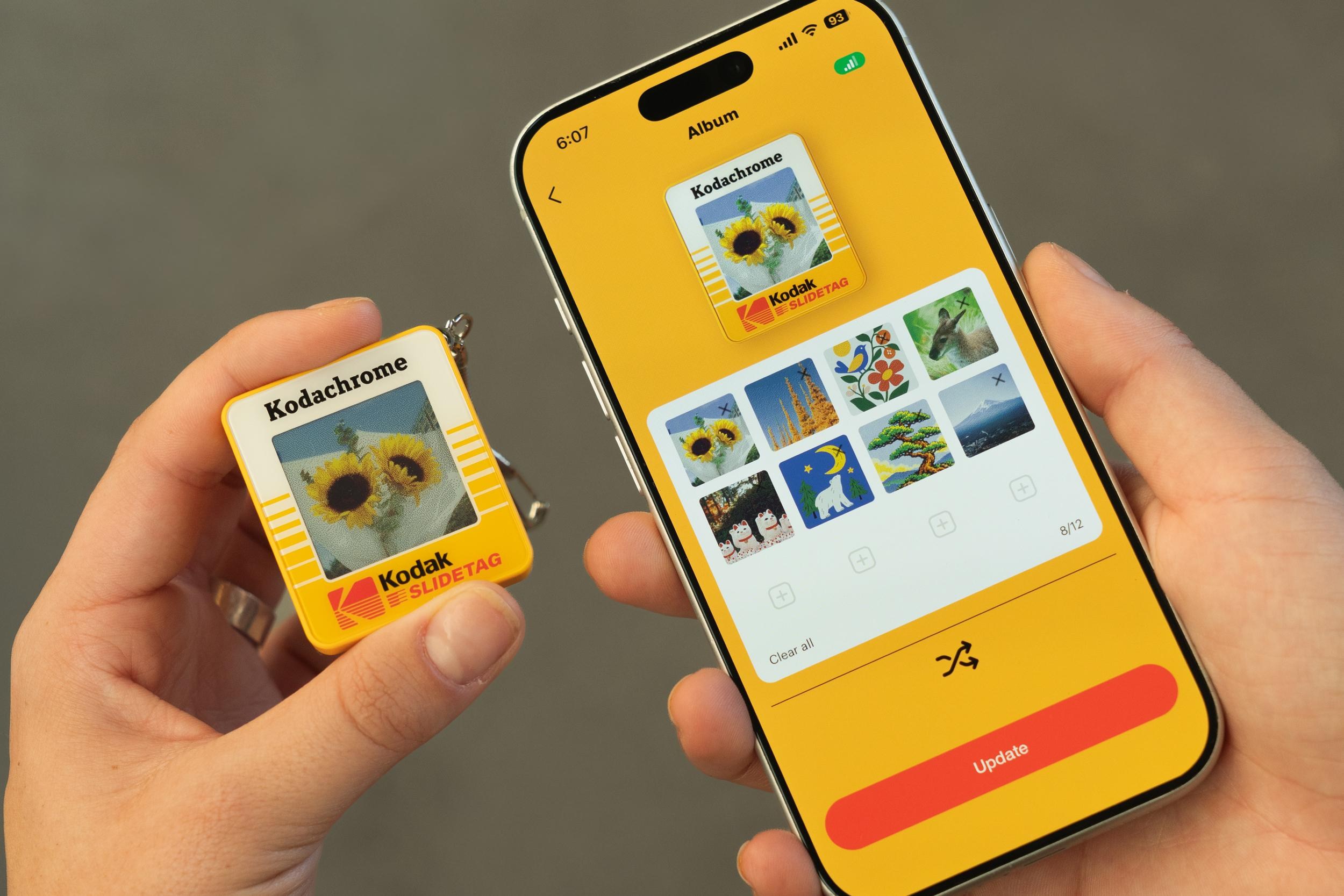
- Core News: Kodak has officially launched the SlideTag, a compact digital photo frame that doubles as a Bluetooth tracker compatible with Apple’s Find My and Google’s Find Hub networks.
- Key Metric/Data: Priced at $34.99 per unit, the device is sold in mystery boxes featuring Y2K-inspired retro designs, continuing the legacy of its Charmera camera line.
- Strategic Impact: This release marks a definitive pivot for Kodak from pure analog manufacturing to “smart” hardware, leveraging IoT connectivity to revitalize a dormant brand identity in the consumer electronics market.
Developing News & Core Details
In a move that bridges the gap between nostalgic branding and cutting-edge utility, Kodak has introduced the SlideTag. Following the success of its Charmera collection—specifically the Y2K-inspired Millennium Edition released earlier this year—the company is expanding its footprint into the Internet of Things (IoT) sector. The SlideTag is not merely a digital photo frame; it is a hybrid device designed to display user-uploaded images while simultaneously functioning as a high-precision Bluetooth tracker.
Available for $34.99, the device maintains Kodak’s signature aesthetic of mystery and retro charm. Like its predecessor, the Charmera, the SlideTag will be distributed in “mystery boxes,” offering consumers a curated selection of designs that evoke the Y2K era. This packaging strategy serves a dual purpose: it creates an unboxing experience reminiscent of trading cards or vinyl records, and it allows Kodak to manage inventory costs by producing limited runs of specific colorways.
Technically, the SlideTag represents a significant evolution in hardware architecture. While traditional digital frames are often static appliances requiring manual uploads via USB or cloud services, the SlideTag integrates active connectivity. By supporting both Apple’s Find My network and Google’s Find Hub, it transforms from a passive display into an active asset tracker. This capability is particularly relevant for users who may lose small electronic devices or wish to track valuable items like keys, wallets, or even pets.
Technical Analysis & Competitive Landscape
The SlideTag’s architecture highlights a trend in consumer electronics where form factor and utility are decoupled. Most digital photo frames on the market today prioritize screen real estate and resolution, often neglecting connectivity features to save power or reduce cost. Kodak, however, has opted for a “dual-purpose” design that maximizes hardware value.
From an IoT perspective, integrating Bluetooth Low Energy (BLE) into a small form factor is a sophisticated engineering challenge. The device must balance the power consumption required to maintain a constant connection with the battery life necessary to function as a standalone tracker. By leveraging established networks like Find My and Find Hub, Kodak avoids the need for proprietary software development or expensive cellular data plans, which are common in high-end trackers like Apple AirTag or Samsung Galaxy SmartTags.
Competitively, the SlideTag occupies a unique niche between dedicated trackers (e.g., Tile, Chipolo) and smart home displays. Dedicated trackers often lack screens, limiting their utility to simple beeping or app notifications. Smart frames, conversely, are rarely equipped with tracking hardware. The SlideTag’s inclusion of a screen allows users to visualize the device itself—a small, retro-styled rectangle—making it easier to locate visually even when digital signals fail.
The “mystery box” distribution model also introduces an element of gamification into the purchase process. In a market saturated with predictable tech gadgets, this approach appeals to younger demographics and collectors who value novelty over standard utility. It effectively turns the hardware into a fashion accessory, aligning with Kodak’s historical identity as a cultural icon rather than just a camera manufacturer.
Industry & Strategic Implications
The launch of the SlideTag signals a broader strategic shift for legacy technology companies. For decades, Kodak was synonymous with film and physical media. Its recent ventures into digital cameras (Charmera) and now IoT trackers demonstrate a clear intent to remain relevant in an increasingly connected world without abandoning its core brand equity.
For enterprise IT and consumer markets alike, this pivot suggests that “smart” hardware is becoming the new standard for even the most niche devices. As smart home ecosystems expand, the line between a decorative object (like a photo frame) and a functional tool (like a tracker) blurs. This convergence allows manufacturers to command higher margins by bundling multiple use cases into a single SKU.
Investors should watch this product closely as an indicator of Kodak’s financial health and operational agility. Successfully integrating complex IoT features into a low-cost, retro-styled device suggests that the company has mastered supply chain optimization and software integration—skills previously associated only with tech giants like Apple or Google.
“The SlideTag is less about replacing traditional trackers and more about redefining what a ‘smart object’ can be. By merging the utility of asset tracking with the nostalgia of analog design, Kodak has created a product that appeals to both functional needs and emotional desires.”
Final Outlook
The Kodak SlideTag represents a successful synthesis of old-world charm and new-world technology. Its ability to function as both a digital photo frame and a Bluetooth tracker positions it as a versatile tool for the modern consumer. While the $34.99 price point is accessible, the true value lies in the dual functionality that sets it apart from competitors.
Looking ahead, we anticipate Kodak will continue to iterate on this platform, potentially adding features like cloud storage integration or AI-powered photo organization. The success of the SlideTag could pave the way for a new class of “smart retro” devices—products that honor the past while serving the future. For now, it stands as a testament to Kodak’s enduring ability to reinvent itself in an ever-changing technological landscape.



