
⚡ Executive Summary
- Core News: Moore Threads has officially teased its upcoming Lushan gaming GPU ahead of MDC 2026, highlighting a groundbreaking 64GB VRAM configuration that sets a new record for consumer-grade graphics cards.
- Key Metric/Data: The Lushan series aims to deliver up to 64GB of unified memory, significantly exceeding the current 32GB ceiling of high-end NVIDIA RTX 50-series cards and offering unprecedented bandwidth for AI workloads within a gaming chassis.
- Strategic Impact: This move represents Moore Threads’ transition from enterprise-focused compute to mass-market consumer dominance, leveraging its MUSA architecture’s efficiency to compete directly with NVIDIA in both gaming and local LLM inference markets.
Developing News & Core Details
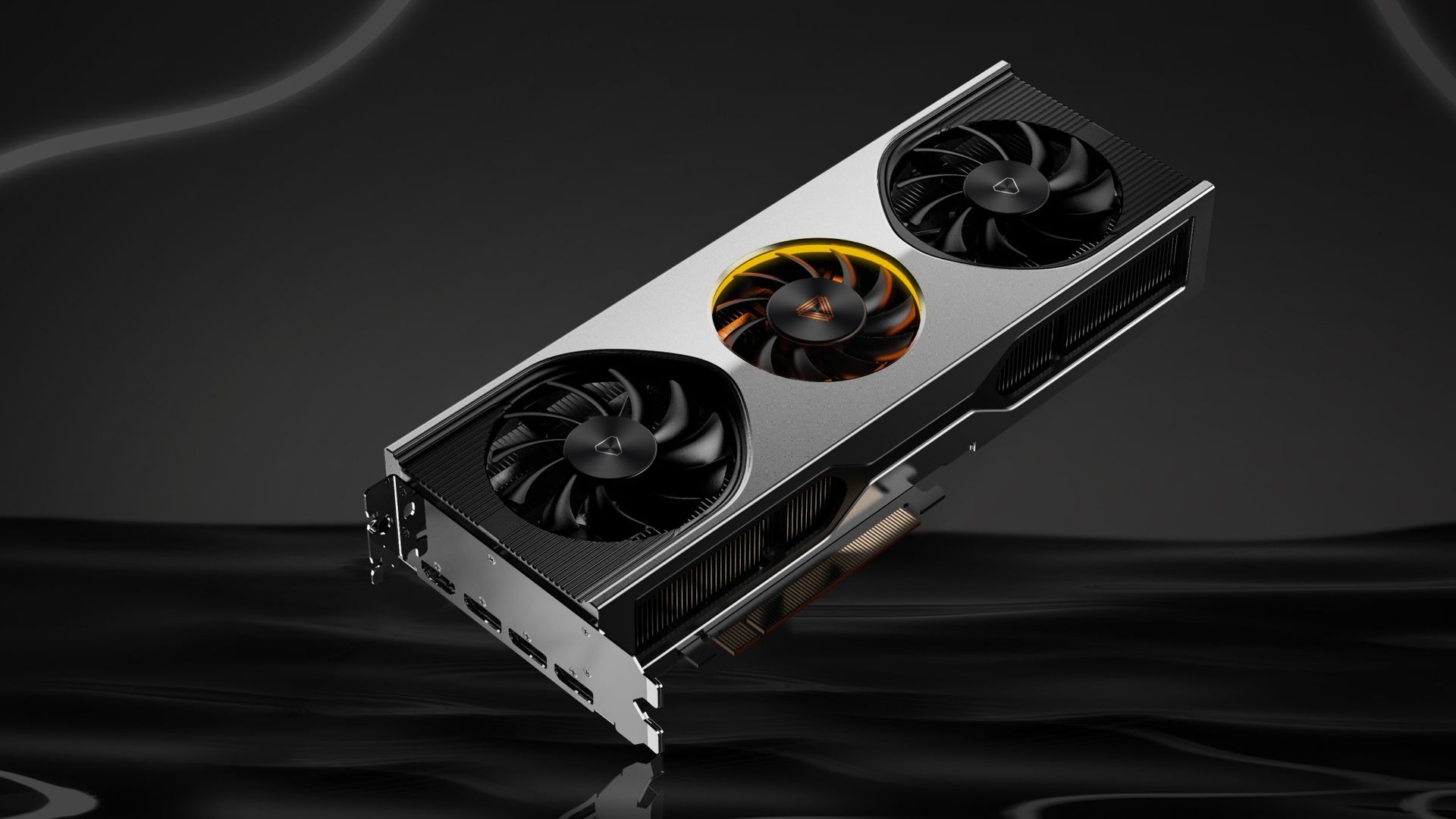
In a significant escalation of the global semiconductor arms race, Moore Threads (MT) has revealed details regarding its next-generation “Lushan” gaming GPU. Teased ahead of the upcoming MDC 2026 event, this product marks a pivotal moment for the Chinese chipmaker, which has long been known primarily for its MT20 series enterprise AI accelerators. The headline feature is not merely raw compute power, but an architectural shift in memory capacity: a rumored and teased record-breaking 64GB of VRAM.
Historically, consumer graphics cards have hovered around the 12GB to 32GB range. NVIDIA’s recent RTX 50-series (Blackwell) architecture pushed this ceiling to 32GB for its flagship models, primarily targeting high-resolution gaming and entry-level AI training. Moore Threads’ announcement of a 64GB variant suggests a departure from traditional gaming constraints, prioritizing memory bandwidth over raw rasterization speed. This implies that the Lushan GPU is designed as a hybrid device: capable of running AAA titles at 8K resolutions or high frame rates while simultaneously serving as a powerful local inference engine for large language models (LLMs) and generative AI applications.
The product manager’s claim of “record VRAM” positions the Lushan not just as a gaming card, but as a portable supercomputer. In an era where AI models are scaling rapidly in parameter count, memory capacity has become the primary bottleneck for local deployment. By doubling the standard high-end ceiling to 64GB, Moore Threads is effectively future-proofing its hardware against the next wave of open-source models that require massive context windows and batch sizes.
Technical Analysis & Competitive Landscape
To understand the magnitude of this announcement, one must analyze Moore Threads’ MUSA (Moore Threads Unified System Architecture) in contrast to NVIDIA’s CUDA ecosystem. While NVIDIA dominates with its highly optimized CUDA cores and massive software libraries, Moore Threads has focused on architectural efficiency and memory bandwidth density. The 64GB VRAM specification likely utilizes a multi-chip package or advanced GDDR7/DDR5X memory interface technology to achieve this capacity without prohibitive cost increases.
From a competitive standpoint, the Lushan’s 64GB configuration places it in direct contention with NVIDIA’s hypothetical “Blackwell Ultra” or specialized workstation cards. However, Moore Threads’ strategy appears to be a “value-for-performance” play. If they can deliver 64GB of VRAM at a fraction of NVIDIA’s price point—potentially leveraging domestic manufacturing supply chains and optimized power envelopes—they could capture the emerging market of developers and creators who need high memory for AI but cannot afford enterprise-grade pricing.
Technically, this shift highlights the changing definition of a “gaming GPU.” The line between gaming and compute is blurring. Modern games increasingly utilize ray tracing and AI upscaling (DLSS/FSR), which are computationally intensive. Furthermore, the rise of “AI-native” workflows means that a graphics card with 64GB VRAM can load entire datasets into memory for real-time rendering or training small models on-the-fly. Moore Threads’ architecture, known for its high instruction-level parallelism and efficient tensor cores, is well-suited to handle these mixed workloads.
The competitive landscape also includes AMD’s RDNA 4 series, which has been pushing towards higher memory capacities. However, Moore Threads’ entry into the consumer space with such aggressive specs signals a maturation of China’s domestic GPU industry. It suggests that the supply chain constraints previously plaguing Chinese chipmakers are being overcome, allowing for more ambitious product designs.
Industry & Strategic Implications
The implications of Moore Threads’ Lushan 64GB GPU extend far beyond a single product launch. For the enterprise IT sector, this signals a potential shift in how organizations procure AI hardware. If consumer-grade cards can offer 64GB VRAM at competitive prices, companies may opt for clusters of high-memory gaming GPUs rather than expensive enterprise accelerators for specific inference tasks. This democratization of high-bandwidth memory could accelerate the adoption of local AI models across smaller businesses and research labs.
For consumers, this represents a new tier of hardware: the “AI Workstation Gaming Card.” Users who want to run Stable Diffusion, Llama 3 variants, or other heavy AI workloads locally will find Moore Threads’ offering highly attractive. The ability to load larger models into VRAM without external RAM overhead is a game-changer for content creators and developers.
Strategically, this move cements Moore Threads as a serious contender in the global GPU market. It demonstrates their ability to pivot from niche enterprise solutions to mass-market appeal. If they can maintain software compatibility (via MUSA) at a level comparable to CUDA, they could disrupt NVIDIA’s dominance in the consumer AI segment within 2-3 years.
“The Lushan GPU with 64GB VRAM is not just a gaming card; it is a strategic weapon designed to bridge the gap between consumer affordability and enterprise-grade memory capacity, effectively challenging NVIDIA’s pricing model for high-bandwidth AI workloads.”
Final Outlook
As we look toward MDC 2026 and beyond, Moore Threads’ Lushan series is poised to redefine the consumer GPU market. The 64GB VRAM specification sets a new benchmark that will force competitors like NVIDIA and AMD to either match the memory capacity or justify their premium pricing through superior software ecosystems.
Future predictions suggest that we will see more hybrid devices emerging, where the distinction between a “gaming card” and an “AI accelerator” becomes obsolete. Moore Threads is leading this charge by leveraging its MUSA architecture’s efficiency to deliver high memory density without sacrificing performance. If their driver maturity and software optimization continue to improve alongside hardware specs, the Lushan could become the go-to choice for developers seeking a balance of raw power and cost-effectiveness.
In conclusion, Moore Threads’ next Lushan gaming GPU is more than just a spec sheet update; it is a declaration of intent from China’s semiconductor industry to lead in both compute density and memory bandwidth. The 64GB VRAM record is the first major milestone in what could be a decade-long shift in how we build, run, and interact with AI-powered systems.



