
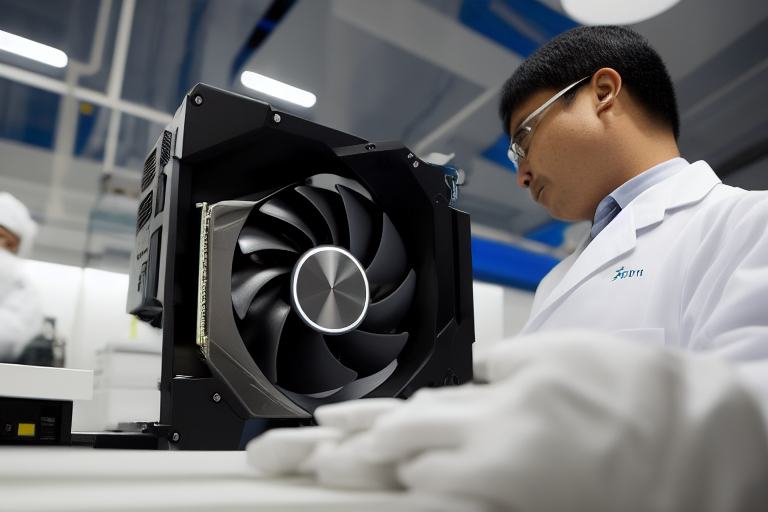
⚡ Executive Summary
- Core News: The MSI GeForce RTX 5070 Ventus 2X OC 12GB has been spotted on Newegg at a retail price point of $839.99, marking a notable availability and relative pricing datapoint in an otherwise volatile component market.
- Key Metric/Data: Offering a 12GB VRAM buffer on Nvidia’s cutting-edge Blackwell architecture, the card attempts to bridge high-end ray tracing performance with mid-to-high tier pricing constraints.
- Strategic Impact: While hardly a budget savior, micro-fluctuations and localized sales signal early normalization efforts within the consumer hardware supply chain, though structural cost pressures remain.
Developing News & Core Details
The appearance of the MSI GeForce RTX 5070 Ventus 2X OC 12GB priced at $839.99 on Newegg has caught the attention of hardware enthusiasts navigating what many colloquially term the “GPU wasteland.” For months, consumer-grade graphics processing units carrying next-generation architectures have suffered from severe inventory imbalances, inflated secondary market scalper pricing, and broad manufacturing constraints driven by enterprise artificial intelligence allocation priorities.
This specific listing features MSI’s dual-fan Ventus thermal cooling solution paired with an out-of-the-box factory overclock. The 12GB GDDR7 (or advanced GDDR6X, depending on final binning configurations) VRAM subsystem is engineered to handle modern ray-traced workloads and complex frame-generation pipelines. At $839.99, the card sits in a precarious psychological bracket for gamers and independent content creators: significantly higher than historical mid-range pricing paradigms, yet increasingly viewed as a functional entry point for modern Blackwell-powered performance.
Technical Analysis & Competitive Landscape
To understand the significance of an $839.99 price tag on an RTX 5070 variant, one must evaluate the architectural landscape. Nvidia’s Blackwell architecture introduces substantial generational leaps in tensor core density and ray-tracing intersection throughput. However, the foundational silicon economics have fundamentally shifted. Wafer allocation at leading-edge foundries like TSMC is fiercely contested by high-margin enterprise accelerators (such as the H100, H200, and Blackwell B200 data center chips), leaving consumer desktop silicon fighting for residual fabrication capacity.
Consequently, board partners like MSI, ASUS, and Gigabyte face escalated input costs—from advanced packaging substrates to high-speed memory modules. The Ventus 2X OC design represents a stripped-down, utility-first approach to thermals, eschewing massive triple-slot heatsinks and excessive RGB lighting to keep the bill of materials as lean as possible. Against competing offerings from AMD’s Radeon lineup and Intel’s emerging Arc battlegrounds, Nvidia continues to command a software-ecosystem premium powered by DLSS 4 and advanced neural rendering features. Yet, this pricing tier exposes persistent friction between raw hardware cost and consumer purchasing power.
Industry & Strategic Implications
The broader technology sector watches consumer GPU pricing closely, as it serves as a reliable barometer for semiconductor supply chain health. When retail channels stabilize enough to feature standard-edition cards near suggested retail thresholds—even when those thresholds are historically elevated—it indicates that production yields are maturing and component hoarding is experiencing localized cooling.
For investors and enterprise IT strategists, the consumer GPU market’s pricing elasticity directly impacts the PC hardware ecosystem. System builders, workstation assemblers, and independent developers rely on accessible mid-to-high tier components for local model training, content production, and development environments. If cards like the RTX 5070 settle closer to competitive baselines, it relieves pressure on small-to-medium businesses that cannot justify enterprise-grade hardware expenditures but still require local neural processing capabilities.
“The modern graphics card market is no longer governed solely by gaming demand; it is a downstream casualty of the enterprise artificial intelligence gold rush. Every wafer dedicated to consumer silicon is a deliberate opportunity cost against multi-million dollar data center contracts.”
Final Outlook
While an $839.99 price tag for an xx70-tier graphics card would have been considered unthinkable just a few hardware generations ago, the contemporary landscape reframes this listing as a relative anomaly of value within a constrained marketplace. As production scales through the latter halves of fiscal quarters, consumers can cautiously anticipate more frequent promotional pricing and stabilization across retail channels.
Ultimately, the long-term health of the consumer hardware segment depends on foundry capacity diversification and the eventual saturation of enterprise AI demand. Until those macro trends converge, listings like the MSI GeForce RTX 5070 Ventus 2X OC serve as fragile beacons of normalization in an otherwise turbulent hardware ecosystem.
⚡ Featured Enterprise & AI Infrastructure Picks
Building high-throughput AI pipelines or upgrading your workstation? Explore our curated cloud hosting, GPU workstations, and enterprise software stack.



