
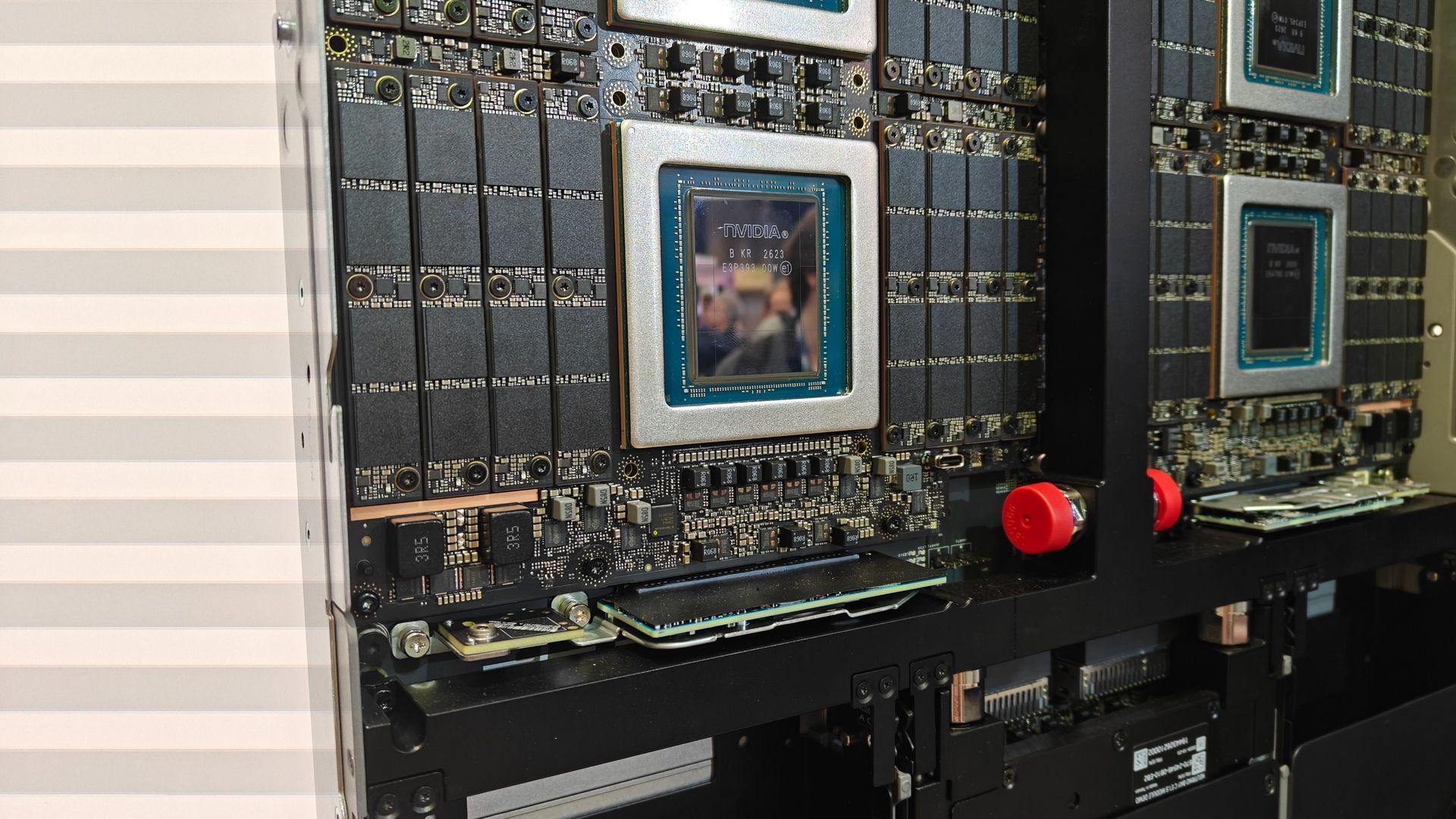
⚡ Executive Summary
- Core News: NVIDIA is defending its AGI claims for Vera against AMD’s criticism.
- Key Metric/Data: NVIDIA emphasizes that Vera was designed with base principles and product intuition, not specifically targeting the AGI moment.
- Strategic Impact: This dispute highlights the evolving landscape of AI architecture and its competitive dynamics in enterprise IT.
Developing News & Core Details
NVIDIA has recently come under scrutiny from AMD regarding claims about creating a CPU designed for AGI (Artificial General Intelligence). In an interview with Tom’s Hardware, NVIDIA is pushing back on this characterization. The company argues that Vera was developed based on “base principles, product intuition, and oftentimes simple allegorical laws of computer science,” rather than targeting any specific moment in the development of AGI.
This controversy underscores a broader debate within the tech industry about the direction and capabilities of AI models like Vera. NVIDIA’s stance is that its focus remains on delivering robust, efficient hardware solutions for various AI applications, including those that may evolve towards more advanced forms of intelligence.
Technical Analysis & Competitive Landscape
The dispute between NVIDIA and AMD highlights the complex interplay between hardware and software in the development of AGI-capable systems. NVIDIA’s Vera model is part of a larger strategy to position its GPUs as central components for advanced AI workloads, including those that may one day achieve general intelligence.
From a technical standpoint, NVIDIA has been investing heavily in AI research and development, particularly through its CUDA platform and the optimization of its GPUs for deep learning tasks. The company’s approach is rooted in leveraging existing hardware capabilities to meet evolving computational demands rather than pursuing a direct path towards AGI.
Key Performance Metrics & Specifications
- Compute & Throughput: NVIDIA’s Vera model demonstrates high throughput and efficiency, making it suitable for large-scale AI training tasks. The company emphasizes that these capabilities are designed to support a wide range of applications, from natural language processing to computer vision.
- Scalability & Deployment: NVIDIA’s architecture is modular and scalable, allowing for integration into various data center environments. This modularity supports both single-node deployments and large-scale cloud-based solutions.
- Security & Maintenance: NVIDIA focuses on ensuring robust security measures to protect against potential vulnerabilities in AI systems. The company also prioritizes regular updates and maintenance to keep its hardware and software platforms up-to-date with the latest advancements.
Industry & Strategic Implications
The dispute between NVIDIA and AMD has broader implications for the enterprise IT landscape, particularly in terms of how companies approach AI architecture. The industry is witnessing a shift towards more integrated hardware-software solutions that can support advanced AI applications.
NVIDIA’s stance on Vera reflects its commitment to leveraging existing technology to meet future demands rather than pursuing speculative AGI projects. This strategy aligns with the company’s broader vision of enabling innovation across various industries, from healthcare and finance to autonomous vehicles.
Final Outlook
The future of AI architecture remains uncertain, but NVIDIA’s approach suggests a focus on incremental improvements and practical applications rather than speculative projects. As the industry continues to evolve, companies like NVIDIA will play a crucial role in shaping the direction of AGI development.
"NVIDIA’s Vera model is not just about reaching an AGI moment but about delivering robust solutions that can support the evolution of AI."



